Who is against the world establishment, and why?

The left are keen to redefine the Brexit voters and the Trump voters as part of the world’s poor, left behind by the shiny new globalisation mainly left of centre governments like the US and France have brought them. They say they get it. Apparently the UK’s wish to be independent was no more than a protest vote by former steelworkers and low paid workers.If only we had left it to the civil servants, teachers and lawyers we would have got the right answer. The vote for Trump was a howl of anguish from the “Rustbelt”, a disobliging phrase used to describe swing states that voted the wrong way. Successful parts of the world were dismissed in a throw away description because one or two core industries had experienced a painful decline.

They extend this analysis to Brexit voters in the UK and AFD voters in Germany. Apparently we were all low skilled, down on our luck and uneducated. If only we had done as well at school and got to College as they did, we would not conceivably have voted the way we did.

This is of course self justifying nonsense. For every out of work steelworker who voted for Brexit there was a well qualified professional also voting for it. And why are they so scornful of the out of work steelworker, whose vote is worth the same as the lawyer and whose judgement may be better? For every low paid worker backing the AFD there is also a wide range of people who are far from struggling voting the same way. In order to get to 52% in the UK and to 48% in the USA for Mr Trump you need to do far more than mobilise the people who have lost out from globalisation.

Nor is it true to say all Brexit or Trump voters are anti all features of globalisation. Many of us are happy to work alongside talented people from other cultures, to have open borders for tourism, student exchange and business travel, to enjoy the benefits of good imports and to share technology around the world. We do not want to put the clock back to a world where there is little international trade in ideas and services.

The main features of globalisation which many dislike are the result of supra national government. There is a widespread feeling that too much is now dictated by the EU and by international Treaty. This prevents democratic engagement over our laws, and stops elected governments making changes people want.

There is also a widely held view that allowing in too many migrants year by year drives down wages, creates shortages of homes and public facilities, and changes communities too rapidly. This feeling is strong in many parts of the USA and Europe. Taking too many talented and skilled people from developing countries into unskilled work in the west also makes the economic progress of developing countries more difficult to achieve. It is related to the excessive international government, which insists on free movement to the higher paid places.

Most of the people who want a slower pace of inward migration to the US or UK are far from being racist. They do not wish to pick and choose people based on race or origins. They simply want fewer people overall. The extraordinary thing is how tenacious the elites are in trying to keep government away from people, by doing more and more through unaccountable global institutions and by treaty. As Labour implied in the UK, if the politicians do not like the way people vote in elections and referendums, then they set out to change the people. That is why both sides get so angry with each other.
Central Banks cause recessions

I have often tried to explain that the Fed, Bank of England and ECB made two grave errors over the last decade or so. Most commentators now agree that they were too lax in their requirements for cash and capital for the commercial banks in the period up to 2008. Quite a few of us said so at the time, most now say so with hindsight. Their laxity allowed or encouraged commercial banks to overexpand, lending too much. We saw property, commodity and financial asset bubbles as a result.

Most still fail to agree that from 2008 onwards the Central Banks made the reverse mistake. They demanded too much cash and capital reserve of the banks, so there was too little cash and credit available for jobs and growth. The Central Banks helped bring down a few of the large banks by their precipitate action. Since then their constant pressure for stronger bank balance sheets has meant slow growth generally.

Tim Congdon is one of the few economists to explain all this. He has done so again recently. He also points out that Quantitative Easaing, a policy he recommended, was sufficient to prevent the Great Recession the Central Banks created from becoming a Great Depression. The artificial created money did enough to offset the worst of the money destruction from their approach to commercial banks.

My view throughout has been that the authorities should not have undermined the banks in the first place, and having done so they should have acted as midwife to new stronger banks more quickly to resume normal money and credit growth. In UK terms I argued for faster and more effective measures to get RBS and HBOS lending more again as a preferable answer to QE.

Whilst I accept Tim Congdon’s argument that QE was better than doing nothing when they visited the Great recession on us, QE has had unfortunate side effects. It has created a new price bubble in bonds and other financial assets. As the Prime Minister has pointed out, it has helped the rich with financial assets more than the rest of the population.

Today we see the dangers of the price bubble in bonds. The US authorities, wedded to ultra low interest rates all the time there was a Democratic President, look as if they now want to put interest rates up. Markets have decided that Mr Trump’s reflationary policies will require higher interest rates, and have sold bonds to raise the longer term rate of interest. As a result the dollar has started to strengthen some more.

Mr Trump’s reflation will take time, as he will need to fight through the tax cuts and spending rises he wants.In the meantime the USA is experiencing a monetary tightening. Tougher language from the Fed is pushing up expectations of short rates, and unwinding some part of the bond bubble is pushing up longer rates. The world economy does not need a monetary tightening in the USA all the time so many banks around the world remain prisoners of the tougher regulatory system that has given us slow growth. Nor does Mr Trump wish to see the modest rate of growth in the USA interrupted by the wrong monetary tightening. The Central Banks can mess it up again.

The Pope condemns wall building

The Pope this year has made clear his dislike of border walls and fences. He has urged politicians to build bridges, not walls. He has never named individual countries or politicians that he has in mind.

Looking at what is going on, this has been a big past year for new wall and fence building. The main centre of this activity has been the European Union, along with Turkey acting with EU encouragement and money.

The EU has substantial border fences and walls. There are the fences around Melilla and Ceuta to prevent people entering Spain. There are now long fortifications of the Austrian borders with Slovenia and Hungary. There are fences and walls between Bulgaria and Turkey, Hungary and Slovakia, Hungary and Croatia, and Slovenia and Croatia. There is the large construction along the Macedonia/Greek border.

The EU as a whole is helping fund a huge border protection between Turkey and Syria. Along the 70 km stretch from Kilis to Karkamis a ten foot high wall is being added to the existing razor wire, and watch towers built. The West is helping with cash, surveillance balloons and anti tunnelling equipment. When the EU signed the Turkey/EU Association Agreement giving Turkish people more rights of movement into the Schengen area, one of the conditions was better border defences for Turkey along its Middle Eastern southern border.

It is difficult to escape the conclusion that the Pope must have in mind the EU and those member states busily adding to their walls and fences, and assisting Turkey with its massive construction. If Mr Trump goes ahead with adding to the border fence the US already has along parts of its Mexican frontier, he will be adopting an EU policy which has been actively pursued over the last year.

Obama’s farewell tour

When he was first elected President Obama had huge political goodwill around the world. Many wished him well and were excited by his personal story. I liked the promise of a new approach to international relations. I particularly liked his pledge to close Guantanamo Bay, a blot on the Western conscience, and his wish to disengage from Middle Eastern wars. He carried with him the hope of diplomacy, a new language about reconciling differences and tying to overcome old enmities with new approaches.

Like many I feel badly let down. He never closed Guantanamo. The war in Iraq dragged on, as did the war in Afghanistan. The President often dithered, then added to the military forces involved. He went along with intervention in Libya which removed a bad government, to replace it with a rolling civil war. He bombed some of the time in Syria, as the West sought to create a third force of moderate democrats who either did not exist or who were overwhelmed by both sides in the violent conflict. It is difficult to say the Middle East is a better place today than eight years ago, though Americans have shed much blood and spent much treasure on trying to remodel several countries.

For me the worst moment of his Presidency was when he dared to come to the UK to back the Remain campaign. It was a catastrophic error for the Leader of the Free world to involve himself in a referendum in a friendly country on the wrong side, arguing with those who wanted to argue the British/EU colonial government case rather than the case of the Independence seeking Americans/UK citizens. He communicated a sense of a man who did not particularly like our country. His eviction of Churchill’s bust from the Oval Office was in itself unimportant. I understand his wish to surround himself with his own choice of greats and mentors. It did however, speak eloquently to us that he did not consider the shared crusade to rid Europe of fascism in the 1940s as an important story worthy of recollection close to his desk.

He started his Presidency with the banking crisis in full flow. The US responded more vigorously and more successfully to it than Japan had done to its crisis in the late 1980s, or the Euro area did in 2008-16. During his term the US economy has experienced a sustained but moderate recovery from the collapse it felt in the early days of his tenure. He spent much of his political capital in pushing through Obamacare, which badly divided his nation and led to the collapse of the Democrat vote in subsequent elections. In his later months in office he has seemed strangely detached from the job, surviving in it by touring the world and espousing all the establishment causes he can find.

It is perhaps a fitting end to his tenure that he spends time in Europe with a series of continental politicians that have themselves lost touch with their voters, to make common cause to be tougher against Russia. This is one farewell tour where I will not be buying the soundtrack. Whatever happened to the hopes of a more peaceful world?

MP expenses

IPSA has just published the total expenses of all MPs for 2015-16 year. The average MP that year claimed a total of £174,867 to run an office, and to cover travel and accommodation costs. The main part of the sum was spent on staff salaries.
John Redwood claimed a total of £76,487 that year, or 43.7% of the average, mainly to pay staff salaries to assist with casework and constituency support.

The Talk your country down show

UK consumers have given the best possible answer to all the experts, media pundits and BBC guests invited on to show after show daily since the Brexit vote to talk the UK economy down. We have gone out and shopped for Britain, buying things made here, enjoying services provided by UK businesses, and creating jobs galore in the process. As producers the UK has worked harder and produced more to meet the demand.

I do hand it to all the run down merchants. They are clever and persistent. If at first they don’t succeed – and they didn’t – they try again. Here are some of their favourite scares:

1. Consumer confidence will be badly hit by the Brexit vote, so sales will fall, leading to job losses and further sales declines as people lose income.(result – record levels of spending growth)
2. Companies confidence will be badly hit by the Brexit vote, so they will put off investment. This in turn will mean fewer jobs, hitting incomes, and will of itself slash the growth rate. (Result Many good examples of major new investments being committed to UK)
3. Foreign investors will be put off coming here, so inward investment will be badly damaged (Tell that to Google, Wells Fargo, Tata etc)
4. The pound will go down (well they did get one right!) This will boost prices, which will slash real incomes, which will cut consumption which will lead to a recession.(that hasn’t happened)
5. People will stop buying new homes, so there will be price falls and a cut in new homes built .(Instead people went out and bought more new homes, and housebuilders are stepping up output by double figure percentages)
6. Commercial property values will tumble, undermining the construction industry and reducing landlord incomes (Instead commercial property values pretty stable with rents increasing and good flow of new developments and lettings)
7. Some big companies will take their business elsewhere. (Name them)

Everyone of these forecasts save the fall in the pound have been proved wrong in 2016. The original forecasts were for early disasters on the back of the immediate shock of the vote. Now they are regrouping and saying this all might happen later – say after Article 50 is triggered. Why?

It is wicked that some want to talk the pound down to spark the inflation that they think will result in the recession they forecast. It is bad that some want to talk large companies out of investing here to prove themselves right, despite the evidence of their own eyes that the UK is a large and growing market in need of more capacity to supply more goods and services at home.

No wonder experts were given a tough time in the referendum. To many of them look as if they bent their views and estimates to their political views, and now look like bad losers.

Consumer Council for Water

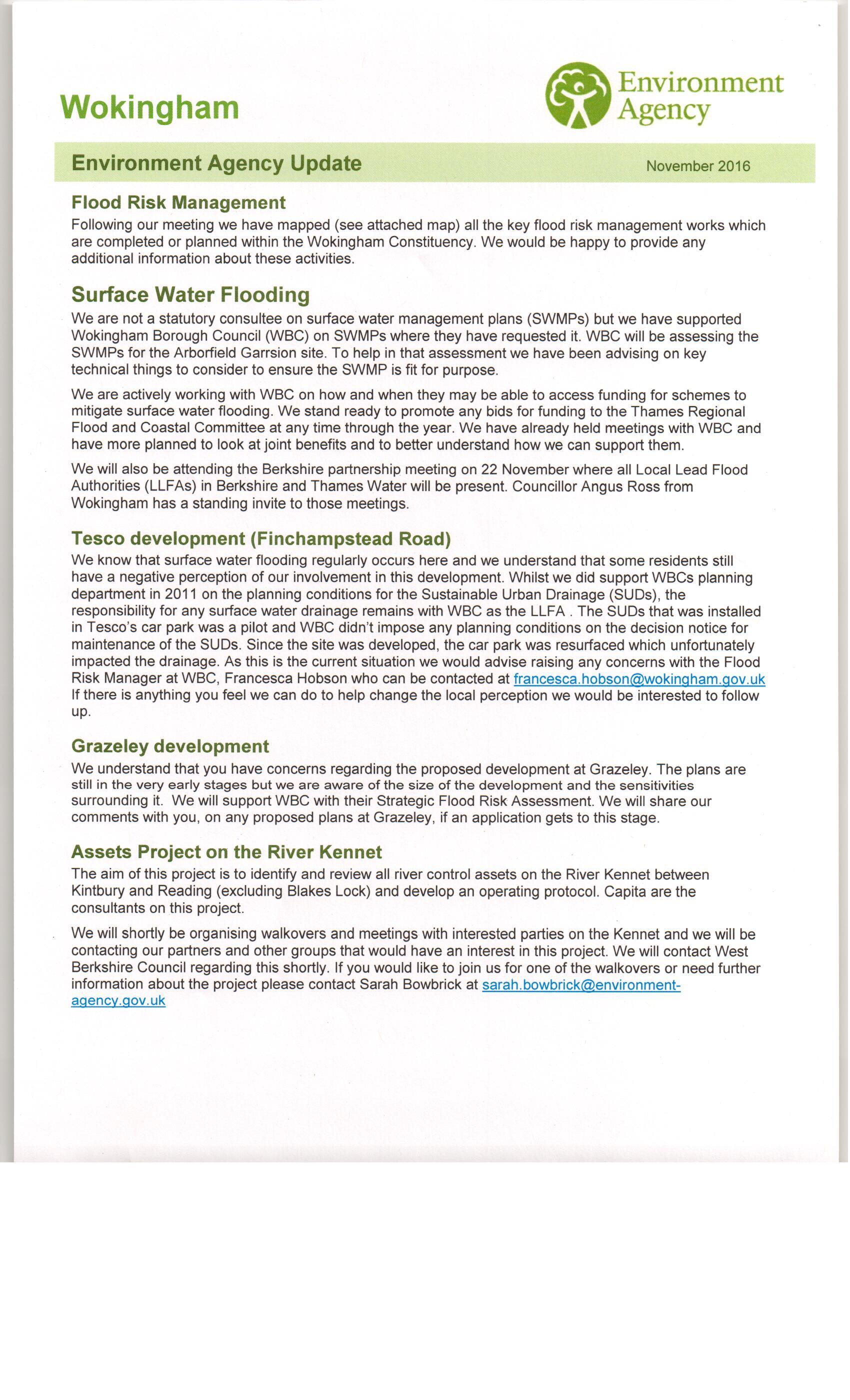
The Consumer Council for Water (CCWater) is the statutory body for water consumers and they have a service for complaints about water supply and sewerage service. They have provided contact details should you need to make a complaint.consumer-council-for-water0001

consumer-council-for-water0002consumer-council-for-water0002

More economic good news

Yesterday showed unemployment falling to 4.8%, the lowest since 2005. Wages rose by 2.3%, well ahead of prices. Price inflation fell back despite the Bank’s continuous assurance of inflationary problems ahead, though it might rise next year. Property companies reported increases in rentals, and gloomy valuers only managed to shave a little off central London capital values, where they had been forecasting a big hit after the vote. The workforce participation rate rose to a healthy 74.5%, ahead of the USA and continental countries. Google announced a major new investment in the UK. A major housebuilder told us sales were 19.5% up.

The money supply is accelerating into a a double digit rate of growth, and bank credit is also growing well. All this points to the UK being the fastest growing of the advanced countries this year, and indicates next year too should see good growth. It is high time the gloomy forecasters admitted their mistakes and hiked their 2017 forecasts.

The OBR and the Treasury also need to lift their forecasts. It would be quite wrong in these conditions to feed the Chancellor low forecasts for growth for next year. These would tell him the deficit will be higher, thanks to lower revenues and higher welfare spending. Instead the truth is likely to be very different. I am sticking with 2.2% for next year’s UK growth rate. Given the latest figures it is difficult to see why it should be lower.

Today’s retail sales figures, showing a record rate of growth of 7.4%, confirm the trends.

An amended speech for Parliament to take back control

I have reworked some remarks I made in Parliament recently. It is background to the current debate about whether Parliament should immediately get on and approve a short Bill to send the Article 50 letter, or whether the government should continue to seek to reverse the strange decision by the High Court of England, effectively in conflict with the High Court of Northern Ireland, over how to handle our exit from the EU. As someone who thinks exit does have to be passed by Parliament I am all in favour of pressing on, as I believe there is a clear majority for an Article 50 letter, which is why Labour has never tabled a motion to stop one as they could have done! I do not think these large constitutional issues are ones for the Courts, but are for Parliament and people to decide.

17.4 million people voted to leave the EU.
That’s more people than have ever voted for a new government in the UK.

We voted in good faith
We voted knowing exactly what we want our country to do
We voted in optimism, expecting a better future out of the EU
We voted knowing many experts thought it would do substantial short term economic damage
We thought them wrong, and so it has proved
We voted to leave.

We did not vote to stay in parts of the EU
We did not vote to carry on paying them money or accepting their laws
We voted to take back control
We voted to have our own borders policy
We voted to spend our own money
We voted to be able to make our own laws

We voted Leave because we want to live in a democracy again
To live in a country with its own sovereign Parliament
Serving a sovereign and free people
To live with the freedoms, rights and responsibilities our ancestors fought to give us
We voted to transform this puppet Parliament into a proper Parliament again
17.4 million voters understood our liberties had been pillaged
Our voting rights eroded
Our control of our laws had been stolen away
Some of our taxes had been taken to spend elsewhere

We have been lied to
We no longer believed the endless reassurances that we still had a UK democracy
That we still had a sovereign Parliament
Under pressure they told us we were still sovereign because we could leave the EU that took so many of our powers
So we took them up on that promise
The people have spoken
What part of Leave do some in the establishment not understand?

On May 24th I spoke in Parliament
I explained why it is a puppet Parliament
I reminded MPs of how impotent Parliament has become
Unable to change benefits, when government and opposition was united in wanting to
Unable to control our borders
Unable to abolish VAT on tampons and green products
Unable to make our own decisions about so many things from energy to the environment, from tax to trade

I asked if the people will do what Parliament feared to do
Would the people demand that we stop this charade of power
And take back control?

We now know the answer
So today the question is
Can this once might Parliament be mighty again?

Does this Parliament have it in it to take back control?
Does this Parliament accept that all its true power comes from the people?
And all its power has to be used in the interests of the people.

Today we must pledge to do as the people decided
The people are merely telling us to take back powers so needlessly tossed aside
So we can again do good for them
So we can again carry out their will
So we can restore to the Mother of Parliaments her full dignity
Or else perish at the next election

Are there enough MPs willing to sweep aside this puppet Parliament?
Enough peaceful Pyms and Hampdens wishing to empower us again?
There are still strange forces trying to impede the popular will
This Parliament needs to tell the courts we must send an Article 50 letter
We need to show an earnest urgency to do what the voters told us to do

It need not be difficult to take back control
It does not need Mrs Merkel’s consent
Or is this now a House of people who fear to take responsibility?
Are we but shadows of past glories
Still marionettes in the Brussels drama
Still too timid to step into the light of accountable power?

Of course not
If the people can be brave
Surely we can follow
If the voters get it
So must the establishment

The High Court of Parliament answers to no UK or English Court in matters of the constitution and high politics
Soon we will no longer bow to the courts of Brussels either.

Lets take back control
Send the letter
Leave the EU
Reunite voters with their Parliament