Real public spending up again in UK – and welfare spending too

Yesterday saw the release of the June figures for spending, taxing and borrowing. Over the year June 30th total public spending rose by 2.9% in cash terms. As there was no inflation over that year, that is a real increase of 2.9%. I look forward to a flood of articles praising the end of austerity and recognising that real public spending is rising.

The welfare figures also show that despite a good year for creating jobs and getting more people off welfare and into work, the combination of higher rates, more people eligible for various benefits and better take up has led to a 3.6% real increase in the amount of welfare paid out.

The deficit came down a bit, thanks to revenue growing at a lively 4.4%. That’s a big real increase in tax receipts, thanks to higher incomes and more items being purchased and attracting VAT. It would be welcome if more commentators writing about the economy worked from the actual Treasury figures, instead of relying on misleading and wrong opposition soundbites. In order to discuss how we can best look after those in need, we first need to know how much we are currently spending and why it is going up.

Could bombing Syria work?

I have no more love for ISIL than the Prime Minister. Like him, I would rather live in a world where there are no extremist groups using violence to gain power over worried and damaged communities. I wish him well with his wider strategy for tackling extremism.

I do however have the same reservations about bombing Syria as I did when I wrote to him with others when he last wanted to do it. We urged him not to.

Bombing remains a blunt weapon, for all the improvements in tracking and aiming technology. Whilst with modern intelligence and bomb aiming it is possible to kill more of the people you want to kill whilst killing fewer of the people you do not wish to kill, you can still end up killing the wrong people. In what is a war for hearts and minds as well you also leave yourself open to claims that you have killed bystanders and civilians, and open to extremists themselves killing others and claiming you did it. You also create martyrs of the dead in the eyes of those who support them, which can enable them to recruit replacements for those you kill.

It is not realistic to suppose you can kill enough of the extremists by bombing to get them to give up. They are too widely dispersed and too embedded in the civilian populations to allow easy success from the air. That’s why various military experts say bombing has be part of an invasion or wider campaign. In the end you only destroy ISIL power by fighting house to house and killing them or forcing them to retreat. This can be done, but you end up killing a lot of the civilian population you are trying to liberate. Most people agree that US and UK soldiers should not be asked to do this. You leave open the question of how then do you help the legitimate government establish proper control? Where the government is the government of Syria, you are left with the moral dilemma of do you want to help Assad re establish control over the country? If not, how do you also arrange for his defeat? What would you replace both ISIL and Assad with? How would the new government after a brutal war to gain enough control be able to unite the country and create successful peaceful administration?

The other problem I have with bombing ISIL is they are not the only nasty group to dislike. The UK has banned or condemned a long list of organisations. What about Boko Haram? Al Nusra? Abu Nidal? Adu Abyan? Abu Sayyah? Al Qaeda? Ansar al Sharia? -just to name a few from the A and B items on lists of such organisations. Extremism is a multi headed monster. Bombing one part of it has so far not ended or controlled it.

Yesterday I asked the Secretary of State for Defence who would take over the government of parts of Syria if Coalition forces are successful in displacing ISIL? He did not seem to want the current government of Syria led by Assad to do that. There’s more to creating better government than bombing some evil men.

A wild ride to political union if we stay in the present EU

I have a debate on Tuesday in Parliament on the topic of political union. I want to draw more attention to the 5 Presidents joint policy statement of how they intend to create a political union out of the EU and Eurozone. It is high time the BBC followed this, and the UK government made their response to this revolutionary and important document known.
The ambition of the document is clear. They seek a Euro Treasury. They want detailed control over a wide range of economic and business policies in every Euro state. They want a political union to back their currency union. They imply a transfer union despite German objections.
The document envisages future large transfers of power, just as we are seeing in Greece already. The document says nothing reassuring for the UK as a non Euro member. The UK has to understand this vision, and work out a new relationship for us to live and work alongside it but not to be dragged into it. That is the purpose of my debate, to stress the urgency and to see how the government will protect our democracy from this latest assault.

As the document says “Progress must happen on four fronts: first , towards a genuine economic union that ensures each economy has the structural features that prosper within the monetary union. Second, towards a financial union that guarantees the integrity of our currency across the monetary union and increases risk sharing with the private sector. This means completing the Banking union and accelerating the Capital Markets Union. 3rd, towards a fiscal union that delivers both fiscal sustainability and fiscal stabilisation. And finally, towards a political union….”
This will inevitably involve sharing more sovereignty over time…it will need to shift from a system of rules and guidelines for national economic policy making to a system of further sovereignty sharing with common institutions, most of which already exist…”

All this is a sensible prospectus to try to build a successful single currency. There are three problems with it. The first is they want to use the EU, when two members of the EU are not going to join the Euro and seven others are not yet in it. That requires a different political architecture.

The second is, they have already created the currency, which is greatly stressed by not having proper political and transfer arrangements to back it up.That means they are in a tearing hurry on what are very sensitive and difficult matters.

The third is, Germany is still reluctant to pay her share of the bills in the way richer parts of a currency union do elsewhere.

It is time for the UK to explain why we need a looser relationship with the EU, as the Euro area takes the rest on a wild ride to political union.

Debt relief for Greece?

The Germans have some good points to make about Greece. Perhaps their best one is to remind people just how much debt relief Greece has already enjoyed.
In March 2012 97% of all the bonds held by the private sector representing money lent to Greece were reduced in value by 53.5%. This meant a Euro 107 billion gift to Greece and loss to the bondholders.
At the same time the Greek Loan Facility from the EU accepted a 1% or 100 basis points reduction in the interest receivable on its loans. The EFSF guarantee commitment fees were waived and the maturity date of all GLF and EFSF loans to Greece was extended by 15 years. Interest on loans from the EFSF (which became the main lender to Greece) was deferred for ten years.
These very generous terms were not made available to other emergency borrowers from the EU. The ESM official website tells us these changes cut Greece’s debt burden by a handy 49% of 2013 GDP.
The problem is, the Greek economy has not recovered and Greece has not found a way to prosperity, despite this debt retirement and despite substantial new loans being offered. If Germany were simply a profit oriented bank manager she would conclude that this had so far proved to be very bad business, and would also conclude that lending more was unlikely to be more successful than past loans.
Were the EFSF and the IMF to contemplate writing more debt off or extending it further and making its terms yet more lenient,they would also be wise to change the policy they are recommending attached to any future loans. Why should the next lot be any better at triggering prosperity than all the debt so far advanced?

If the rest of the Euro area want to keep Greece in and avoid perpetual crisis, they need to put Greece on grant aid. If they want a real Greek economic revival, they have to allow Greece out of the Euro, and have a proper IMF recovery package which usually includes a devaluation and an accommodating money policy to permit growth without too much inflation.  The Euro is just giving Greece permanent deflation. In such a circumstance more public sector cuts depress demand further, as the private sector cannot take up the slack.

The UK should not pay a penny more to the EU

The UK is constantly being mugged by the EU.In recent years the UK state has had to pay fines in excess of £500 million for infringing EU rules. We have recently been faced with an additional bill for regular contributions because our economy has grown faster than others and is bigger than they originally calculated. Now they want the UK to stand behind a bail out for Greece, when the UK has an agreement with the EU that it will not participate in any Euro bail out.
The main money for Greece has been provided under the auspices of the EFSF and the ESM. These funds are for Euro members only and are provided by Euro members only. So far so good. Then up pops the Commission and suggests that Greece’s next “bridging” loan of maybe 12 bn Euros should come from the EFSM, which is money provided by all 28 member states of the EU to an EU country in financial stress. The money is borrowed by the EU, and member states stand behind the market borrowings. The UK government is right to reject the  use of this mechanism for the special problems of a struggling Euro member. It looks as if the UK has now received legal assurances that we will not be liable for any of this money, and will expect full collateral against the amount put up by Euro area countries, along with watertight text.

Were the Commission to persist and to push it through without protection for the UK on a qualified majority vote which the UK lost, the UK should refuse to pay. If the EU tried this The UK Parliament should enact a one clause Bill amending the 1972 European Communities Act to make clear we do not pay any Euro bail out monies and would not accept the jurisdiction of the European Court on this matter.

The EU is free with its economic advice,telling the UK to cut its budget deficit and to get it below 3% of GDP. This advice is incompatible with its constant demands for more taxpayers money from the UK and its own spendthrift ways. Every penny we send to the EU is borrowed, to be repaid later by UK taxpayers. The sum needs to be cut.

It is difficult to understand why the EU and the Euro Group think they have more chance of succeeding with this latest Greek loan than with the previous ones, or how they think this is going to be repaid. They are lending more money to a country which is already in default with the IMF and the EFSF, as the EU’s own institution has made clear. They may want to use the EFSM rather than the ESM at this juncture because it seems to avoid the need for Parliamentary votes in the Euro area countries pledging the money, but as they intend to make longer term loans through the ESM they need Parliamentary votes on that. It’s a bizarre money go round linked to an economic policy for Greece which does not work.

Consultation over Spencers Wood Post Office

I have received the following letter from the Post Office:

16 July 2015

Dear Mr Redwood

Spencers Wood Post Office®
Basingstoke Road, Spencers Wood, Reading, RG7 1AD
Changes to your Post Office® – tell us what you think

We’re talking to the Postmaster about making some changes to the above Post Office and we’d like you to tell us what you think about the changes before we finalise our plans.

What’s happening?

There’s an exciting programme of investment and transformation taking place across the Post Office network, helping to make our branches more modern and convenient for you and for the Postmasters who run them. We’re talking to the Postmaster about changing to one of our new-style local branches and if the change goes ahead:

• Post Office services would be offered from a low-screened, open plan style service points, integrated into the retail counter
• The branch would be open for longer: Mon – Sat 09:00 – 20:00 & Sun 11:00 – 17:00. (Current opening times are: Mon – Fri 09:00 – 17:30 & Sat 09:00 – 12:30)
• You’ll still be able to get most of the Post Office products and services you’re used to however for a small number of services you may need to visit an alternative Post Office, go on-line or, telephone our customer helpline. Details of product availability are provided overleaf
• To get the new branch ready, it may need to close for up to seven days during September/October 2015 for refurbishment

What’s next?
We want to know what’s important to you and would like you to tell us what you think, particularly on the following areas:

• Why you use this Post Office and what you like about it
• What you think about the proposed new-look Post Office. For example the Post Office service point would be on the retail counter, so is there anything you’d like to ask us or would like us to take into consideration about the proposed location of the Post Office till or the queuing area
• What you think about any changes to the opening hours
• If you have any comments about how you will access the Post Office products and services that won’t be available at the branch if the change goes ahead
• If you have any comments about the potential closure period during the refurbishment or access to other branches in the area

There’s also a list of frequently asked questions provided at the end which you may find useful.

It’s easy to let us have your feedback by completing our convenient online survey via the following link postofficeviews.co.uk and entering the unique code for this branch 12393999

Customer information materials are also being displayed in branch and details are published on our website too at postofficeviews.co.uk
We’ll be accepting comments up to and including 14 August 2015.

You can also let us have your comments in the following ways:

Please note that items sent by Freepost take 2 working days to arrive and don’t include Saturday or Sunday. Therefore please do allow sufficient time for your comments to arrive before the end of the consultation period, as we are unable to consider feedback received after the deadline.

We won’t be responding to you individually however the feedback received will be taken into consideration as we finalise plans with the Postmaster. We’ll write to you again outlining the main comments received and our response to these and also to explain the final plans for the branch. All of the responses received will be provided to the independent statutory consumer watchdog, which in Great Britain is Citizens Advice and Citizens Advice Scotland, and in Northern Ireland, the Consumer Council.

When would the changes happen?

We’re planning to make these changes in September/October 2015 and we’ll put a poster up in branch at least two weeks before to let customers know the exact date and to tell them how we’ve considered the feedback. We’ll make sure any disruption caused by the refurbishment is kept to a minimum.

The following branch will be happy to provide customers with Post Office services during this period.

• Three Mile Cross Post Office, Basingstoke Road, Three Mile Cross, Reading, RG7 1AT

We’ll also be asking customers for their feedback once the changes have taken place and details will be available in branch shortly after the new look branch opens.

Yours sincerely

David Gold
Area Manager

Schools Funding

I have received the following update from the Government on Schools Funding:

16 July 2015

The Government is committed to developing world-class schools across the country, so that every child, everywhere, can fulfil their potential. That’s why in the Conservative manifesto we committed to protecting the money following children into school, to confirming the extra £390m fairer funding uplift from 2015-16 into budgets for 2016-17 and beyond, and to making funding fairer.

Today we are taking the first steps towards meeting these commitments by publishing the per pupil funding rates for each Local Authority’s schools budget for 2016-17. This protects the per pupil funding in each authority from 2015-16, meeting the commitment to protect the national schools budget and to base-lining the £390m extra funding from last year. You can see how this affects each Local Authority at the following address:
https://www.gov.uk/government/publications/schools-funding-arrangements-2016-to-2017

We are also publishing the Education Funding Agency’s Operational Guide; to allow Local Authorities to start the process of consulting with their schools on how the funding should be distributed in their area.

Final funding allocations to each authority will be made in December, in line with the latest data on their pupil numbers.

Base-lining the 2015-16 Minimum Funding Levels in 2016-17 is an important step towards making funding fairer. However it remains the case that a school in one part of the country can receive over 50% more funding than an identical school in another part of the country.

We are therefore committed to making schools and early education funding fairer and will put forward our proposals in due course.

We recognise the links between funding for early education, schools and pupils with high cost Special Educational Needs. These are complex issues to consider, and we will consult extensively with the sector and the public on them.

Yours sincerely

Sam Gyimah MP
Parliamentary Under Secretary of State for Childcare and Education

Calais and illegal immigration

Knowing of the great interest in this topic by many readers, I am today publishing the latest Ministerial update on this .

“The UK and French Governments have been working closely together to respond to the pressures caused by the growing number of migrants crossing the Mediterranean this year. The strike action by French port workers has recently exacerbated these pressures, temporarily closing the port of Calais and disrupting services by ferry operators and Eurotunnel. This had significant repercussions for the UK – in particular for lorry drivers, the travelling public and local residents in South East England. Although the strike action is now paused and the Port of Calais is open, the risk of further French strike action remains.

During the strike, Border Force, working with the French authorities, put in place well-tested contingency plans, reinforcing security and supporting traffic flow at the juxtaposed ports. All freight vehicles entering Calais, Coquelles and Dunkirk underwent intensified screening using some of the best techniques and technologies in the world – including sniffer dogs, carbon dioxide detectors, heartbeat monitors and scanners – as well as visual searches to find and intercept stowaways. Over 8,000 attempts by illegal migrants were successfully stopped at the juxtaposed ports during the strike period, thanks to these joint efforts.

The strike affected the travelling public and local residents of Kent who suffered disruption due to traffic. The Home Secretary will be meeting colleagues from Kent to discuss this issue directly. It also had a huge impact on hauliers from all over the country – who were subjected to long delays and repeated attempts by illegal migrants to board their vehicles.

Support for hauliers

We are working with the British haulage industry to support our drivers, and I recently met representatives of the industry to discuss their concerns. We provide clear guidance on lorry security and an accreditation scheme for hauliers. However, as the vast majority of vehicles arriving in the UK are foreign registered, the bigger part of our challenge is international, which is why we have offered to host an international event to promote best practice in lorry security.

Yesterday, the Home Secretary announced the creation of a new secure zone at the port of Calais for UK-bound lorries. This will provide a secure waiting area for 230 vehicles – the equivalent of removing a two-and-a-half mile queue from the approaching road. As peak-time queues rarely exceed this length, it will transform protection for lorries and their drivers – removing them from the open road where they can become targets for migrants.

Bolstering security for all travellers

HM Government has been working closely with the French Government over a longer period to tackle with the broader situation in Calais. Earlier this month, the Home Secretary met the French Interior Minister, Bernard Cazeneuve, and agreed to strengthen that  cooperation further and build on the Joint Declaration they made last September. Since then we have:

  • committed to investing £12 million (of which £6 million has already been spent) to reinforce security at our juxtaposed ports in Northern France. This includes new fencing to secure the approaches to the port of Calais and joint work to improve traffic flow through the port and Border Force controls, so that more tourist vehicles can queue within the secure environment of the port. This work is due to be completed at the end of this month;
  • funded a £2 million upgrade of detection technology; and boosted our dog searching capability by another £1 million; and
  • provided funding for additional fencing to help secure approaches to the Channel Tunnel at Coquelles, where repeated incursions have taken place over the last few weeks. This work, which we announced last week, has already begun and is also due to finish by the end of this month.

In addition, we have made considerable progress in targeting criminal gangs in Calais through better intelligence sharing and increased collaboration between UK and French law enforcement agencies, and we are running joint communications campaigns to tackle myths about life in the UK. We continue to keep the situation under review and will assess whether further measures may be required.

Tackling the problem at source

The problems in Calais are clearly symptomatic of a wider issue that needs to be tackled at source and in transit countries. This was reflected in the recent European Council discussions attended by the Prime Minister. The Government is clear that we must break the link between people making the treacherous journey across the Mediterranean and achieving settlement in Europe.  We must target and disrupt the organised criminal gangs who profit from this.

We are enhancing our work with European and African partners to tackle these callous criminal gangs and increase the support for genuine refugees in their regions of origin.

Recently, the Prime Minister announced the establishment of a dedicated law enforcement team to tackle organised immigration crime in the Mediterranean. Around 90 officers will be deployed in the UK, the Mediterranean and Africa to pursue and disrupt organised crime groups. They will make use of every opportunity at source, in transit countries, and in Europe to smash the gangs’ criminal operations and better protect the UK and the vulnerable people they exploit.

Continuing our work to crack down on illegal immigration

And finally, whilst the UK should remain generous to those who need help, we must also continue to be tough on those who flout our immigration rules or abuse our hospitality as a nation.

Since 2010, the Government has introduced new laws to make it harder for people to live in the UK illegally – restricting their access to rented housing, bank accounts, driving licences and our public services. We have revoked the driving licences of 11,000 illegal immigrants, closed down nearly 900 bogus colleges, and carried out over 2900 sham marriage operations in the past year.

The new Immigration Bill that we will introduce later this year will build on this work and enable us to take even stronger action. It will include measures to make it even more difficult for people to live in the UK illegally, make it easier for us to deport them, and make Britain a less attractive place for people to come and work illegally – by making illegal working a criminal offence in itself.

The Government’s approach is clear: we are working closely with the French authorities to mitigate the consequences of irresponsible French strikers; continuing our close collaboration to bolster the security of the ports in Northern France; providing assistance to our hard-working hauliers and the travelling public; and leading the international efforts to tackle this problem in the longer term – with generous support for those who deserve it, and tough sanctions for those who do not.

The Rt Hon James Brokenshire MP

Immigration Minister “
 

Dangerous and expensive farce – the Greek loan go round

The Euro members of the EU will lend Euro 7bn to Greece via the EFSM (technically an EU not a Euro area fund)  so Greece can repay the ECB and the IMF what it owes them, prior to agreeing new loans from them! We are told the non Euro members of the EU will not carry any of the risk, so why use an EU rather than a Euro area fund?

Meanwhile the ECB which says it wants Euro 4.2 bn back on Monday from a previous loan will lend an extra Euro 900 million to Greek banks in the next few days and will doubtless be expected to lend considerably more thereafter.

Why this absurd money go round?  Why don’t the creditors delay repayments for a  period whilst they are negotiating the new longer term loans?  What’s the point of a bridging loan from them to repay themselves?


John Redwood’s banknote theory

Reproduced from the BBC Newsnight live blog with permission.

James Clayton, Newsnight political producer.

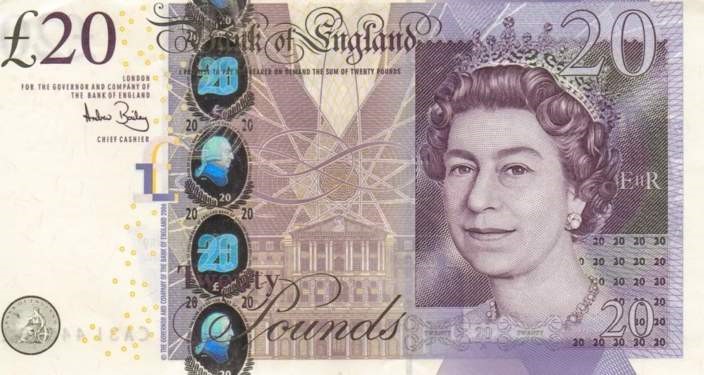
John Redwood thinks all you need to illustrate the problems of the Euro are two banknotes – one €20 and one £20 note.

First of all look at the British £20 note


* The Queen represents the British Government

*There is a statement from the Bank of England:  “I promise to pay the bearer on demand the sum of twenty pounds”

* It is signed by the Chief Cashier of the Bank of England

* It has a picture of… the Bank of England

* It has a logo of… the Bank of England

In short – this is a pretty unequivocal IOU. It’s an explicit “promise to pay” from the Bank of England, assured by the British Government.

Now take a look at the €20


What does this note actually mean?

*  The gothic windows are not real, they don’t exist. They’re a symbol of “an artistic period” of European architecture

* The flag on the note is the EU flag – despite nine countries within the EU having nothing to do with the Euro

* There is a signature, but it’s not explained who it is or what their role is

* There is no explanation as to what his note actually means for the owner

* There is only one reference to the European Central Bank on both sides of the note

Redwood argues that this tells you all you need to know about how the Eurozone works. The Euro notes are unclear, ungrounded and do not adequately represent the governments that back the ECB.