Mr Redwood’s contribution to the Statement on Syria, 20 May

Mr John Redwood (Wokingham) (Con): What is the current balance of strength between moderate, democratic forces and undemocratic, violent, extreme forces within the opposition? We do not want to help the latter.

The Secretary of State for Foreign and Commonwealth Affairs (Mr William Hague): I cannot give my right hon. Friend a precise percentage—obviously such a thing does not exist—but from everything that can be gathered and ascertained, the great majority of opposition fighters and supporters support the National Coalition or groups affiliated to it. That coalition is committed to a democratic, non-sectarian future for Syria, but the extremist groups are undoubtedly growing in strength. I would argue that one reason for that is that somebody who wants to join an extremist group can get a rifle and training immediately, whereas those who go to support a moderate group cannot. We have to bear that in mind in the debate we have started to have in the House.

Regulating utilities


             Many people think their energy, water and other utility bills are too high. We have often examined the EU and UK policy background to some of the high prices, with many of you joining my criticisms of the carbon levies, renewables obligations and the rest that is pushing up our energy costs.

            There is a further problem with our utility industries that the UK still has the power to fix. There is a lack of  competition in several major areas. People claim these great utilities are natural monopolies. Government buttresses their strong market positions  with statutory protections, and they rely on Regulators to avoid high monopoly prices.

           Unfortunately the absence of competition means a lack of innovation, a complacent reliance on older methods of production and delivery, and a lack of market test on the cost base.  In order to have better industries delivering more and cheaper water, more and cheaper power, and delivering more and cheaper public transport, we need to encourage or require more competition.

            John Penrose MP has recently written an interesting paper entitled “We deserve better”. It helps us realise that there are two essentials we need to improve the performance of the large utility areas. The first is the simple ability for customers to switch easily between companies supplying water, or electricity or gas or train travel or  banking services. The second is the easy ability of a challenger business to use parts of the existing pipe or cable or clearing network to link them to customers in their early days as they build up their customer base.

                There are many good examples of pipes and cables being used as common carrier systems. The UK needs to get on with providing easier access, as the means to create more competition. Once you allow more competition you will get more  capacity and plenty of new ideas. Just look at the way mobile phones took off once we broke the BT monopoly.

A new relationship with the EU – as our current membership is anti business and jobs


          I have long argued that the government should create a new relationship with the EU. I was pleased  Mr Cameron used this phrase in his important Bloomberg speech. The businessmen who have written today to a newspaper saying it is in our economic interest to stay in the EU on current terms, as always have failed to explain why. The problems with our current membership include the high cost energy, ineffective and expensive regulations and other anti enterprise measures which adversely affect us. The EU is anti jobs, exporting them to other parts of the world by making us uncompetitive.

           To me the phrase a new relationship  means that we want to create a relationship based around the important trade the UK does with other states in the EU. We also may well need to co-operate with the neighbours, through bilateral agreements over pipelines, ferry links, air routes and all the other issues that relate to the conduct of trade and the travel of people between our islands and the continent. I leave open the possibility that we will want to undertake other matters based on mutual  political co-operation, where it makes sense for us and them and where we have a veto over whether to do it or not, just as they would also enjoy a veto.

             I do not think we can mend this broken relationship which many in the UK now find unacceptable, by a few modest treaty amendments. After all, the whole Conservative party voted No to Nice, No to Amsterdam, and No to Lisbon. The Conservative party was forced into accepting Maastricht reluctantly by a past leadership, only accepting it on the basis that we were exempted from the main points of that treaty, by refusing to join the Euro.

              I find it bizarre that the media and some other critics now make out the Conservative party is once again divided on Europe and talking  about something that matters to few people. The party I know is united behind the proposition that we need a new relationship,  and  still united around the view that at least the last three treaties and arguably more were unacceptable in surrendering  vetoes and pushing the federalist agenda.

                  In a democracy one Parliament cannot bind its successors. To recover our democracy we need to be able to reverse EU laws previous governments have adopted, and need to be able to unwind treaties we voted against at the time. Far from banging on about a minor issue, we are seeking to sort out the big issues of border control, migration, extradition, energy prices, welfare eligibility and the rest where the EU now has the power to block or amend what we want to do.

The Conservative party


On Friday night I spoke to the annual dinner of a Conservative Association. The 80 people present included professionals, senior business executives and entrepreneurs as well as retired people who had worked hard and saved during their working years. There was little old money, some new money, and a lot of people who just take responsibility for their own lives by working and saving for their retirement.

Just as in my own constituency, I found them well informed about the political and business worlds, concerned for the future of our country, and keen to offer public service. Several of them were Councillors, and many of them wish to see improvements in their local area which will help the many. I am happy to represent people like them, and to work with them to try improve the UK’s public services and economic performance.

It is true that they think we need a new relationship with the EU, because they see directly that in many areas now the UK cannot take the action it needs to take owing to EU law and controls. It is also true that there is a range of opinions about how to tackle it, from those who just want to leave tomorrow to those who wish to negotiate a sophisticated package that  enhances trade and allows good relations on a whole range of matters with the neighbours.

I see having people like these members as a strength for any political party. They are a source of good advice as well as people who do a lot to ensure the smooth running of their local communities.

Bubble blowing


            Several authorities around the world seem keen to blow bubbles again. The US Fed is busy with another programme of Quantitative easing, keeping bond yields very low. The Japanese authorities have embarked on their double the money supply policy, and are buying Real estate Investment trusts and other assets as well as bonds with the money they are creating. It is probably only a matter of time before the European authorities find a way round their ECB constitution and German objections, and inject  more cash into their banking and market systems.

         The usual objection to this type of easy money is that it causes inflation. Japan can say it has not done so in Japan over the past twenty years, when QE has been part of their response to slow growth and no growth in their economy. This year inflation fears proved wrong, as commodity prices have tumbled. The most recent inflation figures from the US are low, helped by  a large petrol price fall. World authorities are likely to draw comfort from the lack of  advanced country inflation so far, as they find new ways to ease money.

         The authorities should, however, consider  asset price inflation. In the long bull market that preceeded the 2007-8 crash there was plenty of asset price inflation. Central banks ignored it, and pointed out that shop price inflation was under better control, thanks to to cheap Asian products and downward wage pressures from rapid migrations around the world.

          In 2008 the advanced country authorities decided to call a halt to this asset price rise, and expose the loan book problems that followed for the banks as soon as you forced asset prices down. They brought on a slump. They then told us they would not allow this to happen again. They would order the banks to hold more cash and capital, to stop them lending too much to the private sector to bid up asset prices.

          Now they are deciding to bid up asset prices by other means, especially by direct purchases of assets by the authorities themelves. This in turn generates asset inflation again. Will they this time just let it run? It would seem perverse to blow up another bubble, only to puncture it again. Were they to do so, this time surely they would have to blame themselves, for both inflating the  bubble and puncturing it?

Back to public spending


                Talk at Westminster is moving to future spending  plans. The need for more action to curb the deficit into the next Parliament is hitting Ministerial deasks. The Treasury is engaged in detailed negotiations with the main departments over how to reduce the rate of increase in cash spending beyond 2015.

                The government  imposed a pay freeze on public sector pay for a couple of years, yet public sector pay continues to rise faster than private sector pay. In the most recent quarter total pay including bonuses in the private sector has slowed to zero without an official freeze. Public sector pay rose by 1.4% with a freeze.  The rate of reduction in staff numbers in the public sector has also slowed recently. The government needs to revisit the size and cost of its overhead, and to use natural wastage more extensively to cut out less needed posts, to raise productivity and cut costs. Numbers employed in the public admin and defence category fell from 1.71m in December 2010 to 1.579m in December 2012.

                It should also revisit the question of hom many staff it employs in expensive central London offices. It could employ fewer in total, and employ more in outer boroughs where offices costs are half the central costs. It could let out the central space freed for good rentals and lease premia, or sell peripheral buildings outright.

                The latest NAO Report does make good reading for the business case for HS2. I have favoured deferring this project. It might make sense to start it from the north, from Manchester and Leeds, rather than from London anyway,and defer the spend until the budget deficit  is under better control.  I assume the government will not wish to say the business case is poor and we cannot afford the project.  Far smaller sums spent on upgrades and removing bottlenecks on the exisiting west coast line  might be the better immediate rail investment.

               It needs to step up its asset sale programme, starting with assets like Citizens Bank, still owned by RBS. It is time taxpayers got some cash back for their large unwise and forced investment in RBS shares.

Good and bad numbers


              The US budget deficit is tumbling, according to the latest  numbers. The combination  of  recent large cuts in  public spending, and continued economic growth, is working well. The US economy is recovering on the back of the shale gas revolution, cheap energy to power more factory output, and the continued ability of the US to harness the digital revolution to business success.

              Meanwhile, the EU numbers remain dreadful. Italy has been in recession for seven quarters, with economic output falling another 0.5% in the most recent quarter. Germany is down 1.4% on the last year but managed a very small increment to output in the first quarter of this year. France is in double dip recession, with the position continuing to deteriorate.

              The UK economy looks as if it is now picking up. April was probably a stronger month than the previous  half year has seen. There are welcome signs of more full time jobs, some increase in housing activity, and a pick up in consumer confidence. The London economy appears to be doing well, with continuing difficulties spreading the progress to all parts of the UK.

               Some of the extra money being created is now finding its way into activity. Some will also find its way into rising asset prices. We see worldwide in the advanced country Stock markets that the susbtantial sums being created to promote growth are fuelling asset price rises. The authorities have to judge when to ease off the monetary accelerator in a way which does not damage the recovery but does prevent asset prices becoming unrealistic again.

Thatcherism Conference

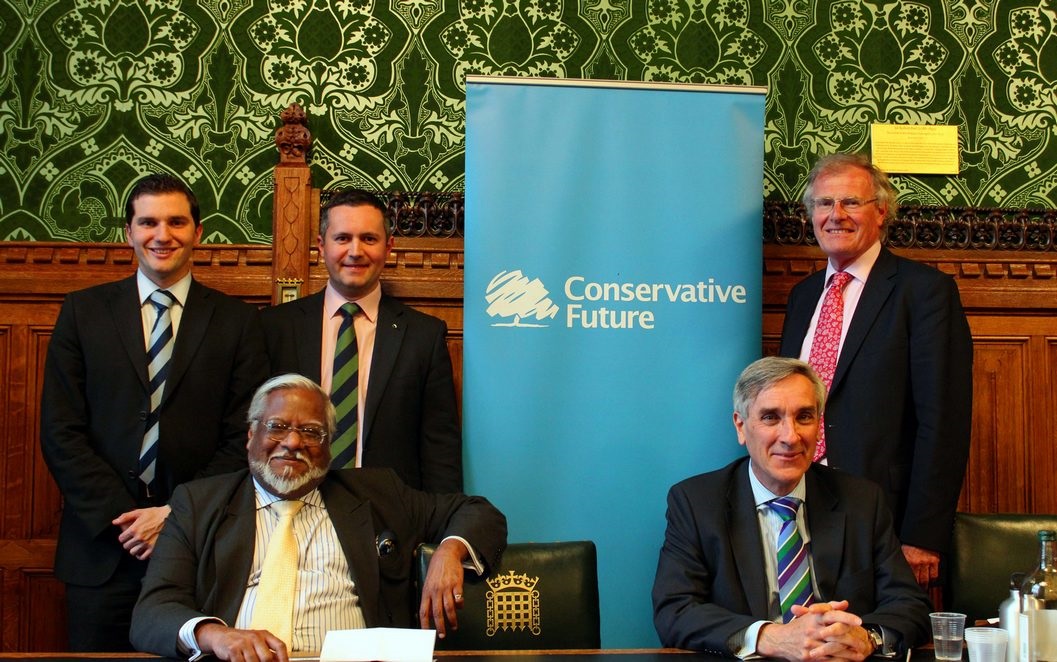
Thatcherism conf2 (3)

Mr Redwood was invited to speak at a Conservative Future event, “Remembering and extending the legacy of Margaret Thatcher”. The event was held yesterday in the House of Commons.

Wokingham Times

The issue of Europe will not go away, much though the federalists wish it would. The BBC have gone back to saying the Conservatives are obsessed by Europe and split over it. The truth is somewhat different. Most Conservatives want the UK Parliament and government to be able to make decisions in the interest of the British people. In all too many areas the Coalition finds it cannot do that, because huge powers were given away at Nice, Amsterdam and Lisbon in the more recent treaties agreed there. The last Labour government surrendered control of our borders, our energy policy, our financial regulation policy and much else besides.

The government would like to decide who is eligible to receive benefits in our country. Should someone recently arrived from a continental country qualify for a full range of benefits if they cannot find a job or should their own country support them? Should they qualify for all the UK top up benefits and public services if they do find a low paid job? Ministers discover the EU has views on this which entail UK taxpayers paying out full benefits to people who have not made any previous contribution themselves to UK taxes, who are not going to become UK citizens, and who may keep their family in another country.

The government would like to decide who we invite into our country. It cannot do this when it comes to people arriving from the rest of the EU. The government has stated it wishes to cut the numbers of migrants, as in recent years very large numbers have imposed strains on the provision of housing and public services in the popular parts of the country. As a result the government has to be less fair to the rest of the world to accommodate more arrivals from Europe, but struggles to tackle the overall problem.

Many of us want cheaper energy. The UK’s energy bills are particularly high. The US is benefitting massively from gas prices half the level of our own. That boosts people’s spending power, and helps the US economic and industrial recovery. Here in the UK standards of living are cut by high energy bills. Industry is moving activities abroad to get the benefits of cheaper fuel. When Ministers try to do something about it, they find much of it is laid down in EU rules they cannot change. A number of older power stations are being closed to comply with the EU before replacements have been built, leaving us dangerously short of power.

There are many more examples of how the EU dominates our daily lives in ways many people do not like. That is why many of us Conservative MPs are demanding a new relationship for the UK with the EU, and seeking a popular vote on our relationship with the EU. Far from being split on this issue, most Conservative MPs think the EU has too much power and often uses it in unhelpful ways. We all want to see a changed relationship where UK democracy can flourish again. In this Parliament where no party has a majority, expect plenty of lively debate as we try to find a way forward. We are busy trying to persuade the federalist parties that they too need to help us restore our right to self government in the areas that matter.

How should Ministers vote today?

Apparently Ministers are advised to abstain today on the issue of whether we should have an early referendum on the EU. Let’s look at the case for each possible course of action:

Vote against the proposal to amend the Queen’s speech motion

Conventionally this is what Ministers would do. After all, they framed the Queen’s speech and signed off that it was the right programme for the country. Accepting an amendment implies they were wrong, and should have put a referendum bill in themselves. We know they gave thought to doing so, as they were bombarded with proposals for a referendum from Conservative MPs in good time  before they completed the Queen’s speech.

They should vote against if they wish to block any future attempt this Parliament to put a referendum motion and Bill to the Commons. Otherwise they will be accused of u-turn or worse if they fail to vote this amendment down but vote down any attempt to implement its views at a later date. I guess the Lib Dem Ministers will do just this, showing that the Lib Dem party has decisively torn up its pre 2010 election pledge to off an In/Out referendum now it is in more of a position to call one.

Vote for the proposal

Conservative Ministers could vote for the amendment,  saying that an In/Out  referendum is now Conservative party policy, so to vote against would be  bizarre. They could support either an immediate Mandate referendum to get on with negotiaitng a new relationship, or early legislation for the 2017 In/Out or both and be consistent with Conservative policy.

When asked why they were supporting criticism of their own Queen’s Speech, they could argue that it is the Coalition’s Queen’s speech, which is why it does not  in this area reflect Conservative policy. Different rules surely apply to Coalition government than have applied to single party government in the past. The Lib Dems after all changed their voting on cutting the number of MPs despite prior Coalition agreement.

Abstain

Abstention overcomes the problem of being seen to criticise their own Coalition Queen’s speech, whilst avoiding having to vote against official Conservative policy. Ministers are likely to see  it as the least bad compromise.

It also means that the attitude of Labour is in the spotlight, as Labour can determine the outcome if most Ministers abstain. Unfortunately as Labour now looks likely to vote against it, it seems the amendment to the Queen’s speech is doomed.

Conclusion

The danger of Lib Dems and Labour being against a referendum, and Conservative Ministers feeling they have to abstain, is that Parliament fails to reflect the majority wish to the voters.