Big contraction in the City – are people now happy?


             City am has recently reminded us that there has been a big fall in City employment, down by 100,000 to 250,000. There has been an even bigger fall in bonuses paid, down from a peak of £11.6bn to an estimated £1.6 billion this year.

               In the wild anti City atmosphere that followed the Credit Crunch many people and politicians said they wanted a smaller City. They wanted an end to excessive bonuses and high levels of remuneration. They have now got what they asked for.

             The government has done half of what it set out to do in its search for a better balanced economy. They wanted a smaller proportion in finance and a higher one  in industry. The City has contracted. We now need faster growth in industry, to give us the complementary “march of the makers” the Chancellor conjured in one of his speeches.

                I am not persuaded the country is happier for this. Many of us would like less inequality of incomes, but some of us want that to happen by people on low incomes earning more, not by people on high incomes leaving the country or working less.  The politics of jealousy may attract socialists, who just dislike rich people, but it does not make anyone else better off. Indeed, it makes the country worse off.

                   The collapse in City earning has led to a sharp fall in tax receipts from the City. At its peak the City contributed a massive £70 billion to the Treasury. Today that is down to £40 billion. The government has to try to find that missing £30 billion from somewhere else. That means taxing people on lower incomes more, through VAT, fuel duty and the rest.  It also means the state borrowing more, so we have higher taxes to look forward to for longer to service the debts. The state still wishes to maintain and increase its level of spending, despite the pressures on revenues.

                 Why has the City fallen like this?  Some of it reflects well paid  people relocating to competing centres with lower tax rates. Some reflects the demand for banks to hold much higher levels of cash and capital for any given level of busienss, which makes them much less profitable. Some of it reflects the end to excessive activity based on too much credit prior to 2007. Some of it results from the growing costs of regulation which cuts into profits and bonuses.

                    The UK needs to be careful. The City was its great economic success story of the last three decades. It generated a lot of wealth and income for those who worked in it, brought other business in its wake to the UK, and paid a large amount in taxes to contribute to our wide ranging public service provision. Most countries with a success story like that would want to nurture it and develop it. Circumstance, political rhetoric and regulatory decisions have in the last five years shrunk the City.

                 Maybe now we should stop shrinking the City, and recognise that it can still provide jobs for many and tax revenue in abundance. Is anyone happier now there has been such a huge fall in bonuses and tax revenues?

A letter from Eton College


            Yesterday I received an email letter from Eton College. It was a letter I have come to dread.

            It was well written and confident. It came from a sixth form boy. He invited me to speak to their Keynes Society.

             He explained that the Society invites people like me to address their Economics Club on a Thursday evening. He recited the impressive list of recent speakers including the Governor of the Bank of England. He asked me to join them for dinner before the lecture. He praised my work in my book “After the Credit Crunch” to demonstrate they have a serious interest in the issues I raise in public debate. He understood where I come from on  the issues of banks and Europe and will doutbtless wish to cross examine me with his fellow students after the lecture.

               He did not know that I have been a speaker at their Society before. I was greatly impressed when I went. The lecture was very well attended, though delivered in the evening with no teachers involved in organising it. I gave  a fairly demanding lecture. They listened in rspectful silence and then asked a searching  series of  relevant questions.

              So why should I dread the invitation? I am of course  delighted that there are able young men wishing to discuss these matters of great importance to our joint futures. My worry is the letter reinforces the sense I have of the large gap between the approach of the best in the independent sector, and the typical approach in the state sector.

                I have not had any invitations from economics societies organised by students in state school six forms. If the state sector does not offer the Governor of the Bank of England or leading figures in the UK economics debate the chance to go in and discuss with students, but Eton does, Eton will get more help and the state schools will not. Therein lies the rub.

What did Labour do for me?

There were not many positives in the replies about what the Coalition government has done for you. So let me see how I can do an equivalent for the past Labour government, where I found plenty to criticise, particularly in the later years of credit crunch and crisis. There were things about the Labour government that I thought were good:

1. Accepting the Eurosceptic view that we should not go into the Euro, and using the opt out the Conservatives had negotiated.

2. Cutting standard rate income tax to 20% and keeping top rate tax at 40%

3. Controlling public spending in the first Labour Parliament, and paying back some debt.

4. Cutting CGT to 18%

5. Providing incentives to enterprise and business

6. Launching Academy schools

7.  Making some improvements in hospitals and health care

8. Widening the M25 and improving J 11 on the M4

A Free School for Evendons?


          I have been asked to write about the plan for a new freeschool in Evendons.  You can see the details of it on www.evendonsfreeschool.co.uk. The idea is to set up a new primary school for 4-11 year olds. It would welcome children of all faiths.  It would emphasise good English and the STEM subjectsm, science, technology, engineering and maths.

           The supporters  say “We will engage with the wider business community to ensure that we embed a culture of enterprise and entrepreneurship to complement academic achievement”. They would run a House system.

           The proposers would welcome responses from people with children who might want to go to such a school, so they can assess potential demand. Wokingham is short of primary school places, so new ones will need to be provided somehow.

Mr Redwood’s contribution to the opposition debate on Fuel Duty, 12 Nov

Mr Redwood (Con) (Wokingham): I am very grateful. Will the hon. Lady (Cathy Jamieson) explain which specific tax loopholes Labour would close that the Government are not already closing, and why does Labour not provide any money after April when they would be putting the tax up again?

Cathy Jamieson (Lab) (Kilmarnock & Loudoun): I absolutely will explain that. We think that there are loopholes that can be closed, and I am sure that the Government will also want to close every possible loophole. For example, there is a growing problem with some employment agencies forcing workers to become employees of umbrella companies. They then falsely inflate the workers’ travel and other expense claims, reducing tax and national insurance and pocketing the avoided tax as profits. Her Majesty’s Revenue and Customs forecast in 2008 that the cost to the Exchequer of that avoidance would be around £650 million by 2012-13. More recent reports have suggested that the current tax loss could be as high as £1 billion. Even if only a proportion of that money was recouped, it could pay for the fuel duty rise to be postponed.

As I said earlier, I know that many Government Members feel strongly about this issue. We have heard over the weekend and today all the talk about the Chancellor being in listening mode, but at the same time the Treasury’s official line is that no decision has been taken. Nods and winks are no good to families struggling in the run-up to Christmas. The approach that says “It will be all right on the night” is no use to the small business trying to balance the books and plan for the first quarter of next year. If the Chancellor has made up his mind to delay the duty rise, his Ministers should say so, and they should say so today. If we do not hear that announcement loud and clear, every hon. Member who wants to see the increase dropped should not only talk the talk tonight, but walk the walk; they should walk into the Lobby with us and vote for the 3p increase to be delayed.

Mr John Redwood: The Opposition are right to highlight the issue of the cost of living, and it is timely that we are having a debate about the pressures on it. It is particularly timely that we are having a debate about the pressures that the outgoing Labour Government imposed on the cost of living, which still remain. I am thinking of the hidden increases in petrol duty, and all the other measures that they left in place or that were needed if we were to try to combat the deficit.

There is no doubt that the squeeze on people’s real living standards has been very severe in the last four years. It was most severe under Labour during its slump, but it has continued under the coalition Government. One of the reasons for the intensity of that squeeze on real incomes is the fact that price inflation has remained obstinately high, partly as a result of indirect taxation and partly, as the Minister said, as a result of world pressures on commodity markets.

I find myself unable to support the motion, which may come as no surprise to any Member on either side of the House. I consider it to be defective in two important ways. First, I do not think that a temporary three-month freeze will solve the problem. A double whammy in April, which is what Labour proposes, could be even worse, because people will not have become used to the rising fuel price that was inherent in the Labour plans.

Fiona O’Donnell (Lab) (East Lothian): The right hon. Gentleman suggests that three months do not constitute a long period, but they will be three months of cold weather, during which people will be having to cope with an increase of up to 11% in their energy bills. The three-month freeze would make a difference.

Mr Redwood: I am all in favour of lowering energy bills, although that is probably a topic for another day and another debate. I have made many suggestions to the Government, all of which I think Labour would find unpalatable. I have, for instance, suggested possible methods of making gas much cheaper, thus reducing prices for all our constituents and affecting real incomes in a way that would please me, but is not often favoured by my party.

I think that the first part of the motion is flawed because what it proposes would not solve the underlying problem, namely, the tax increases left by the outgoing Government, but I am not very happy with the second part either. The Minister said that he did not think the Opposition had done their sums properly before proposing the measure to deal with tax avoidance, which they say would pay for the temporary lower duty rate. It was interesting to hear from him that the Labour Government had considered a scheme relating to travel costs, but had decided that it would be unwise to pursue it. We do not know whether they made that decision because of the impact that it would have on people or because it would not bring in enough revenue, but it appears from what the Minister said that there was an issue involving the amount of revenue that it would raise. For those two reasons—it would not solve the duty problem, and the numbers do not add up—I think that it would be unwise for the House to support the motion.

As for the coalition Government’s amendment, I find myself particularly in agreement with the final words, in which we are asked to welcome

“the Government’s commitment to do more to help with the cost of living in future”.

I was interested to hear the Minister not only say that he understood the points that many of my right hon. and hon. Friends had been making about the level of fuel duties, but imply that action might be forthcoming in the autumn statement and the subsequent Budget statement to tackle that or related problems. I shall be happy if the Government tackle the over-burden of taxation in a variety of ways. I do not think that we need be too prescriptive tonight. We know that an autumn statement is coming up, and we know that there will be a Budget statement after that. However, I want to address my few remarks in this short debate to the issue of what the commitment to do more to help people in the future might amount to in those two important statements of Government policy.

The first point that I hope the Government will grasp is that this country’s problem is not that it is undertaxed. If we look at the budgets and the state of the national finances, we see that there is every sign that successive Governments have tried to increase the tax burden substantially to keep pace with accelerating current public spending. I think that we have now reached the point of no return—the point of saturation. The high rate of income tax introduced by Labour has led to a big fall in income tax receipts at the top level, which is not very surprising—and which, of course, is of no interest to Labour Members. They had their little jibe about millionaires, but they should be asking themselves what tax rate will cause rich people to make the maximum contribution to filling the massive financial hole in which we find ourselves.

We are well above that rate now, as the figures clearly indicate. I think that the Government will find that their higher rate of capital gains tax also collects rather less revenue than before, or than they would like, and that fuel duties, while probably still contributing some increment to taxation, are not creating as big an increment as they would like either, as people simply cannot afford all the fuel that they used to buy because the duties are so high.

We know that more than 60% of the pump price—and the price of petrol and diesel in this country is currently very high—goes, in one form or another, to the UK Government. Of course, part of the rest of the price goes in taxes to other Governments so that they can produce the fuel in the first place. A massive amount of tax is being taken by the British Government directly, along with the 60%-plus that is taken by them indirectly through the tax on oil companies, and by foreign Governments in their taxation on the oil. The motorist is seen as an easy target for huge amounts of tax in an attempt to meet the bills. I hope that, when considering ways of easing the cost of living, the Government will bear in mind that motorists and business drivers—people who are trying to power the economic recovery—are incurring very large bills through this particular tax.

I think that all Members agree with two propositions about the economy. First, we would like it to grow faster, and secondly we would like to make big cuts in public spending by getting people back to work, so that they can earn more in jobs than they can receive in out-of-work benefits. Those are the aims that the Government must pursue. They have told us that they wish to make work more worth while. It is now clear that the economy has had a good job generation capability in the private sector over the last couple of years or so, and that is very welcome. However, we now need to ensure that we can reduce public spending by getting many more people into jobs, so that they require less benefit support, and we need to do that partly by cutting tax rates, so that we can collect more revenue in a friendlier way.

There is no doubt that we have tax saturation, and the Government need to take that on board for the purposes of the autumn statement and the Budget. We should reject the rather foolish motion, which was never going to ensnare many Conservatives—Labour will have to get better at ensnaring Conservatives, if that is its game—and support, and ensure that the Government deliver on, their proposal to do more about the cost of living, because that is a very real issue which worries many of our constituents.

8.29 pm

Mr William Bain (Glasgow North East) (Lab): I was intrigued by the Economic Secretary’s arguments when he moved the amendment. He is no longer in his place, but wherever he is at the moment, I hope he can afford enough fuel to return to planet Earth, as that was not a place he was able to inhabit much during his contribution. He spoke of the fanfare of international approval for the Chancellor’s policies, yet the OECD says that this year demand in our country will be one tenth of that in the United States and in the lowest fifth among EU countries. He said this Government dealt in costed spending commitments, from the very Dispatch Box where a few weeks ago the Prime Minister caused chaos in the energy industry by saying every consumer would be on the lowest possible tariff. The Economic Secretary also boasted about taking action on high commodity prices on behalf of a Government who are blocking the enactment of a global Dodd-Frank Bill in line with the successful approach in the United States.

Last week’s election in the United States showed that for voters both across the Atlantic and in the United Kingdom the key issue is living standards. During the longest journey out of an economic slump in Britain for 140 years, living standards have declined at a more prolific rate than during the recessions presided over by the Conservative party in the 1980s and 1990s. As last month’s Office for National Statistics study of well-being showed, on the net national incomes measure, incomes in the second quarter of 2012 were 13.2% lower than before the start of the great recession in 2008. We should be under no illusion: a real economic recovery for millions of lower and middle-income people in this country will not happen until these trends show signs of being reversed.

Mr Redwood: Does the hon. Gentleman agree that the biggest fall in living standards occurred on Labour’s watch, when boom went to bust?

Mr Bain: Tax credits helped to sustain family incomes in that period, but that is precisely the part of the tax and benefit system that is under such great assault from the Government the right hon. Gentleman supports.

We need a long-term strategy to tackle declining living standards, but there are short-term measures we can take now that will help ordinary families. We can have a cut in VAT and not proceed with the 3p rise in fuel duty next January. Both those measures would help to restore growth to an economy that has been starved of it for a year, and which is smaller now than at the time of the Chancellor’s comprehensive spending review of October 2010.

Despite a decrease in the headline consumer prices index inflation rate from 5.2% to 2.2% since last October, costs of basic goods such as electricity and food are going up. Average electricity bills are up by £200 since the coalition took office, taking the average bill to £1,310 a year. Costs for childminders for the over-2s in Scotland have risen at nearly twice the CPI inflation rate this year. Living costs are, therefore, soaring for millions of people.

Mr Redwood’s contribution to the Statement on the BBC, 12 Nov

Mr John Redwood (Wokingham) (Con): Will the Secretary of State speak up for licence payers and ask Lord Patten, when she next talks to him, whether he will reconsider the outrageous and over-the-top pay-off and what he intends to do about the excessive number of highly paid managers, which he now condemns as if he were a critic, rather than their boss?

The Secretary of State for Culture, Media and Sport (Maria Miller): My right hon. Friend makes a powerful point. He will know that we have frozen the licence fee, and I am sure he will know that I have made my views very clear to Lord Patten on this matter.

Do we need independent candidates?


           Some claim that we need more independent candidates in elections, especially for Police Commssioners. Those who are disillusioned with party politics think that we could find judicious wise independents who could do the job just as we want.

          As a democrat I have no problem with “independent”  people offering their services to the electors. Freedom to stand and to put a different point of view is vital to life in a democracy. So is choice between serious candidates who can win. There is nothing stopping an independent candidate becoming a serious rival for power, if their message is popular and the other competing  parties are unimpressive. Occasionally this happens.  Often in Council or General elections people want to choose between the major parties, because they want to influence which party will end up running the body concerned.

          However, I do think we need to examine what we mean by “independent”.  An independent can be genuinely independent of all political parties. That means that they will not take a party whip once elected to a given body. They can make up their own minds, unguided by colleagues in the same party. Some will think this an advantage. However, on a Council or in a Parliament it also has some disadvantages. It means the independent cannot form a government or a majority group to run the Council. The independent cannot guarantee to introduce anything they offered in their manifesto, as they may not even have a seconder for their proposals, let alone a majority. Thay may become inadvertent or unintentional liars or promise breakers. In office they discover they have to change their minds or broker deals with others to try to get anything done.

           Police Commissioners are  different. They are single people who can build their own little office and run the job as they see fit. The Labour and Conservative Police Commissioners likely to be elected will be pretty independent themselves. There will be no whip to suggest what they should say and do.

                 They can make their own agendas. If they became persistently hostile to their own party in Parliament and  went out of their way to disagree with its fundamental beliefs, then they could lose the right to fight again to retain their job as a member of their stated party. If they  fail to  live up to reasonable standards of conduct they could be thrown out of their party in a public gesture of annoyance by the party leadership.

                  There is no similar hygeine mechanism for an independent. If they misbehave no-one will take their party membership away. It is only if their misbehaviour becomes gross that the police and  courts become involved. They too, of course, would need to curb bad habits if they want to be re-elected.

                   The question of independence from a party should not be confused with true independence of thought. An independent might be more ideological than a party candidate. They might have clear and strong prejudices, but not declare them before the election. You do not know how an independent will decide matters or what is likely to be their view of a common problem, unless they tell you in their manifesto. Often their manifesto is very thin on detail.  With a Labour or Conservative candidate you have more idea of what you are likely to get.

                               Nor should the idea of independence be confused with the important issue of the independence of the police. All serious candidates for Police Commissioner and all main party candidates agree that they will not try to mess with the independent right of the police to investigate and to charge people for offences without fear or favour and without political interference. The law establishing Police Commissioners was also very clear on this important matter.

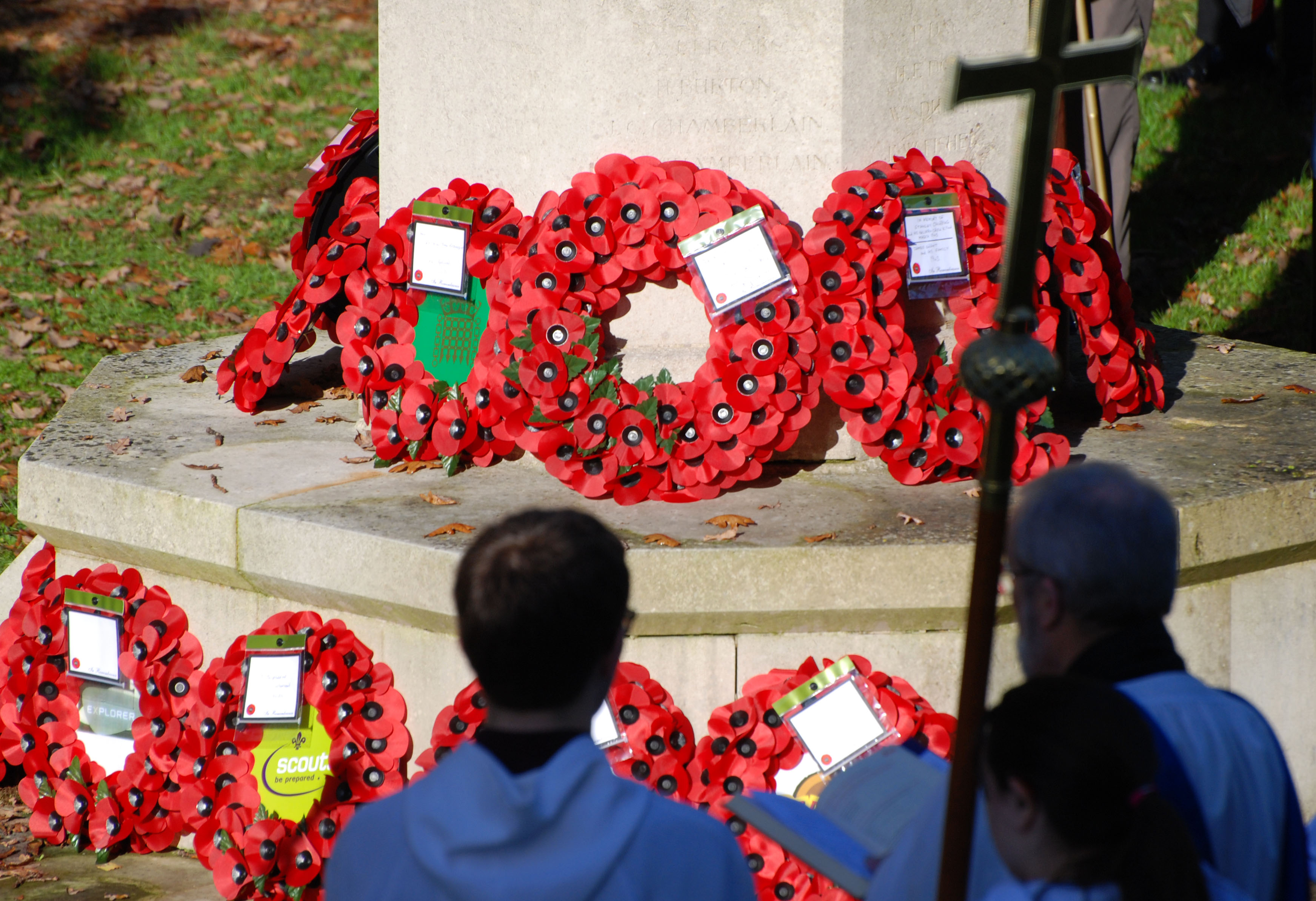
At the going down of the sun – Remembrance in Wokingham


               We marched as usual to All Saints Church for 3pm, and marched back at 4pm to the War Memorial in the Town Hall.  The All Saints service was well attended, as we sang well known hymns including  I vow to thee my country and Now thank we all our God.

               As we placed wreaths in the Town Hall and held the silence between the bugle notes I could only think of Afghanistan. How many more deaths will our forces suffer there? How much longer before the policing tasks can be undertaken wholly by local personnel? 

              It was a bitter blow to learn that on the very day we remembered all those who have made the ultimate sacrifice, another of our brave soldiers was killed in Afghanistan.  We need to draw our involvement there to a close. As Northern Ireland showed, deeply troubled countries need political initiatives to stop or limit the violence.

              Many people turned out for Remembrance Day. We all felt we wanted to say a big thank you to past generations who had to fight for the freedoms and very survival of our country. We will also have had our own  thoughts about the current conflicts.

               I would like to thank all who organised the event and who participated to make it such a moving occasion.

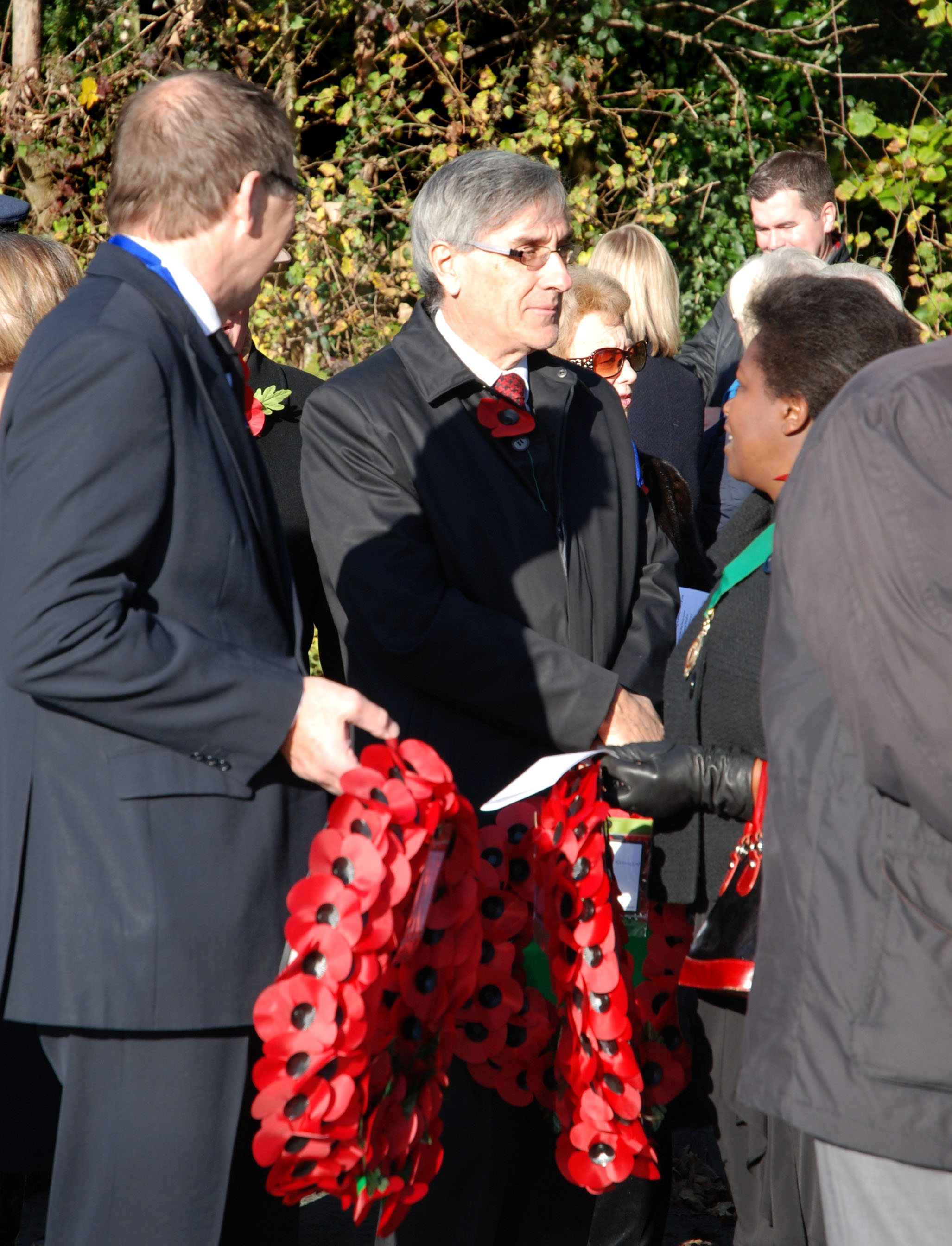
We will remember them – a drum head service at Burghfield


We assembled before 10 and marched from Hatch Gate to St Mary’s Church. At 10.40 the familiar sound of the Chinook came overhead. The noise and power of that aircraft reminded us of pain of war, and the  losses our country has experienced  in recent days and years in Afghanistan.

We were fortunate that the sun shone as we joined in our out door service. The Church is undergoing refurbishment.  It was a moving occasion, as we placed wreaths on the Memorial in the Churchyard.

I would like to thank all who organised it, and the many hundreds of people who turned up to j0in in the march or to watch the spectacle. Burghfield acknowledged its special relationship with today’s armed forces. The dangers they face were uppermost in our minds. People wished to thank our armed forces for their courageous sense of duty.

Images courtesy of Kevin Butler:


Some questions for the BBC


  Lord Patten, on behalf of the BBC Trust said:

“At the heart of the BBC is its role as a trusted global news organisation…. (George) offered us his resignation because of the unacceptable mistakes and unacceptable shoddy journalism which had caused so much controversy…. He’s behaved as editor with huge honour and  courage…George had set on putting in place a number of changes, which will be required in this great organisation and it’s a tragedy that he was overwhelmed, as we all were to a great extent, by these events….”


Lord Patten has subsequently  suggested that there needs to be substantial change and reform of the BBC, and has attacked its top heavy management structures.

The questions posed by the BBC news and current affairs coverage include:

1. Why did they have   a long record of failing to offer reasonable air time  and fair treatment to Eurosceptics? Why did it take external studies to reveal the shortage of airtime given to critics of the EU, the adverse way they were introduced and treated, and the more frequent interruptions they suffered?

2. Why are critics of global warming theory either ignored or treated as cranks, when there is still serious scientific and economic debate about the causes of climate change, the extent of it  and the best way of responding to it?

3. Why does the BBC normally interview people from a left of centre perspective – demanding more expenditure, higher taxes, more government  intervention – rather than from a right of centre perspective, asking people why they don’t cut taxes, control spending and reduce the role of government? Shouldn’t a balanced broadcaster do a bit of each?#

4. Why are losses, unusual tax arrangements, financial engineering in the public sector treated more leniently than similar things in the private sector?

5. Why did all the layers of BBC management fail to instill into Newsnight after the Savile crisis the need to investigate thoroughly and present a case with evidence to back it up where there is plenty of evidence, and to cancel an enquiry where there is insufficient evidence?

6. Why, after  the failure of the Newsnight team on the Savile issue, did management not require stricter reporting and higher standards for future work?

7. Which managers approved the Macalpine piece? Had anyone on Newsnight read the Waterhouse Report which had looked at these allegations years before? Had they seen the comments on their witness? Why did they fail to put the allegations to the person they were  falsely accusing? Why did they tweet out that they would be revaling a top tory paedophile, only not to name one? Why did they not expose again the actions of Labour Clwyd County  Council, which was responsible for the children’s home and the social service department in question? Why did they not remind us of the 7 people who were successfuly convicted of crimes in the North Wales abuse tragedy, none of whom were prominent Conservatives?

8. What changes did Mr Entwistle wish to put in place? Why did he not tell the Select Committee or the Today programme about these?

9. If Mr Entwistle “exemplifies the highest sdtandards of public service broadcasting” why did these obvious errors occur on his watch?

10. What is the BBC going to do about its top heavy and clearly ineffective management?  Shouldn’t the editors of flagship programmes be responsible for their journalistic output, discussing it with lawyers and others where necessary? Isn’t the only other person who must have a view in difficult cases, the Editor in Chief?


12. Why does Mr Entwistle get such a large pay off when he has done the job for such a short space of time and decided to resign because he did not think he had done or could do the job well enough?

          The BBC Trust needs to tell us what value we are getting for the all the expensive layers of management in the BBC. They need to tell us who is responsible for controlling editors whose journalistic standards are not high enough, or who is responsible for appointing them.