John Redwood's Diary
Incisive and topical campaigns and commentary on today's issues and tomorrow's problems. Promoted by John Redwood 152 Grosvenor Road SW1V 3JL

Anyone submitting a comment to this site is giving their permission for it to be published here along with the name and identifiers they have submitted.

The moderator reserves the sole right to decide whether to publish or not.

MPs, the establishment and expertise

The Horizon scandal is a good extreme case of what can go wrong when too many Ministers and MPs accept official advice and believe experts, only to discover later that the official advice and expertise is badly wrong and doing grave harm.

I am all in favour of expertise. If I was ill I would seek advice from a doctor as they know so much more than I about diseases and health problems. I would also be aware of the need to ask what the side effects of treatment might be and  what the record of success has been if treatment was proposed as ultimately I would have to make the decision about what to do.

Valuing experts does not mean that experts are always right. Indeed, in the areas I know best where I have some expertise of my own I am well aware of the divergence of opinions amongst the experts. This makes a Minister’s job both very interesting and very challenging. Advisers advise and Ministers decide. Sometimes a Minister needs to ask for a second opinion or a different expert view. Good Ministers are generalists but they have a sense of when the expertise is well based and when it could let them down. Good Ministers also wish to achieve good results for the public they serve. That too can demand changing experts to get a better answer.

I and a few other MPs, impressed by the work of  James Arbuthnot, asked questions about Horizon from early days of the problems emerging. We all knew good honest local PO managers and could not believe some of them were accused of fraud and false accounting. As we realised the numbers involved I asked how senior managers of the Post Office and senior officials in the sponsor department could think there was suddenly a big outbreak of fraud around the same time as a new accounting system was introduced. It was also strange that no evidence came forward of these alleged fraudsters suddenly having bloated bank accounts or stuffed wallets of their own, going on a  spending spree from the profits of crime.

It was frustrating that so many senior officials and Ministers stuck to the Post Office line.  In future blogs I will look at other very worrying examples of where establishment thinking based on errant expertise is doing damage. As readers will know, I have been challenging establishment thinking over inflation, growth, reductions of CO 2, energy policy and migration amongst others. When people say they want change in the way we are governed, they are often seeking change in the controlling theories and policy prescriptions. When all the main parties accept the same expertise which turns out to be wrong democracy is damaged.

My calls for Post Office apologies and compensation

Post Office compensation

I am glad the government has now signed off on a compensation scheme for Post Office managers wrongly accused and badly treated by the Post Office over the introduction of the Horizon computer system. Some were made to pay large sums to the Post Office they did not owe and some were falsely accused…

Some compensation at last for Post Office managers

I reproduce below a letter from the Minister about compensation for those caught up in the Horizon software problems. I have been pressing for a long time for proper compensation.   Dear Colleagues, Post Office Horizon Compensation I know that colleagues will welcome an update on compensation for postmasters who were wrongfully convicted on…

Compensation for Postal Managers

I have pursued the issue of compensation for Postal Managers who were wrongly accused when the new computer system failed to account properly for their businesses. The letter beneath gives us the latest update on compensation, where I have urged the government to be generous and get these matters settled:   Dear Colleague, POST…

My support for the Government’s new policy to ensure that the Post Office properly apologises and compensates every post master wrongfully convicted

Sir John Redwood (Wokingham) (Con): I am grateful to the Minister for changing the policy. I have been a long-standing critic of past Governments and Ministers for not telling the Post Office to apologise and pay up, and I encourage him today to ensure that the Post Office apologises properly, and pays up quickly and generously.  …

The Post Office systems scandal

It has taken many years, much suffering and plenty of legal bills for the Postmasters to get justice over the Horizon scandal. MPs including myself told past Ministers there was no sudden outbreak of mass criminality by Postmasters, but there was a systems and accounting problem created by new computers. This has at last…

Justice for Post Office managers

I was pleased to learn that at last the Post Office accepts its accounting software was faulty and led to wrongful accusations and cases against Post Office managers. Various MPs took up these matters without success, as in this 2014 debate to highlight the problem: Post Office Mediation Scheme, 17 December 2014 Mr John…

Green campaigners encounter consumer scepticism

Electric cars are not selling well to individual buyers. Few people want to buy a heat pump. Green campaigners insist these products are essential to save the planet. They plan further taxes subsidies, regulations and bans to force people to buy things they do not want or cannot afford. To succeed the green revolution needs to be a popular revolution with people wanting its products.

There are various strands to scepticism which Green campaigners need to take seriously. Shouting back at people that they are climate deniers is no way to win them over and is usually wrong. Let us first look at the science.

I know of no one who denies carbon dioxide is a greenhouse gas or who denies manmade carbon dioxide is increasing. Most accept climate  has changed a lot in the past and is likely to carry on changing. The issues many have with the “settled science” include

1. Green scientists do need to explain to the wider audience what caused the warm periods and ice ages before mankind appeared. How will these  same forces which must still be around affect our temperatures going  forward?

2. In historical times before industrialisation and the adoption of coal,oil and gas as prime energy sources  by people what caused global warming and cooling? Could these forces still be around?

3. How does variation in solar intensity, solar flares and other changes in our main light and energy source affect past earth temperatures.? What are the forecasts for sun activity going forward? Will this make us warmer or colder?

4. Why do wind and current  patterns shift? What is the forecast for these going forward, as they can have an important impact on weather in different countries and continents.

5. What is the role of water vapour and what changes are likely in its pattern in future? Water vapour is another very common greenhouse gas.

Future temperature levels will be the result of the interplay of the past natural forces that produced climate change with the manmade additions to  greenhouse gases. To persuade more people to join green campaigns they will need persuasion that manmade CO 2 will be the deciding variable in future temperatures. This is presumably based on the thesis that past natural forces like solar activity and seismic activity will not be dominant forces or that their net impact will be neutral in ways that it was not in previous eras.

The problems with an electric car

I reproduce today the views of an EV car owner sent to me recently. He agreed I could  share this with you. As it reveals this is someone who bought into the green  idea and wanted the EV to work for him. Experience was very disappointing. I have shortened and anonymised it:


“Some 5 months ago I was in a position to change my Petrol vehicle (Peugeot 3008) for an electric one. Unfortunately the 3008 has only just been released as a Hybrid and the full EV is not due until later next year (2024). As a result of this I was obliged to go to the E2008 which is a smaller vehicle. Despite this the E2008 was considerably more expensive than the petrol 3008.


The cost of a home charger was nearly £1000 extra to have installed. Even the domestic “granny” charger was another £250 to charge at home until a home charger could be installed.


I try to have “green thoughts” about the environment where possible and use Solar Panels and have recently installed a Combi Boiler.


However after using the Electric car for 5 months I have reverted back to a petrol driven model due to the following reasons.


My wife and I had range anxiety. Most manufacturers quote a range of in excess 200 miles. In practice the best I could get was about 150 miles in fair weather. With the recent cold weather I found that range could drop down to as little as 110 miles.

We had to make a number of trips to towns  about 120 miles away  and required a charge on the way home. Of the 5 trips we made we found that none of the high speed type were working, after trying 5 different chargers we finally found a charger which was at a hotel. When we arrived at the hotel the charger was in use and the guy had only just started charging so we knew it would be about an hours wait. Also there is no queueing spaces so we had to double park until the space became free.


On our most recent trip away I wanted to use one of the regular chargers only to find there were already 3 cars waiting to use the one charger.  This would have meant waiting up to 3 hours before I could connect.


I also had a friend visit from Slovakia and we decided to take her out shopping by car. We knew that it would be risky trying to complete the journey without recharging on the way home. We tried 5 different chargers and found that they were not working.


We decided that the only way was to hope for the best and try to get home without the charge and made it home with just 11 miles spare and no reserve having turned off the heater on the way home to save energy.


On these occasions we were in contact with the Network Operators who tried to be helpful but could only suggest using low power chargers at supermarkets which could mean a stay of 7 hours, plus the devices have a maximum stay time of 2 to 3 hours without a penalty of £100-150 for an overstay.

(He gave up on the EV )

Unfortunately I lost about 30% in the trade in of my electric vehicle after just 5 months and had to pay a premium of about 20% in buying a 2 year old petrol model.

Reply: This explains why EVs are a hard sell to non fleet buyers. The motor industry has here lost a customer who bought into the idea but was thwarted by the costs of the product and the difficulties of recharging when away from home.


The single market helps EU decline

I was a fairly lonely voice amongst MPs saying I wanted out of the EU single market as well as out of the EU. I did not want a so called free trade deal with the EU single market on the poor terms Mrs May negotiated . I would have been happy with World trade Organisation most favoured nation terms which  we would have got  automatically without a deal .

I came to this conclusion from my experiences running a major international industrial  group of companies before entering Parliament, and from being the UK’s single market Minister in the run up to the laughingly named completion of the single market in 1992.

My business life taught me a UK major company was not welcome as an investor on the continent, where there remained many barriers to acquisition of an existing business and to greenfield activity. The Group I ran continued to find it easier to invest, sell product and make money in the USA, Australia, and Asian countries  than in France or Germany.

As single market Minister I saw how the so called single market project was a massive power grab.The EU proposed the takeover of regulatory and lawmaking powers in sector after sector. It grew single market competence to cover employment  policy, health and safety, environmental policy, transport and much else. It regulated  to gain control. It usually did so in a prescriptive way, laying down how products must be made to the recipes  of the existing dominant continental companies who influenced the drafting. It was anti innovation and dismissive of small business and the needs of the self employed.

The CEBR has just produced its latest forecasts for world GDP out to 2038. These show that the EU’s share of world GDP has slumped from 33.5% in 2008 to 23.6% today. They expect it to fall to just 19% by 2038.  This should be no surprise as EU growth in the last fifteen years has been very weak. The EU has watched as the US has built seven mighty tec global companies that dominate the digital revolution.The UK needs to break free from EU anti enterprise anti innovation rules and go for new ideas and faster growth.It is good news that the UK now does not have to follow the last three years of yet more EU rules stifling business and markets.The UK needs to speed its own revival with pro growth policies now it is free to do so. It should allow companies to innovate, not tying them down with rules on how to design and make things.


More thoughts on controlling spending

There are many other areas where spending can be reduced or better targeted beyond the big ones mentioned yesterday.

As I have often urged the Bank should stop selling bonds at big losses for taxpayers to lay. Hold them to repayment to cut the losses.

There are still monies being sent as overseas aid to successful and or well armed countries with nuclear programmes. Why is still true? Why are we still paying money to the EU several years after leaving? There should be a push back on their calculations and interpretations of the Withdrawal  Agreement.

Who does the UK spend so much on highly speculative technologies for decarbonisation? These can be developed by the private sector or led by other states with more need to decarbonise than us where they are clearly not yet commercial.

Why does the UK have a high tax and subsidy model when it comes to energy? The UK ‘s very high carbon and energy taxes loses us industry here and with it costs us tax revenue. Industries like steel that cannot afford our high energy costs and taxes then need substantial subsidy payments to keep some of the industry .Cut the taxes and end spending on the subsidies.

Happy new year

“Pour me another,  lets toast the new year
Here’s to a better, put  fizz in our cheer”

Tonight’s  not for sorrows, nor mulling old wounds
Come banish our troubles,  lets sing some new tunes

Caught in the present is a moment to choose
To look forwards or backwards, to win or to lose

If your comfort is  clinging to all that has past
This precious moment of hope will never last

Grasping  the future and its  unknown way
Can bring success and many a wonderful day

The past is well trodden,  we know the ending
The future is for moulding, shaping, bending

As last year expires,  hopes and promises broken
Change things this time , leave pledges unspoken

So pour me another, drink to the new year

Here’s to a better, put fizz in our cheer

If your life is a drama  you can change the plot
If your friends are the  actors you can recast the lot

If people around you are holding you back
Tell them you’re changing, to a new track

Lets hold on to clichés that drive us to more
Lets venture out from  behind that closed door

We can stretch for the stars and strive for the sun
We can soar with  the wind making life more fun

You are only out of the game  when you give up the play
So write some new words so you have a new  say

Aim for something better, embrace the best
You may fall short of target  but gain from the quest

So cast off the old. Live a new dream
Grab the future foretold. Mine a new seam

So pour me another, lets toast the new year
Here’s to a better, put fizz in our cheer

Trust that  tomorrow can be better than today
Let the future  empower us with its  new way

Lets cast off from austerity, from all those extra  taxes

Lets go for growth as austerity relaxes

Lets make our own minds up and set our own pace

The future is only ours, my friend, if it we  embrace

Tonight is the night is to put on a new face


So pour me another, lets toast the new year

Here’s to a better, put fizz in our cheer.


The government should resolve to spend less on wasteful plans in 2024

The main reason we are running a large deficit is the public sector is spending too much. Controlling spending better is important to get the deficit down, to allow more tax cuts and promote more growth. There are four main areas where less can and should be spent.

  1. Public sector administration and civil service numbers.  Between fourth quarter 2019 and third quarter 2023 civil service numbers have increased by 69,000 and other public administration by 41,000 making a total rise of 110,000. The total is now 1,175,000. Productivity has slumped during this period of rapid additional recruitment. There has also been substantial grade creep with many more senior and higher paid people in the mix. The civil service is too keen on additional regulation, more international obligations and more meddling with people’s lives and business activities. Do less of it.
  2. The high costs of making provision for large  numbers of low paid economic migrants. Whilst this may be cheap labour for companies it is dear for taxpayers. Every additional 250,000 need a new city the size of Southampton to live in. That means many new homes, schools. surgeries, more utility capacity of all kinds. At an estimated £250,000 each of public sector capital and early years revenue spending 100,000  new additional  migrants cost £25bn.
  3. The high welfare costs of many more people registering as unable to work. Whilst it is important we have a generous system for those disabled who cannot manage a job, it is difficult to believe so many more people each year are being added to this category. With more support and better benefit administration more could get suitable work.
  4. Local government wasteful spending. In so many places as in Wokingham local Councils are spending so much money on narrowing roads, making unhelpful changes to road junctions, and  introducing cycle lanes where no-one uses them as part of their anti driver policies. Many Councils have been adding to property and other investment portfolios at foolish prices and finding in some cases they cannot rent them out at a rent that delivers any return for taxpayers. Some  Councils have expanded their administrative staff numbers and pushed up pay for  senior personnel.

The government says it wishes to tackle these problems. There are remedies it can put in place for 2024 to start to make a difference  and bring the growth rate in public spending under better control.

  1. Place an immediate ban on additional external recruitment of personnel for the civil service and other public administration. If an additional person from outside is needed a special case should  be signed off by a Minister. As people leave to change jobs or to retire so the departmental organisation chart should remove some jobs and amalgamate others. There should be some better  control over the ratio of senior staff to the rest.
  2. Implement the plans to cut legal migration by 300,000 and step them up to reduce it by more. The aim should be to get it below 2019 levels as promised in the Manifesto. As it comes down so the large budgets for extra public sector housing and services can be reduced.
  3. The government is proposing extensive further welfare reforms to help more people back into work. This needs speeding up as the numbers who cannot work again continue to surge.
  4. Put tougher controls on local authorities borrowing to buy assets and make investments. Central government should decline to fund anti driver schemes.


Ceasefires, negotiations and peace treaties

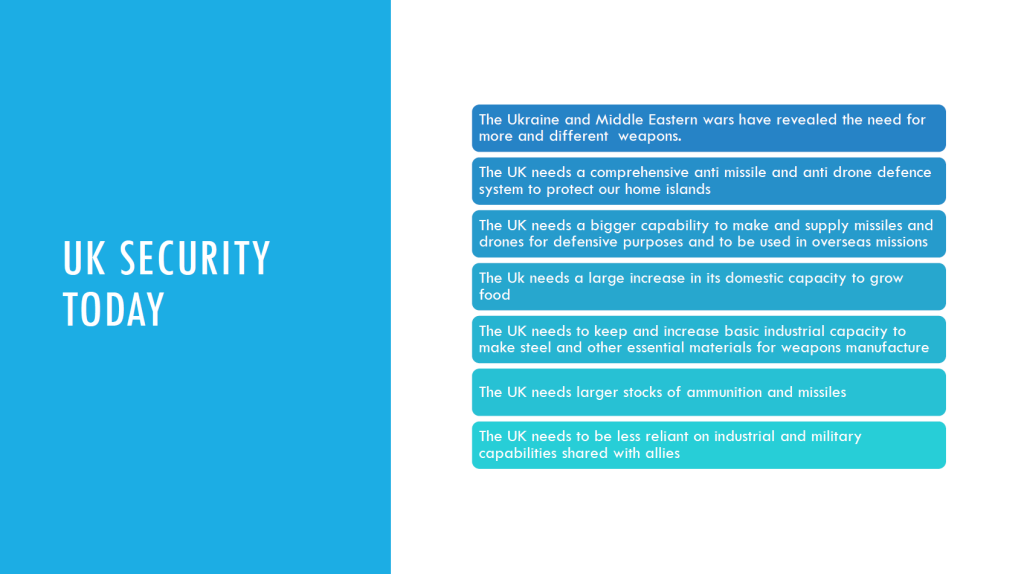
The deaths of Israeli citizens in their own homes at the hands of Hamas shocked the world. Now there are big concerns about the plight of civilians in Gaza as Israeli forces seek out Hamas fighters in crowded urban areas and close to hospitals. Meanwhile death and destruction rain down on the areas of Ukraine close to the battle lines. Neither side can gain an advantage sufficient to shift  decisively the heavily defended positions along the frontier between two armies.

Most wars end with a negotiated ceasefire and a subsequent peace treaty. Some after huge damage and death end with unconditional surrender of the losers.

It looks as if NATO and the EU will stay out of these two ugly current wars. Nonetheless their financial and military support is essential to Ukraine and important to Israel . This means President Biden has some leverage over Israel and Ukraine and may well be considering using it to ponder  options to negotiate. The President looks as if he would prefer war off the agenda. On Ukraine he is being harried to spend less by some Republicans and faces in Mr Trump an opponent who wants peace.

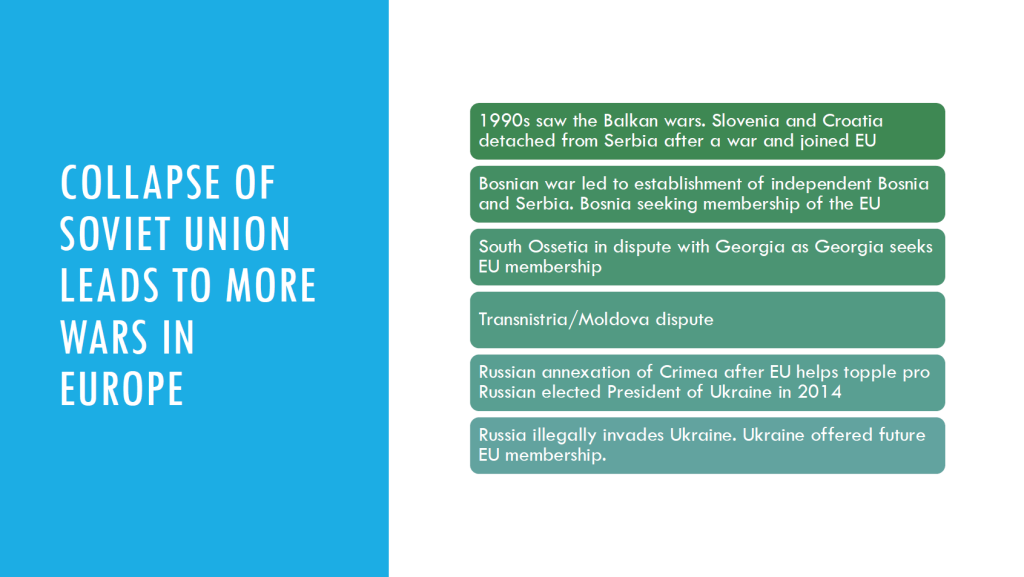
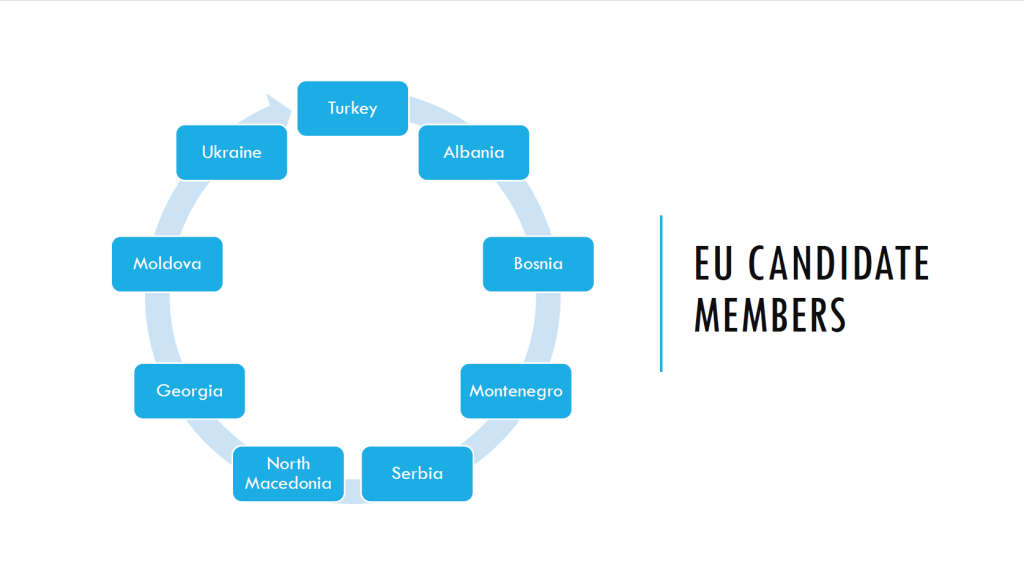
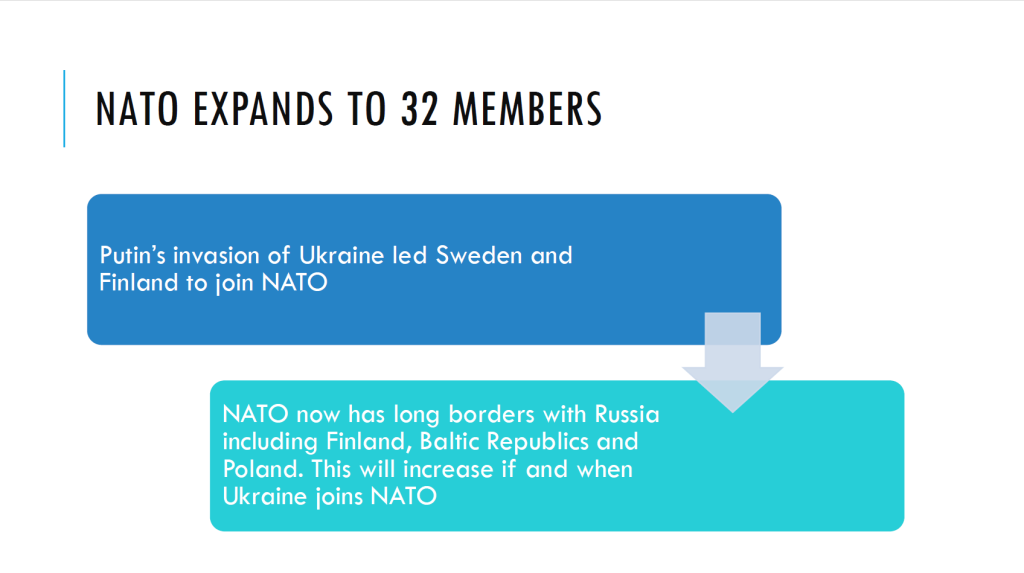
The EU is struggling to get agreement to all the money Ukraine needs. The EU was involved in the overthrow of the elected President of Ukraine in 2014 for being too pro Russian. The EU offer of future membership of the EU to Ukraine is seen as a further provocation  by Putin following the expansion of  NATO.

Many call for a ceasefire in Gaza and think the US and NATO could require one. The truth is Hamas are not ready to return the hostages and stop rocket attacks on Israel, minimum requirements for a ceasefire. Nor is Israel willing to stop fighting  Hamas in Gaza despite civilian casualty levels. Until both  shift they will carry on fighting whatever others want.

Our European heritage

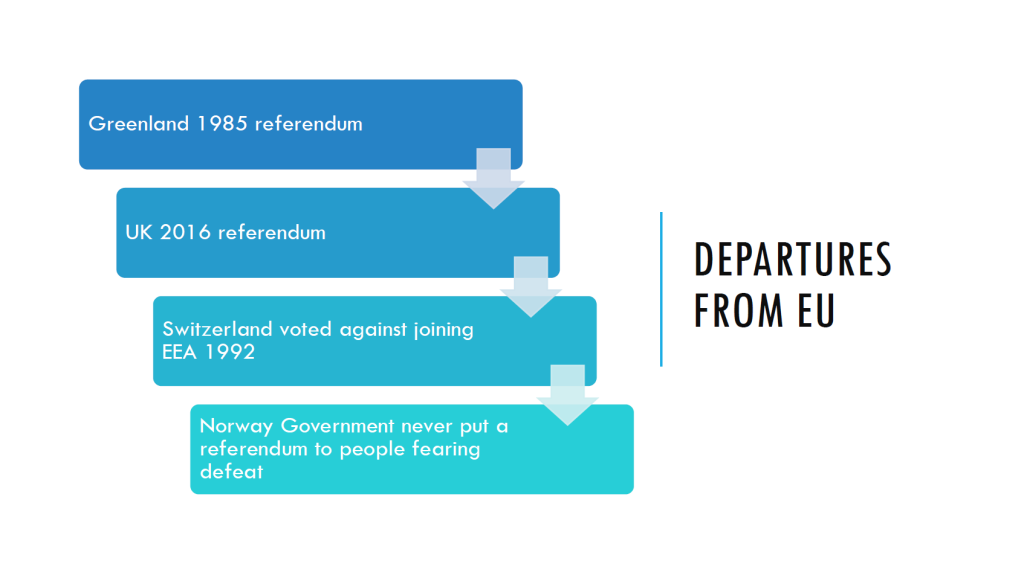
Many of us who v0ted for Brexit stressed that we wished to be friends with the continent, to trade with our neighbours using most favoured nation terms under the WTO, and to do many things  with them by mutual agreement in sport, culture, defence, foreign affairs and the rest . What we voted to end was EU control over us, EU law making, a relationship driven by immutable Treaties and by a foreign court.

None of us doubt that our past has been  very interwoven with our European neighbours, and none of us doubt our future will also contain many European engagements and links. What does annoy many Brexiteers is a false economic and historical narrative from Remain politicians that our links with Europe have always been positive and EU style laws and controls are essential for our peace, prosperity and freedom. Any normal reading of history will show how one sided that view is. Today the EU seeks to resolve tensions by legal argument, but not so long ago Europe fought over these matters.

The latest trade figures show that contrary to Remain forecasts our trade in goods and services combined has risen with the EU since we left. It has risen more with non EU, as it was doing in our later years as EU members. Non EU now accounts for 58% of our trade, though both EU and non EU are welcome.

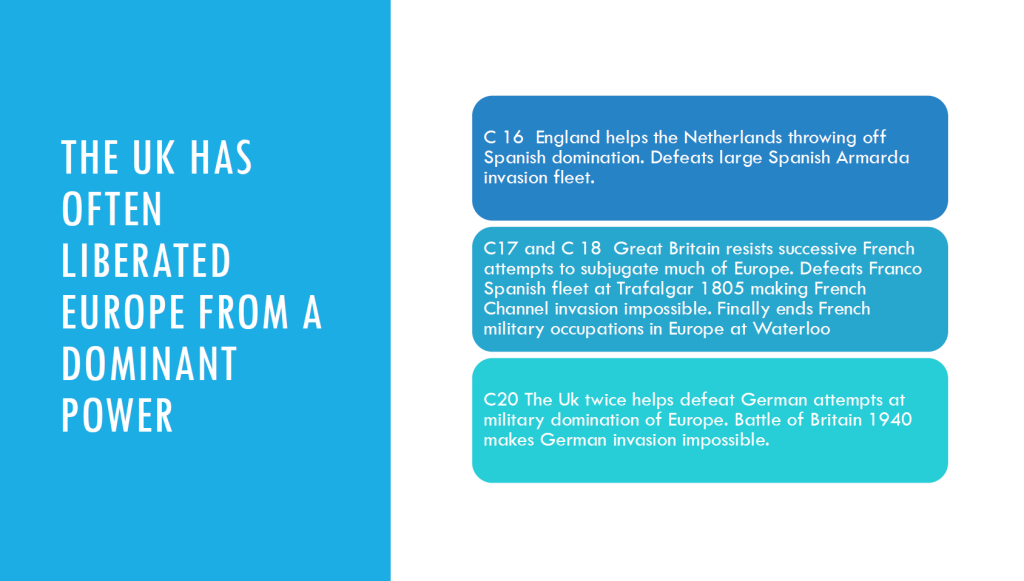
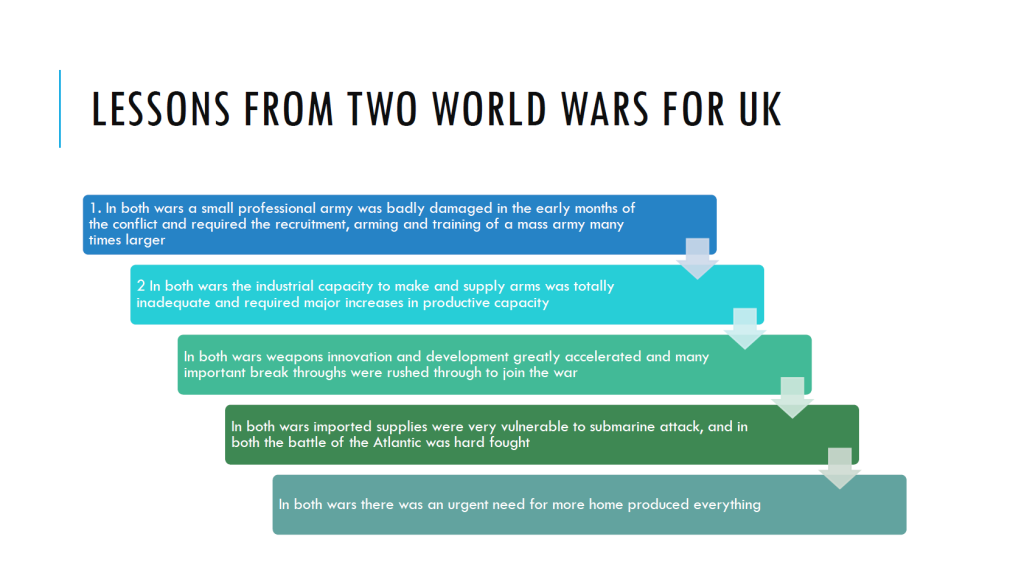
The UK has a global destiny and has had a global role for several  centuries. That came to me from my reading of much European and world  history. That also taught me that too many times  our intense involvement with the continental European countries   forced us into wars that  were often as damaging to them as well as to us. We got involved in the struggles for domination by the great continental powers, and were often helping smaller countries to resist them. I am going to write some pieces to explore more of this theme over the weeks ahead. Today let us start by remembering that the UK often suffered pre 1945 from invasion, from raids and occupations by European powers, from annexation of our lands and from systems of slavery and feudal exploitation that came from the continent.

The Roman invasion led to seizure of lands and wealth, to a slave based society with inferior jobs and opportunities for most of the British who were unable or unwilling to join the Roman governing elite. The Viking raiders plundered, burned, and assaulted in their many raids and wars. The Norman French comprehensively chronicled their robbery of the lands and wealth of the kingdom for their own settlers, and placed a feudal yoke upon many British inhabitants of these islands. The Spanish attempted conquest in 1588, the French tried under Napoleon and the Germans under  Hitler amongst the more serious attempts at violent overthrow of our governments. Had any of those succeeded we would have lost our freedoms and right to self government.

The UK’s involvement in European  wars has been too frequent and damaging, leading to too much loss of life and diversion of effort from more productive peace time uses. Today it is welcome that the EU seeks to resolve the tensions between EU states by legal and political process. There are also dangers from the rise of European nationalism that the EU itself will get into disputes with its neighbours. Currently the war in Ukraine reminds us how damaging European wars can be.

The UK should be careful not to seek to express strong  views about how the continent is governed, and should be reluctant to be drawn into continental conflicts and arguments. The UK cannot and should not seek to  impose a  view about all the border disputes, religious struggles, policy rows and neighbourly disagreements that still beset the many nations that have land borders with each other on a continent packed with many states. They need to resolve those themselves through peaceful means .

The Germans who have a big influence on EU policy direction used to argue with me to relent my opposition to the UK joining the Euro. They used to think the clincher argument was that the UK would have no influence  over it if we were not in it. They refused to grasp I had no  more wish for a say in the future of the Euro than in the yen or the rupee. The UK should take a global view based on a good mixture of our national interest and the best way forward for freedom, democracy and free enterprise worldwide.