Travel Advice for Gaza and Israel

The Government has provided updated travel advice to Gaza and Israel which I have reprinted below.

Our  Travel Advice has updated to advise against all travel to Gaza and to nearby areas of Israel and to advise against all but essential travel to Israel. (www.gov.uk/foreign-travel-advice/israel). We will keep this under close review. We are telling any British nationals in any areas affected by the fighting that they should follow the instructions of the Israeli Home Front Command.

My officials are working around the clock to support affected British nationals as our utmost priority. Our consular assistance must alas include support for the families of British nationals reported dead or missing. We are also supporting those who require new passports, or Emergency Travel Documents, or other assistance with leaving Israel and, where possible, facilitation for the Rafah border crossing between Gaza and Egypt. We are also asking affected British nationals to register their presence via (https://www.register.service.csd.fcdo.gov.uk/israel20231009/tell-the-uk-government-youre-in-israel-orthe-occupied-palestinian-territories) so that they can receive FCDO travel updates. We are aware that commercial airline capacity out of Israel is constrained and that some British nationals are having to delay their departure.

As mentioned above, any constituents who remain in Israel should follow the instructions of the Israeli Home Front Command. We are working with the Department for Transport and the Israeli government to keep commercial flights running. We are available 24/7 should any British nationals need to contact us, including to update their contact details or location. Our Crisis Response Centre is fully operational and we have embedded Police and other government liaison teams. British nationals in Israel or the Occupied Palestinian Territories requiring consular assistance should call the following numbers: +972 (0)3 725 1222 or +972 (2) 5414100. If they experience technical difficulties or if they are in the UK, call +44 20 7008 5000.

THE RT HON. JAMES CLEVERLY MP
Foreign, Commonwealth and Development Secretary


How has devolution done?

Scottish devolution when voted on at the end of the last century was claimed to be the way to allow Scotland to perform better than England in public services and economic growth when they could run their own services and boost their tax revenues.

I have no intention of arguing we should seek to reverse a democratic decision taken in a referendum, and many Scots may well have voted for more Scottish decision taking however it worked out. It  nonetheless sheds an interesting light on policies towards higher spending and higher taxes to see what Scotland has bought by choosing both. It is a perfect experiment compared to England over the last 23 years.

Scotland has imposed a higher 21% intermediate Income tax rate, a higher higher rate at 42% and a higher Top rate at 47% compared to the rest of the UK at 20%, 40% and 45%. This has helped Scotland to afford much higher public spending per head, though the bulk is paid for by a bigger grant from UK taxes. Scotland last year spent £13,881 per head on public services  compared to £11, 549 in England.

If we take the two key services of health and education we see little advantage from these higher sums. Scottish pupils on average are well behind English ones in maths and science judged by international secondary school comparative  assessment, and similar in English. The NHS in Scotland has more long waits to get NHS treatments than England and has a bigger percentage on waiting lists.

Meanwhile there has been no boost to growth from higher spending and taxes. Since 2000, the first full year of the Scottish Parliament, Scottish GDP has advanced 86.6% in cash terms compared to 106.2% for the UK as a whole.

Scottish voters need to ask some tough questions of their government. Why aren’t public services better for all the extra money? Why is economic growth lagging so badly? It also warns England that a further hike in taxes and public spending would not deliver better results on this evidence.

Labour’s conference

So Labour wish to run large scale investment projects better than HS 2. They wish to halve the government’s use of consultancies, reduce the use of chartered planes for government Ministers and ensure more private investment is added to state investment to boost output.

This is not going to suddenly change the growth prospects, get inflation down faster or transform public sector management. Consultancies may be due a hair cut, but you cannot say how many you need until you identify what they do and whether  they are essential because  the civil  service does not have the skills and knowledge. Otherwise they should only be used where  they are cheaper and better than in house.

Cutting down on plane use may afford some small savings though rail tickets are also dear these days and chauffeured cars do not come cheap.  Most of us would like to see more private investment alongside or replacing public investment. The question is does the state identify enough projects that will earn a decent return to attract the investment? Labour’s wish to impose more windfall taxes will put off some private and foreign investors, reminding them that if their investment works the government will want to pocket more of the profits.

Labour promises us iron clad  fiscal rules. They want to double up on Treasury forecasts and an independent Office of Budget Responsibility . They will make every decision on tax and spend dependent on a report and forecast by the OBR. They should have learned that that very system allowed a huge increase in spending and borrowing over covid when they backed government spending plans and urged more. It then led to big rises in tax revenues  which they attack.  Chancellors have to make judgements as they will be blamed for the results. The OBR needs to amend its models so it can forecast the levels of tax revenue and borrowing more accurately than it has been able to do in recent years. We need an accurate guide to help steer the ship. How would they restore lost productivity with public sector Unions keen to expand workforces?

Visit to Maiden Erlegh School autism hub

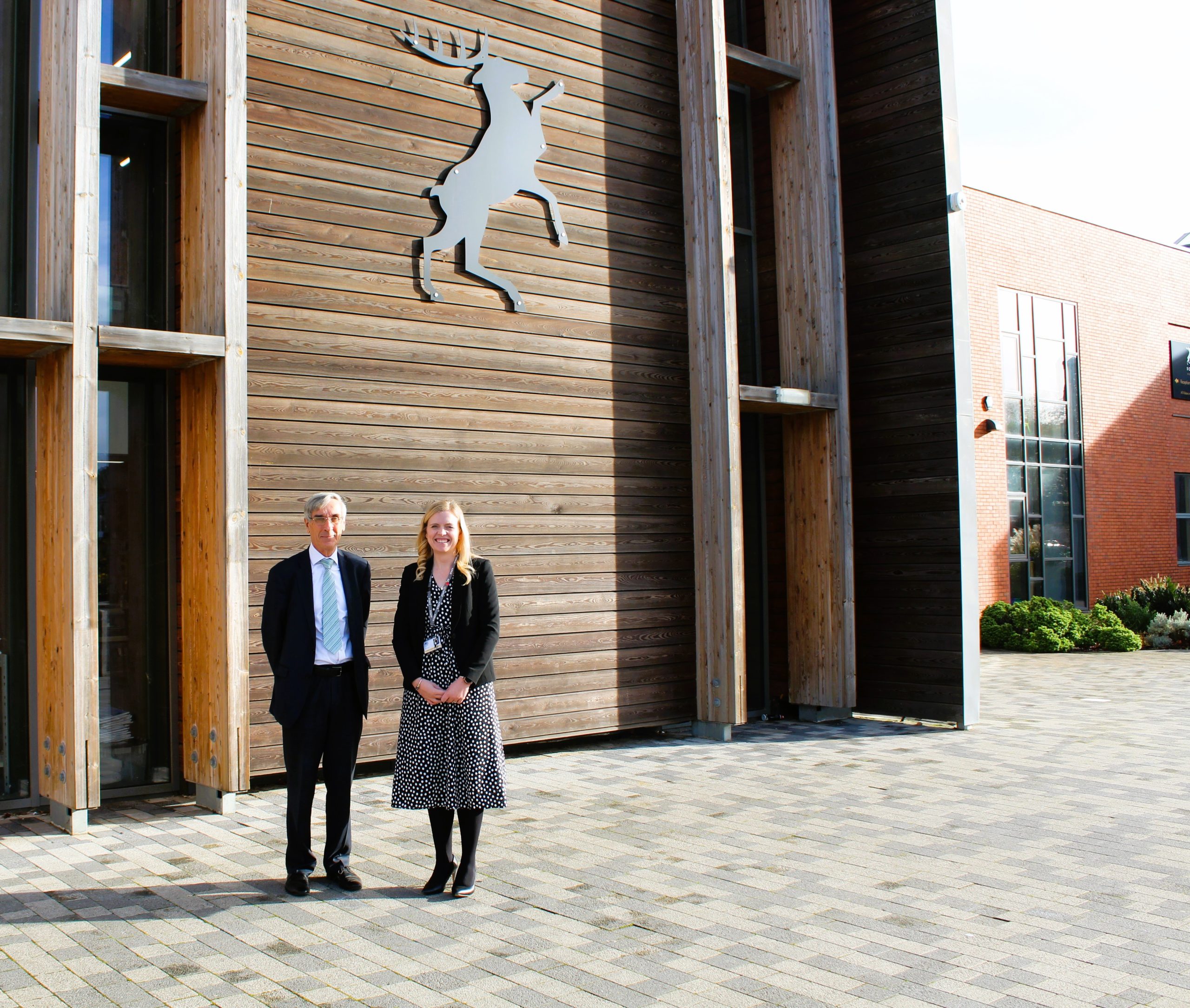
I was pleased to attend the opening of the new unit at Maiden Erlegh School on 29th September. The new unit offer staff and pupils a great new space for their activities and reflects the effort Maiden Erlegh puts into offering a good service and plenty of support for pupils with additional needs. I wish them all well in the new Centre as the school  expands, offering a good education to more pupils.

Dinner with Iain Duncan Smith and Wokingham Conservatives.

On Friday evening local Conservatives met for an excellent dinner at the Sand Martins Golf Club. Our guest of honour was Iain Duncan Smith

Iain spoke to us as one who has dedicated so much time, effort, and fund raising to working with a range of charities to give people a better chance in life. He  has worked with those who help people off drugs and alcohol, help equip people for work, assist those who are disabled and and young people who need access to sport, recreation and other facilities. He was the architect of the main welfare policy, making it always worthwhile to get a job with help from the Employment service to do so.

He gave us the benefit of his experiences, told us an amusing story about his time as a senior Minister, and set out how a Labour government would be damaging to our country.

Raising UK public sector productivity

The Taxpayers Alliance published a study showing that civil service numbers rose by 101,440 between 2016 and 2023. This was an increase of 24% and a bigger increase in numbers than the total strength of the British army. There has been a particular growth in top grades and the higher salary policy oriented posts, with 2,050 paid six figures and 195 paid more than £150,000.

In 2021-2 44,220 people left the civil service, or 8.6% of the headcount. 69,400 new people were recruited. This demonstrates that a decision to freeze recruitment can make a substantial difference quite quickly to overall numbers and to payroll costs. Ministers running such a scheme should be looking for considerably more than the 0.5% productivity gain suggested in the Chancellor’s speech,. given the large 7.5% fall in productivity since 2019.

Of course senior departmental managers should put cases to Ministers to allow external recruitment where a job is crucial and the skills are lacking in the current workforce on the departure of a key member of staff. In most cases there will be plenty of talent in the civil service to find an internal promotion. In many cases the departure of a staff member to retire or go elsewhere will trigger a review of whether that role can be abolished, amalgamated with another or allow the removal of some other role when the person is pro0motoed or moved into the key role.

The Chancellor has proposed £1bn of savings . As the typical cost of employing a person is around £50,000 taking benefits and direct costs on top of salary that equates to around 20,000 fewer posts through natural wastage. This is half the level that could be accomplished in the first year of the programme.

The Chancellor says he wants to increase public sector productivity

The Chancellor in his speech to conference last week stated that he is  now onto the productivity problem in the public sector I have been highlighting:

He said

“We need a more productive state not a bigger state.

If we increase public sector productivity growth by just half a percent, we can stabilise public spending as a proportion of GDP. Increase it by more and we can bring the tax burden down.

Half a percent.

For those of us with private sector backgrounds that doesn’t seem too much, does it? In the public sector, I’m telling you, it’s harder – but we are up for the challenge.

So I’ve commissioned my deputy, John Glen, to restart the process of public service reform.

He wants to know why teachers say more than half of their time is not actually teaching.

…why police officers complain they spend longer filling out forms than catching criminals.

…and why doctors and nurses say they spend up to half their time not with patients but on admin.

Of course we need modern working practices and better IT. But the Treasury too needs to change its focus from short term cost control to long term cost reduction.

And we’re going to start with the Civil Service.

We have the best civil servants in the world – and they saved many lives in the pandemic by working night and day.

But even after that pandemic is over, we still have 66,000 more civil servants than before.

New policies should not always mean new people.

So today I’m freezing the expansion of the civil service and putting in place a plan to reduce its numbers to pre-pandemic levels.

This will save £1 billion next year.

And I won’t lift the freeze until we have a proper plan not just for the civil service but for all public sector productivity improvements.

That means, amongst other things, changing our approach to equality and diversity initiatives. Smashing glass ceilings is everyone’s job – not a box to be ticked by hiring a diversity manager.

But I’m going to surprise you with one equality and diversity initiative of my own, trust me you’ll like this one: nobody should have their bank account closed because someone else decides they’re not politically correct. We’ll tighten the law to stop people being debanked for the wrong political views.”

Comment:

The government should aim to recoup the lost 7.5% of productivity since 2020 as quickly as possible. Freezing civil service posts will both  help raise productivity as natural wastage brings numbers down, and will act as a stimulus to the senior managers of public services to hasten the restoration of the levels of productiv9ity hit in the last decade and lost so far this. There is a £30 bn saving to be won from just doing things as well as the government did in 2019.

Somethings are moving in the right direction

Readers know that I spend a lot of time urging changes and improvements to government policies in some areas. Often people write in  to say they agree and to complain that government does not. Conference this year shows that there are changes for the better that  offer a clear difference and superior choice than the Labour/Lib Dem policy.

Take the speech of the new Energy Security Secretary. She stated that she intends to source more energy domestically instead of relying on more and more imports as the net zero policy enthusiasts have wanted. She proposes more energy that is “home grown, clean and cheap”, essentials for stronger industry and rising prosperity.

She sees energy independence as ” our best defence”. She says she will back our own North Sea  “instead of relying on oil imports , as Keir Starmer would have it”. As proof of that she has already given the go ahead for the new Rosebank Field, an important future source of oil and gas, well paid jobs and plenty of UK tax revenue.

She promises us “the first large scale nuclear project since Margaret Thatcher’s government”.  She has moved the competition on to find the right company to develop and roll out many small nuclear modular reactors. Done well this could be a big boost for UK manufacturing, with plenty of scope to export as well as to install a number of these probably at existing nuclear sites where there is already a trained workforce facing the closure of an old nuclear  generator.

She reflected the change of direction over the road to net zero announced by the Prime Minister. “If we are to succeed, net zero cannot be something that is done to people, by a privileged elite” “We cannot force people to make wrong decisions for their families. And it is immoral to put forward policies that will impoverish people here, when emissions are rising abroad.”

She argued that as the UK produces 1% of world CO 2 emissions and China 30% more of the burden of adjustment must now be undertaken by the large emitters. She attacked the left who have made “Net Zero a new religion, showing condescension to people’s way of life “. She does not want to lecture people about eating meat, taking a foreign holiday or driving to work.

She recognises government can only get change if it takes people with them, and if the new products and services are affordable and popular.

All this makes much more sense than the command and control system based on bans, higher taxes and legal requirements.

Stop Wokingham Borough Council wasting our money

Wokingham Lib Dem Councillors claim they are short of money and are proposing cuts to services like refuse, litter and grounds maintenance which will be very unpopular.
So how come they think they can spend over £5 million wrecking California cross roads, one of the better junctions on the local road network? It is all part of their anti driver anti business approach, making it more difficult to pop into the shops or drive children to school.
They want to make our lives difficult and send us the bill, whilst  cutting the services we want them to do well.
Sign the petition against the roadworks.

The BBC behaves oddly

After ignoring me for many months yesterday the BBC  sprung into life and wanted my  views on the proposed change of law over the sale of tobacco. Why? I  have never written or spoken about this matter. I have not been lobbying on it, and there was nothing on my website or tweets that morning to arouse interest before they rang.

They seemed ill informed about the proposal as they asked about a proposal to ban tobacco. I explained the proposal was to increase limits on the sale of tobacco by stopping anyone under 14 from ever buying it during their lives, on top of the current ban on sales to anyone under 18. It only becomes a ban on sales for all after around 90 years have passed. It is not a proposal to criminalise smoking.  I said I wanted to hear how it would be enforced as retailers would need to be able to judge ages as the age of permitted purchasing went up, and would want to know what the penalties were going to be.  They then gave up  pursuing it. I reminded them that I set out daily views, and offer stories like the big losses on bonds by the Bank, the problems with carbon accounting and with some self defeating so called green products and services , and   the productivity collapse in public services which they ignore.

I was also telephoned and offered a BBC  interview last Sunday. I asked what it would be about and this was unclear. I said I could do an interview from home on line on the Sunday or at the conference on Monday, as they sounded keen to interview in Manchester. They said they would get back to me, but never did.  Why?

BBC Radio Berkshire did want an interview on rents, housing and the PM’s speech, which I did undertake yesterday morning with ten minutes  notice.