Business rates

The media have been running two popular causes in recent days. The campaigners want the government to spend more on social care. Campaigners also want no business rate rises in places where property prices have risen. This highlights the perpetual tension. How do you raise enough money for good purposes without overtaxing the people and businesses which generate so much of the national income?

Taxing work and enterprise is never a popular idea, nor helpful to promoting growth. It is a necessary evil as the country wants to have decent public services. The skill is how do you raise enough from those who earn the money without doing too much damage to enterprise?

The decision to  tax business property is commonplace around the world. The political difficulty in the UK comes from the need for periodic revaluations of properties. In the areas where these have risen a lot businesses face large increases in rates bills. In the areas where values have gone down other businesses benefit but are not so vocal about the changes.

Is this a good system for taxing  business? If you did not raise business rates, how would you replace the revenue?

I favour setting income and profits  tax rates that people and business will pay and can pay, to avoid too much damage to incentives and to keep business and enterprise at home.  I have no problem with the principle of business rates but would be interested in comments on the current levels.

How the world is changing

The advent of Mr Trump on the world diplomatic scene is making some big changes.

Mr Trump has in many ways a very conventional US view of the world . He sees his main allies as the UK in Europe, Japan in the Far East, and Israel in the Middle East. He tells Israel he wants them to reach a settlement with the Palestinians, but he no longer insists on what that settlement might look like. He warns China on trade,and is friendly towards Taiwan. He  condemns the harsh words and warlike gestures  of North Korea. He is keen to tackle the persistent large trade surpluses run by China and Germany, which he sees as disrupting the world economy and fair commerce.  He wants a world of bilateral relations between nations, rather than complex diplomacy between jostling regional power blocs. The US has traditionally  been suspicious of international bodies taking too much power, and has often found itself in disagreement with the liberal consensus that tends to dominate in those institutions.

The biggest change he is proposing in US foreign policy is the reappraisal of the strength and helpfulness of the EU. Where Mr Obama saw the EU as a benign force, and looked to Mrs Merkel to be his best ally in return for his support for the supranational body, Mr Trump is concerned. He sees the dangers of an inadequately resourced European defence activity that weakens NATO further but still expects US military capacity to be the guarantor of the peace. He is concerned about the low level of the Euro allowing Germany to build a colossal export surplus. He sees how the current level of EU integration is creating a force against it in rising independence movements around the continent. He is doubtless not impressed that the IMF has run up large bills lending to the weaker member states of the Eurozone, when the zone overall is rich enough to  be able to handle its own financing.

How I am a good European

One of my main arguments for the UK to leave the EU was to allow the rest of the members to complete their union free from the UK seeking to hold them back. Anyone looking at the state of the Eurozone can see that the poorer parts of the zone need larger financial transfers from the richer parts. The way the system works at the moment is through the so called Target 2 balances. The latest figures show that Germany now has a huge  deposit of Euro 796 billion with the European Central Bank. This is lent out interest free for as long as it is needed to the large deficit countries. Italy, Spain, Greece and Portugal are the main beneficiaries.  In a normal currency Union the equivalent region to Germany would simply send more grants to the parts of the Union needing more money. These balances may well become an important part of the German election debate over how much money Germany should share with the rest of the Union, and how that should be organised.


David Cameron felt he had to keep the UK out of the Fiscal treaty that wanted to start to address this issue. The UK always made clear as a member it did not wish to see a bigger EU budget and did not wish to send more of its cash to the poorer high unemployment regions of the south of the Eurozone. The rest of the EU with the possible exception of a few richer Northern countries did want a growing budget with more solidarity recognised in higher transfer payments.  It was increasingly difficult to be in the EU but not be in the Euro, the central feature of the EU. The UK was also reluctant to work on a European defence identity or common armed forces, was out of the Schengen common borders and an opponent of the planned political Union with an EU Treasury and more common taxation. The UK public had always been told the EU was just a glorified free trade area which should  be good for our exports. In practice it was a customs Union with many and growing features of a full economic, monetary and political union, which was better  for their exports to us. It stopped us having free trade agreements with many other parts of the world.


One of the strange things about the UK debate since the decision to leave is the wish of some  to argue both that the UK will lose out badly from leaving, and that we have to be punished to make sure we do lose out. The Commission and some in other member states who keep on saying they need to demonstrate we will lose from departure argue a contradiction. If, as they say, belonging is such good news, leaving is punishment enough. If, as they imply, belonging is such bad news, then of course they need to replicate as many of the undesirable features of  belonging as they can on the departing state to stop it doing better! It makes it a highly negative approach. Pessimism rules, and a few  suggest revenge is  their favourite dish. They will of course discover revenge is a boomerang. They cannot hurt us because we are shaking off their controls but they can hurt themselves by imposing high tariffs on their agricultural exports to us and higher taxes to make up for our lost contributions. They should also remember that their own Treaty makes it clear they have a legal obligation to get on well with a  neighbouring state and to trade with it.


I find the delay in the EU acknowledging that all UK citizens legally settled in the rest of the EU can stay there is shocking. Surely these officials and politicians understand that no decent country expels legally settled law abiding citizens from its jurisdiction?  The UK has no wish to  expel EU citizens legally here in the UK. What is holding  back the rest of the EU saying the same? This should not  be a negotiation. This is not something the UK wants and has to pay for.  This is just basic decency, and international law.
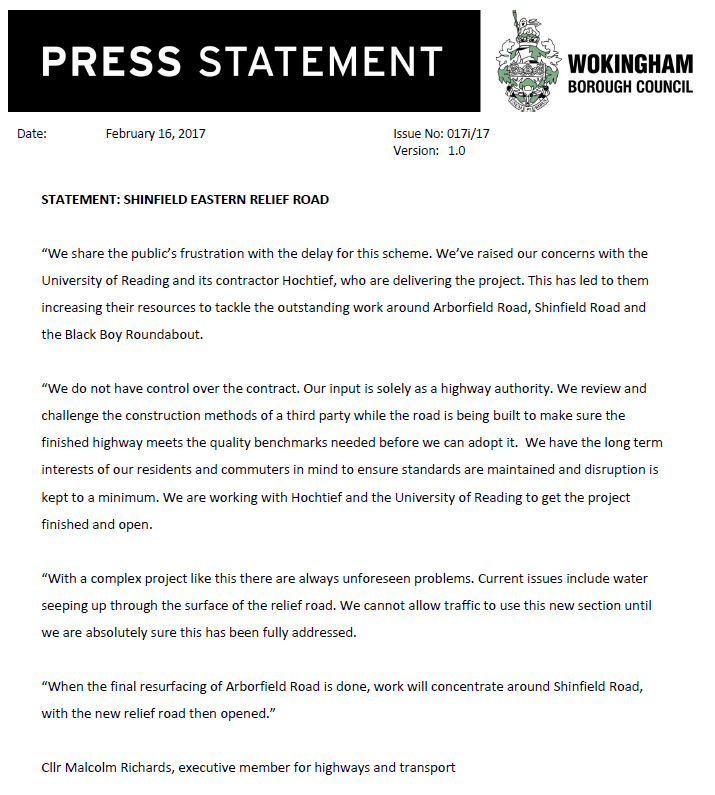
 

Social care and the prudence paradox

If you buy your own home and save for your old age you end up paying for your own stay in a care home should you need one.  If you rent your home and spend all your earnings the state will pay for your time in the care home at the end of your life.

All parties in government have wrestled with this paradox. The prudent pay more tax, and end up losing their capital if they need long term care. All parties have so far concluded it is too dear to offer free stays in care homes to all who need them. All have rightly concluded if someone without any assets needs looking after in old age the state needs to step in to help.

The resulting structure is complex and cumbersome. All individuals have a right to free health care from the NHS. The amounts and cost of NHS care usually escalate dramatically in the final years of a long life. Any time a person spends in hospital provides them with free board and lodging as well as health care. The aim, however, is to enforce a rigid distinction between health care – drugs, doctors time, operations – which are free, and social care including board and lodging which is  only free if you have no money of your own. The elderly person staying in hospital has an adjustment made to their state benefits and pension to reflect their reduced living costs.

The children are third parties in the struggle between  elderly person and the state over what the state will and will not pay for.  With elderly people living into their 90s, the children are often  pensioners themselves by the time the issue gets intense. Some seem to think they have a right to inherit the “family home” or the home of their parents. This is not normally the actual family home they lived in 60 years earlier, as people usually move on. Others say that if the elderly person has moved into a care home and is not going to move back to his or her home, it is only reasonable the property is sold and the money raised is used to pay the care home bills. No-one argues the children have to pay the care home bills of any elderly person who does not have the money to pay, though some chose to.

With social care back on the agenda, I would be interested in further views on what is the right balance between private payments and state assistance. Should prudence be better rewarded? If so, how?

UK employment continues to grow to new record levels

The UK has  302,000 more jobs than a year ago, in today’s employment figures. There are 2.7m more jobs than in 2010.  The UK’s employment rate, at 75%, is around the German level, and well above France at 65%  and Italy at 57%.

I doubt we will hear these figures on the main news bulletins. All those who tell me a country has to  be in the single market to prosper, have to explain two inconvenient  facts. Why are Greece, Portugal, Spain and other countries in the single market so cursed with mass unemployment? Why do countries like New Zealand, Australia, Canada, Singapore and the USA flourish with low unemployment by EU standards whilst not being in the single market?

Cheaper energy

The news of problems with Toshiba’s nuclear power generation investment plans will prompt some new thinking here in the UK. Some in the press are suggesting that in order to carry forward a programme of additional nuclear stations beyond Hinkley, the UK government will now itself have to venture into being a minority investor in these new plants. Private sector companies are finding it a stretch to handle the very high up front investment costs of a new nuclear station. They also have to worry about the long term nature of their commitments, and the eventual costs of decommissioning the facilities when they are worn out.


It is true, as the government argues, that nuclear has merits compared to wind power. It is much more reliable, and the plants can be run permanently without the same amount of back up power than interruptible renewable sources require. Whilst a nuclear plant is dear, you do not need an equivalent amount of stand by capacity, as you do for wind. The idea has been to supply unsubsidised power from nuclear plants. That means guaranteeing them a high and constant price for the power they will generate, given the high fixed costs involved. Some see guaranteed prices as just another variant of subsidy.


The enthusiasm for UK nuclear is based around the decarbonisation plans of Labour and the Coalition governments, in harmony with the EU requirements. The new government, leaving the EU, can rethink  our energy needs and vary the policy. The overriding objectives should be to provide a sufficient supply of affordable power. We need that both to pursue the new Industrial strategy,and to tackle fuel poverty. Building a new nuclear industry here may make sense, but only if it can be done in a way which delivers sufficient power at affordable prices. The government is pressing ahead with Hinkley and in Cumbria. It may be the case that a new fleet of gas powered stations will also be needed to ensure plentiful good value energy.

What is sure is that you don’t have a meaningful policy to fire up many industries we have lost or where there has been decline unless they have access to cheap power.

Housing numbers

During my last meeting with Wokingham Borough I was reminded that Wokingham has a target to build  856 new homes a year from 2013. (LEP study of housing need Feb 2016) That makes Wokingham’s share of the West Berkshire total 30%, with the other Councils  providing the rest of the 2855. Reading itself has a lower target of 699, despite having substantial brownfield redevelopment potential, the coming of Crossrail and the possibility of more starter home and smaller flats in the centre.  Bracknell has to build just 635 a year. Going forward there needs to be a fair division of the requirement.

The total numbers needed in the future also should take into account any change of migration policy designed to lower the numbers of additional people coming to live and work in the country as a whole. The current high numbers of new home sis partly the result of adding 330,000 extra people each year to our population, as we wish anyone coming to live and work here to have access to decent housing. If the government sticks to its target of a substantial reduction and takes the necessary measures on leaving the EU, could  the targets be lowered.

Were the Council to agree to a new settlement at Grazeley of 15,000 homes that would on its own provide 17.5 years worth of housing against targets. Would the development be spaced out over such a time period? Is it feasible to say no to building on any other large sites throughout such a  long time period? Or  might Grazeley  add to the build rate? If other sites are granted on appeal or run over from past grants of planning, then we need to build even more infrastructure to take care of a faster build rate than present plans.

I am writing to the authorities to ask what thought is going in to future targets in the light of these issues.

UK inflation falls in January compared to December. Core inflation holds steady.

The CPI index fell 0.5% in January compared to December. Food prices also fell 0.5% over the same time period, despite the bad weather effects on vegetables.

Core inflation  over the last twelve months stayed at the same level as in  December, at 1.6%.

Overall the CPI  rose  by 1.8% over the last twelve months. This was a higher annual rate than December owing to the fall out of a very good month a year ago. The main factor, accounting for half the annual increase came from higher oil prices affecting transport. The UK inflation rate is mirroring the German and US rates, affected by the same world oil price rise. The other most buoyant item was the increase over the last year in restaurant and hotel bills, reflecting higher wages.

January’s figures were helped by falls in clothing and footwear prices, and by the intense supermarket competition which kept food prices down.