The Minister for Development and Africa’s Replies to my Written Parliamentary Questions

I will pursue these matters, as I am concerned about how much aid we give to multinational organisations to spend for us. Having a voice at the Board table in general discussion does not mean all the aid spent will be in ways and in places we would choose, and it does raise issues over accountability for such large sums of money. Given the need to control public spending better it makes little sense to trust international organisations to spend money for us. 


The Foreign, Commonwealth and Development Office has provided the following answer to your written parliamentary question (92049):

Question:
To ask the Secretary of State for Foreign, Commonwealth and Development Affairs, what unrestricted aid funding the Government provides to international organisations. (92049)

Tabled on: 21 November 2022

Answer:
Mr Andrew Mitchell:

In 2021 £4,277 million of UK Official Development Assistance (ODA) was delivered through core contributions to multilateral organisations. This was 37.4 per cent of the total UK ODA budget.

Multilateral organisations, including the United Nations, global health and education funds, the international financial institutions and the Commonwealth are essential partners in achieving the UK’s goals. The UK uses its voice on multilateral boards to ensure decisions align with UK priorities, including how and where their funds are spent.

The answer was submitted on 29 Nov 2022 at 16:00.


The Foreign, Commonwealth and Development Office has provided the following answer to your written parliamentary question (92050):

Question:
To ask the Secretary of State for Foreign, Commonwealth and Development Affairs, what steps the Government takes to assess the suitability and value for money of (a) projects organised by and (b) grants from international organisations. (92050)

Tabled on: 21 November 2022

Answer:
Mr Andrew Mitchell:

The suitability and value for money of international organisations receiving Official Development Assistance (ODA), including the projects they organise and grants they provide, is continually assessed through FCDO annual reviews and business cases, as set out in the Department’s Programme Operating Framework.

The Independent Commission for Aid Impact (ICAI) independently scrutinises UK ODA to international organisations to assess value for money and impact, including recent ICAI reviews of tackling fraud in multilateral organisations and of the UK’s work with the Global Fund to Fight AIDS, Tuberculosis and Malaria (GFATM). The UK is also a member of the Multilateral Organisation Performance Assessment Network (MOPAN), which carries out regular assessments of multilateral organisations.

The answer was submitted on 29 Nov 2022 at 16:01.

Top Public sector management could do better

I am always disappointed though not surprised by the very different approaches taken by Private sector company  Chief Executives and public sector ones when being interviewed about their organisations.

The company CEO s go on to explain how well their business is doing. They  explain their passion to serve their customers better, to keep prices down and to innovate. They can manage whatever circumstances  throws at them. If they are being interviewed because something has gone wrong, they apologise and tell us how it is now being put right and will not happen again. They  do not blame their shareholders for not supplying them  enough money or giving  them the wrong instructions.They do not say the Bank manager was to blame for being too mean.

In contrast public sector CEOs often come on to tell us their service cannot manage, to say the increases in the  cash they are sent are insufficient, to say they are unable to recruit the  people they have been asked to employ. They are rarely asked why they cannot run the service better or even what they are doing to try to improve it.

We need to encourage a can do approach amongst high paid public sector CEOs who need  to grab the quality and cost problems which bedevil too many public services.

Why does government cost so much?

The costs of running government have escalated whilst the crucial outputs of more and better service have  not risen as we would like. I will look at why in a number of  articles.

One of the reasons is the escalation of the overhead, with more and more management and administration being recruited. Two trends this century that have spurred this process are the moves to so called independent bodies to carry out what remain as government functions, and the overlay of an increasing  number of additional objectives to meeting service needs from net zero targets through diversity targets to behavioural requirements.  These may be desirable in themselves but can become a conflicting overload or impediment to service delivery if not well managed. Carbon reduction targets for example can conflict with the policy need to maintain national energy security and to have more contract gas and electricity at affordable prices from reliable domestic suppliers.  Wanting more legal migrants to fill jobs with a more diverse workforce can lead to greater pressures on social housing and NHS services as the population grows.

The danger of the new models of government are that you can end up with three different managements all running the same bit of service. If we take the  case of NHS England, the Ministers and officials in the Department of Health have a large paybill as if they were running the service, yet they are merely monitoring and supplying resource to the large management cadres of NHS England and the other  national Health quangos. These in turn seek to influence or control the management teams of the NHS Hospital and GP trusts that actually run the service day to day. So there are three public sector layers of senior management. The NHS then contracts in a lot of its needs from the private sector, so taxpayers also end up paying for the management of drug companies, staffing agencies, private care   and pharmacies who provide some of the service.

I have  no issue with sensible buying in and contracting out for drugs, catering services, cleaning and other matters that are well established under Labour and Conservative governments and where the result is better quality and value. I do have an issue with three or four layers of management within the public sector and the contractors, increasing the costs of dealing with each other and increasing the likelihood of blurred accountability.

The idea that a quango like NHS England is an independent body free of Ministerial involvement is not even accepted by its advocates. As soon as anything goes wrong the Minister is called in and is usually blamed. The Minister is rightly held to account in Parliament for the scale of resource , the aims of the service and the success or failure in using the resource well. Rarely does Parliament summon the CEO of the quango and hold her to blame for failure to use resources well, failure to manage staff well or failure to deliver sufficient quality and quantity of care. It is so much easier for all concerned to blame the Minister and blame a lack of money, which of course suits the Opposition in Parliament . As a result we do not get the alleged advantages of independent management, but we do get plenty of extra cost from pretending some of the time that we have this independence  and  that it is better than the people in the department doing the job.

The Immigration Minister’s Replies to my Written Parliamentary Questions

I find it bizarre that the government does not have an answer to this question which it can share with the rest of us. Given the high numbers of migrants welcomed into our country in recent years, it has taken considerable investment in social housing, primary and secondary schools, new surgeries and other capacity to accommodate them. The EU last decade suggested a figure of around 250,000 Euro for the set up and capital support costs for new arrivals, given the need for homes and good quality public services.


The Home Office has provided the following answer to your written parliamentary question (92052):

Question:
To ask the Secretary of State for the Home Department, if she will make an estimate of the average capital cost of providing (a) housing, (b) school places, (c) health services and (d) transport capacity for a new migrant family. (92052)

Tabled on: 21 November 2022

This question was grouped with the following question(s) for answer:

  1. To ask the Secretary of State for the Home Department, if she will make an estimate of the average cost to the public purse of providing (a) housing, (b) benefits and (c) public service capacity for a new migrant who takes a job below the average wage in their first year in the UK. (92051)
    Tabled on: 21 November 2022

Answer:
Robert Jenrick:

The Home Office does not hold this information.

The answer was submitted on 29 Nov 2022 at 15:46.


Meeting with Citizens Advice Bureau

I met the Chief of the local CAB today.

He briefed me on a survey they have done about the cost of living issues.

I explained I had done a lot on this. The decisions to uprate benefits and pensions by the full high inflation rate would help people, as did the direct cash support to deal with the immediate problem

I pointed out the Welfare Secretary of State is currently consulting on how more people with no job can be helped to take one of the 1.3 million jobs still available. I offered to bring any proposals they might have to the Minister’s attention.

Meeting with Chancellor of Reading University

The new Chancellor of Reading University invited me in for talks about the future of the University and his plans as Chancellor. I will not presume to summarise his thoughts as he is still consulting on the best approach.

In response to his ideas I made the following points

1. As a past entrepreneur he should play to his strengths. He  could encourage more spin out businesses from Reading research. He could work in partnership with more local companies. Business can bring money, practical challenges and experience to add to University research equipment  and staff insights. He could build on Reading’s strengths in food science, land management and meteorology. The theme of encouraging more film and entertainment businesses to locate  here could be reinforced.

2. He could increase University engagement in the local area with more joint use of facilities, more open lectures, more courses tailored to local skills needed.

3. He could fund raise especially through stronger past alumni groups to build a larger Endowment fund.


I also pointed out that as a specialist academy for farming and land management the University should not sell off all its farms for housing development.

My Meeting with the Minister Responsible for Probate

I met Mike Freer, the Minister responsible for Probate, following several constituents’ case of delay in processing applications. The Minister confirmed that the office had been taking many months to determine a range of probate cases, and he was working with officials to shorten delays and improve processes. He agreed we should expect a better service. He promised to review personally a couple of cases that are still outstanding for Wokingham constituents.

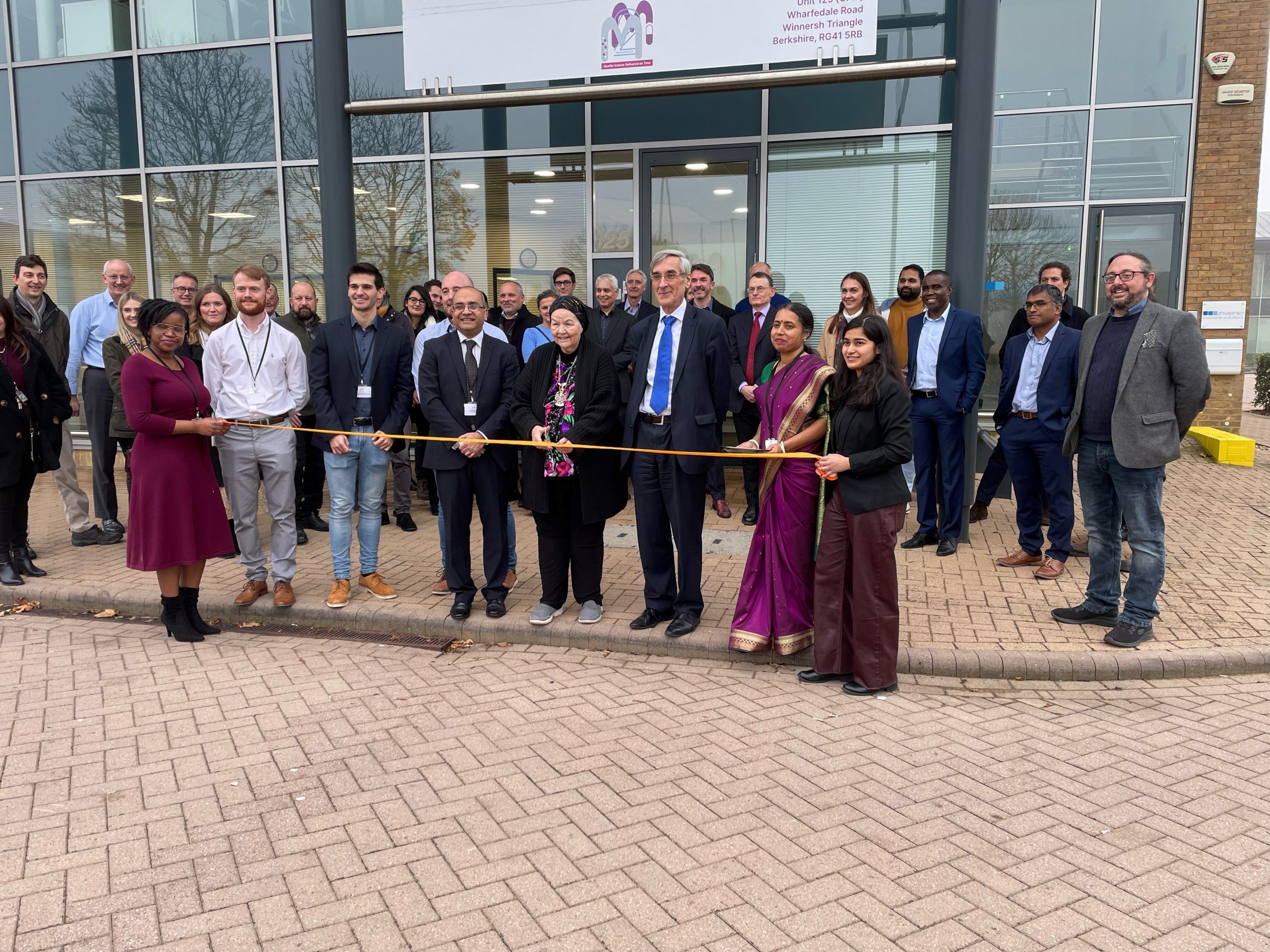
My Visit to M2M Pharmaceutical’s New Site Opening at Winnersh Triangle

I was the guest of honour at the opening of the new premises for M2M, an expanding small business undertaking contract scientific research. Now based at Winnersh Triangle, the company specialises in particle analysis for use in the pharmaceutical industry. In my speech I praised them for their work and growth so far and wished the seven employees well in developing new clients and new ideas that will help in the fight against disease.

The Chief Secretary to the Treasury’s Replies to my Written Parliamentary Questions

I have confirmation that on Treasury/OBR forecasts debt interest will fall substantially by 2024-5 . They confirm the large increase in tax revenues over the forecast period that they expect. They also confirm that were the economy to grow a bit faster the deficit would fall.

All this reflects their strange definitions, including the capital item of index linking with the revenue item of interest paid. It also reflects a model which regularly exaggerates the deficit when there is bit faster growth, and understates the deficit in slowdown or recession.

It reminds us that the budget strategy revolves around increasing tax revenues to pay for rising expenditure.


The has provided the following answer to your written parliamentary question (92043):

Question:
To ask the Chancellor of the Exchequer, what recent estimate he has made of the amount by which the total paid in interest on state debt will change between this year and 2024-5. (92043)

Tabled on: 21 November 2022

This question was grouped with the following question(s) for answer:

  1. To ask the Chancellor of the Exchequer, what estimate he has made of the potential increase in tax revenue between the 2022-23 and 2027-28 financial years. (92044)
    Tabled on: 21 November 2022
  2. To ask the Chancellor of the Exchequer, if he will make an estimate of the amount of extra tax revenue that would be received in financial year 2022-23 if the GDP of the UK were to remain at its present level, by comparison with the amount he expects to receive in that year according to present forecasts. (92048)
    Tabled on: 21 November 2022

Answer:
John Glen:

The Office for Budget Responsibility (OBR) is the UK Government’s independent official forecaster. The OBR’s most recent forecast was published alongside the Autumn Statement on 17 November 2022.

The OBR forecast that tax receipts will increase from £1.0 trillion in 2022-23 to £1.2 trillion in 2027-28, an increase of £196 billion. Debt interest spending (net of the Asset Purchase Facility) is expected to reach £120.4bn for the financial year 2022-23 and fall by £37.9bn to £82.4bn in 2024-25.

The OBR does not regularly produce analysis of tax revenue according to varying paths of GDP. Previous OBR analysis from January 2022 suggests that raising real GDP growth to 2-3% a year over three years, from a base growth forecast of 1.6% per year for those three years, could provide a benefit to the public finances of £10-40 billion through a range of effects across tax and spending.

The answer was submitted on 29 Nov 2022 at 12:04.


T

Muddle in the middle

Sir Keir Starmer wants people to think he is standing up to the Corbyn  left and this will make him ready to govern. He tells Mr Sunak he needs to stand up to his right to woo the elusive middle ground voters.

At the same time, revealing his own self serving intents to deceive, Sir Kier woos the very same so called right wing voters by pretending he now cares about excessive migration and accepts Brexit which he spent three years  fighting after the decision.

The advice to Mr Sunak to ignore the views of those who want to see the Brexit wins and want the government to take control of our borders is bad advice. I do not accept there is a simple right/ left split. If there is the  centre ground has been shifted massively to the left with all the Opposition parties in Parliament wanting higher taxes, more subsidies, price controls, more migrants, compliance with EU rules after departure, aggressive unilateral  pursuit of net zero, Wokeish  cultural attitudes and a belief that more public spending solves all ills.

What Mr Sunak needs to do to raise Conservative poll ratings from their recent extreme lows is to show he does mean business when he says he will bring down migration, end small boat crossings, lower taxes , deliver Brexit wins and restore the unity of the UK internal market. Sir Keir may need to reject the left but Mr Sunak needs to embrace millions of Conservative voters who currently think the government is not Conservative enough