My question on the Post Office Governance and Horizon Compensation Schemes – UKGI governance

John Redwood (Wokingham) (Con):

Will the Secretary of State review the governance of UKGI? How did it manage to preside over the Post Office with its dreadful treatment of sub-postmasters? How did UKGI allow senior Post Office managers to rack up and accumulate losses of £1,390 million, effectively bankrupting the Post Office so that it can now trade only if it has the reassurance of massive cash infusions from the Treasury on a continuing basis? Surely this body has done very badly, and we need a better answer.

Kemi Badenoch (The Secretary of State for Business and Trade):

That is one of the reasons why we have been making personnel changes in this area. It goes back to the point I was making in the statement: Post Office needs an effective chair. Until the day I had the conversation dismissing him, I never had any correspondence from Mr Staunton about difficulties that he was having with UKGI. If he was having difficulties, he should have told me, rather than give an interview to The Sunday Times effectively stating that he had no control over the organisation that he had been appointed to run.

Supporting British farmers

Dear John,

Sticking to our plan to back British farmers

I am writing to update you on the next steps to deliver the Government’s plan for farmers, which the Prime Minister has announced today at the NFU Conference.

We committed to spend £2.4 billion in the farming sector on average every year of this Parliament and we will deliver. In your constituency alone, we have invested £1484212.75 in farming since 1 April 2023.

We are moving away from the EU’s bureaucratic Common Agricultural Policy, which saw 50% of the budget reach the largest 10% of landowners. The Government’s new schemes are investing in the foundations of food security, environmental sustainability and profitable farm businesses. In January this year, we announced the biggest update to farming schemes since the start of the agricultural transition, which included an average 10% increase to payment rates, and up to 50 new actions. This ensures we have something for every type of farmer in England to choose what works best for their business – from uplands to lowlands and beyond. Unique within the UK, we have a policy that puts farmers in control. Choosing how to engage with our schemes in a way that works best for their farm.

Building on the update to our schemes announced in January, we have today announced further steps to back our farmers. Firstly, we will be taking further action to invest in sustainable, resilient farm businesses. In September 2023 we introduced the Management Payment to cover the administrative costs of entering our schemes. This has helped an increased number of small farmers to sign up. We will be doubling that payment to up to £2,000 in the first year of agreements entered into by March 2025 and extending it to Countryside Stewardship mid-tier. This means that the 11,000 farmers in England already in Sustainable Farming Incentive will receive that top up this Spring.

We are also launching the largest ever grant offer totalling £427 million. This invests £220 million in productivity and innovation in farming, £116 milli in slurry infrastructure, and £91 million in improving the health and welfare of our farmed animals. The first of these schemes is an enhanced £70 million round of the successful Farming Equipment and Technology Fund and we will also be increasing the currently open Improving Farming Productivity Fund from £30 million to £50 million – which covers robotics, automation and rooftop solar to build on-farm energy security.

Next, we will improve the service and support being offered to farmers and cut planning red tape which currently stands in the way of farm diversification. We will lay the legislation to deliver those permitted development rights in April so that more farms in England can introduce farm shops or outside sports venues. We will continue to improve Government services with better digital infrastructure, that is easier and faster to use. We will introduce more rolling application windows and make payments on time. Further, in recent years there has been a growing awareness of the importance of farming mental health and we will be making up to £500,000 available to three charity partners to deliver projects that support mental health in the farming sector.

Third, we are also strengthening our food security, which is a vital part of our national security. We remain committed to our target to maintain food production at least at current levels – which is around 60% of what we consume. However, in recent years global shocks from the illegal invasion of Ukraine and extreme weather have made clear that we must step up our monitoring. We will therefore introduce a yearly Food Security Index to underpin the Government’s three-yearly food security report. This will be made statutory when Parliamentary time allows. The index will present the key data and analysis needed to monitor how we are maintaining our current levels of self-sufficiency and overall food security. We expect this to be UK-wide and will work to achieve this, strengthening accountability across England, Wales, Scotland, and Northern Ireland. We will publish the first draft during the second UK Farm to Fork Summit this Spring, which will be an annual event.

We are also supporting farmers to utilise more of their produce. We will be launching a £15 million fund available directly to farmers or the redistribution sector working with farmers, to redistribute surplus food at the farm gate which cannot currently be used commercially. We are also committed to building fairness in the supply chain. We will be laying the regulations for the dairy sector this week, and have today confirmed that the next review will be in the poultry sector.

Supporting farmers, improving our approach, and strengthening food security – this is our plan. We are sticking to it, to deliver a resilient and profitable farming sector which continues to produce some of the best food in the world.

Yours sincerely,


RT HON STEVE BARCLAY MP

UK Government Investments Ltd piles high the losses

UK Government Investments Ltd is another of these 100% government owned arms length bodies. It is meant to supervise and manage the governments substantial holdings in nationalised businesses and its stakes in private sector companies. Last year to March it ran up costs of £23.4 m paying its CEO over £260,000 and its staff a media salary  of  £91,000 each. The Treasury made £24 m available to it to pay the bills. The auditor agreed it is a going concern because the Treasury will make cash available to pay the losses.

So what magic did we get for this expenditure? Why not rely on  departmental  supervision of these bodies which happens as well, with Ministers being more involved? Just look at what has been happening under UK GI’s  stewardship.

Post Office. PO has accumulated losses of £1390 million. It has presided over the calamity of the sub postmaster accounting system. Recent stories suggest senior management is still not resolving the issues rapidly enough despite ministerial policy to do so.

Network Rail. Despite owning all the track and stations with a monopoly the remaining net asset value of Network Rail is just £15 bn. £ 55 bn has been expensively borrowed against its network assets. It lost £1140 million last year.

The British Infrastructure Bank  . A relatively new venture, this lost £21.4 m last year with costs of £35.8 m. It is planning to commit £22 bn to investments, with £10 bn of that being guarantees and the rest debt and equity underwritten by taxpayers. The Bank does not expect to be profitable anytime soon. I expect it will be able to deliver that forecast.

Sheffield Forgemasters is a government owned defence supplier. It lost £5 m pre tax last year but does have positive assets and provides some important products.

Nat West. UK Government Investments says it engaged with Nat West as  shareholder over culture and values . It was very quiet over the leaks from Nat West and the resignation  of the Chief Executive. Clearly its engagement did not prevent serious problems.

OneWeb   This investment is now sitting on big losses. It has been rolled into EUtelsat as a UK minority holding, only for those shares to fall more. Difficult to see why the UK taxpayer should be losing money in a 10 % holding of a European business like this that it is not currently making us  money.


Sizewell C   Much delayed and over original budget.

The government should get rid of this body and go back to more detailed supervision by ministers advised  by their departmental official who currently help supervise these businesses . This track record is very poor and not worth £24 m a year.


Anti driver madness at the crossroads

Anti green policies are now blighting many local communities. Individual Councils declare a climate emergency and take it out on motorists. They wish to grandstand whilst often adding to emissions. Create worse traffic jams and fuel use rises for a journey.

Lib Dem Wokingham Council hates drivers. They do not want us driving to work, taking children to school by car, going to the shops in a vehicle. They want to make the lives of delivery van drivers bringing  goods to our home  and truck drivers taking things to our shops and factories more difficult. They do not seem to like taxis, and see delaying the ambulance or fire engine  as acceptable collateral damage in their campaign to get people out of vehicles.

They spend large sums on closing some  roads altogether. They take well functioning main roads between villages and towns and place obstacles in one carriageway to make vehicles wait until the other direction lane  is empty for their use. This presents new dangers. They see roundabout junctions that flow well and spend large sums on reducing their capacity. In the latest scheme just to the south of my constituency they are spending £5.5 m on changes to a roundabout that the public strongly opposes.Conservative Councillors with the approval of the local MP tried to stop it.  Main roads at the junction will be completely closed or subject to one way light controls for six months. Local shops and the garage report lost trade on a big scale. Parents will be badly inconvenienced when the junior school returns. The Council has had to warn people not to take it out on the workers at the site as they are not to blame for such an aggravating waste of money.

People pay a lot of tax. They want the road money spent on mending the potholes and improving the safety and capacity of junctions, not on making life difficult for drivers. The Councillors who inflict this misery have a car park at the  Council offices, presumably take delivery of on line goods at home from vans and expect emergency vehicles and trucks to get through to handle crises and restock the shops. This latest example of anger about local government should be a warning to all that the wrong kind of green policies make people more distrustful of politicians and Councils. Why can’t they do things that make our lives better? When do they not do a proper carbon count of how much CO 2 all their tarmac, crazy paving  and traffic congestion causes?

Stop the bossing about

The continuing unpopularity of Green candidates for Parliament and most Councils is a notable feature of  the UK, only surpassed in the US. Their main preoccupation to get us to net zero is now however written into most political party programmes to a lesser extent. The Democrats in the US are very keen and the non Trump Republicans accept much of it. The Lib Dems whose opinion ratings remain low in the UK want an extreme version of net zero policies like the Greens. The UK Conservatives want a more measured and pragmatic approach, with a range of views from enthusiastic to sceptic within the party. Reform has now come out against many net zero policies, as has Mr Trump in the US. In these latest UK by elections when people could vote for their best preference without worrying about who would be in government, the Green and Lib Dem vote was tiny.

The public according to polls agrees there is global warming and thinks something ought to be done about it. However a large majority do not back going over to heat pumps and battery electric vehicles for themselves and object strongly to net zero policies that make them personally worse off or make their lives more difficult. The public shows more sense than green talking politicians. Many see the folly of the UK closing down fossil fuel activities here only to import replacements from abroad with more fossil fuel used as a result. Many see that pricing UK consumers out of using so much fossil fuel will do nothing to abate the fast growth in fossil fuel use in China, India and the world as a whole.  Many just want to keep their homes warm with a gas boiler and get to work by van or car because that works.

If Mr Trump wins the US election late this year global net zero strategy suffers a major blow. If the world’s largest economy goes for extracting and using more oil and gas,and sees cheap fossil fuel energy as a competitive business  advantage that knocks a big hole in the Paris Treaty targets. The world’s second largest  economy, China, says it  is committed to net zero. However China is still increasing  its output of CO 2 and adding more coal to its energy mix as well as building wind farms. China has not yet started to cut her output. Many emerging economies reserve the right to increase their fossil fuel use as a necessary way to boost living standards.If UK Greens really thought world CO 2 mattered they would be protesting daily outside the Chinese and Indian embassies.

This is why I argue against UK government and Councils lecturing  us to make big changes in our lives that many do not want to make. Worse still some  of these policies are a nonsense in their own terms. Buy an EV and plug it in to recharge, and we will need to burn more gas in a power station to meet the demand. Change all our homes to heat pumps and create large amounts of CO 2 doing so. Why? How ?

By elections

As most of you are so critical, this is your chance to have your say and to explain what change you want.

The by elections showed many  former Conservative voters stayed home. Some went to vote Reform. The Labour vote stayed around 2019 levels, with a big turnout fall of Conservatives.

The Lib Dem vote collapsed and the Green vote stayed low. The electorate is not saying they want more net zero policies or a faster transition. Labour announced its cancellation of £28 bn extra spend a year on net zero but that clearly did not upset their voters.

Reform did better than in previous by elections, with a slogan of wanting  net zero immigration, not net zero. As a result if the voting pattern the UK now has two more Labour MPs.

The impact of Labour’s troubles over anti semitism will be seen in the next by elections, where they have now written off  Rochdale and have no candidate they support. In the areas where Labour want to alter current policy they would make things worse.

So what would you like the government to  do now? I have set out many if the things I am trying to change.


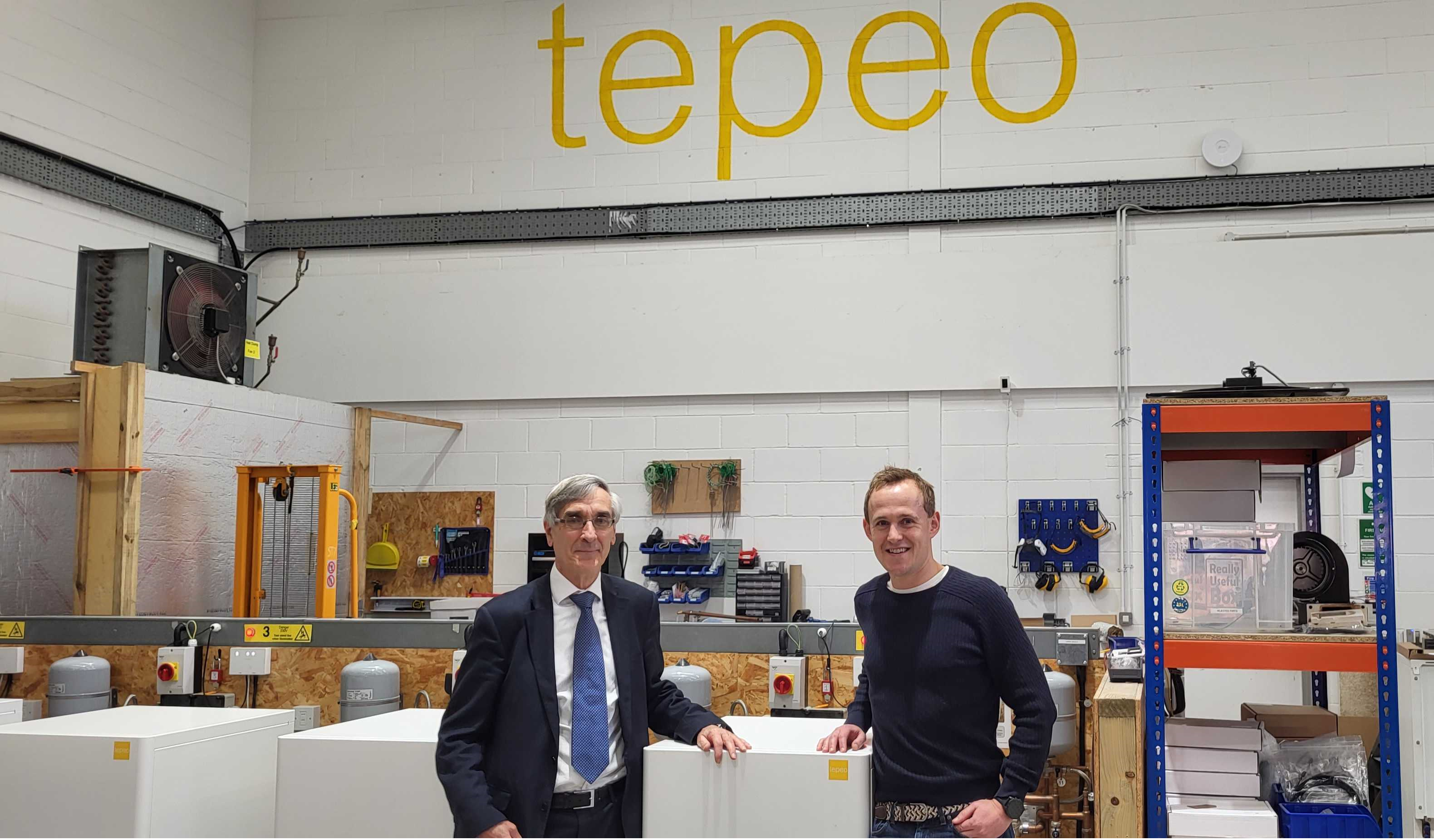
My visit to Tepeo

On Thursday, I visited a business in my constituency. Tepeo is a Winnersh based company that produces zero emission boilers and I was kindly show around their facilities by the CEO.

I have long campaigned for green products to be VAT free and will make the case for zero emission heaters to be included. Heat pumps are not practical or affordable for many homes so I welcome ideas to offer other heating solutions. The government should not use expensive subsidies to favour one heating solution over others when the market needs to develop new choices for consumers. I do hope new heaters can be made in the UK to ensure more people benefit from this technology here at home.

The Bank of England brings us a technical recession

The Bank of England printed too much money. They bought too many bonds at crazily inflated prices. They kept interest rates too low for too long. That gave us a big inflation, as some of us predicted.

They then blamed the inflation on rising energy costs following the Russian invasion of Ukraine. They refuse to explain why inflation was three times target before Russia attacked. They are silent on why big energy importers Japan and China did not have the high inflation when energy shot up.

Too late  they shoved up interest rates. They destroyed money. They sold bonds at depressed prices. They sent the bill for all the losses to the Treasury to make taxpayers pay to  bail them out. This has now delivered the shallow recession and downturn some of us predicted.

So why do we put up with this level of incompetence? It was obvious to anyone who studies money and credit that they lurched from too much to too little. The Bank refused to comment on money and credit, and revelled in a model of the economy and forecasts that were wildly wrong. They forecast 2% inflation for the period when it hit 11%.

What should they do now? Change their model to get their forecasts more accurate. Strengthen the Monetary Committee with some who do think money and credit matter. Stop selling bonds at  huge  losses. Allow sufficient money and credit to accommodate a bit of growth.

Dear Colleague on NHS Dentistry

I was pleased to see the government adding to dental services through the methods set out by the Minister. I am keen to see Wokingham’s needs recognised, so I put to her the issue of ensuring we add additional dentists and dental surgeries as more housing is built and the population expands. She said she also wished to see this and understood the point.

Please find below the Dear Colleague Letter from the Minister which sets out the Government’s plans.

Dear colleague,

Faster, Simple and Fairer: Our Plan to Recover and Reform NHS Dentistry

The Department of Health and Social Care and NHS England have today published Faster, Simple and Fairer: Our Plan to Recover and Reform NHS Dentistry.

Our new plan will help patients can get the dental care they need when they need it and support NHS dentistry to deliver 2.5 million more appointments for patients.

The plan will address the series of challenges facing NHS dentistry which affect patients’ oral health and ability to access the care they need, as well as workforce recruitment and retention. Our plan will deliver faster, simpler and fairer access to NHS dentistry. The new measures being announced include:

  • Offering a New Patient Premium to support dentists to take on new NHS patients
  • Introducing dental vans to deliver care to under-served areas
  • Attracting dentists into areas of need with ‘Golden Hello’ payments
  • Launching our ‘Smile for Life’ programme to focus on prevention and good oral health from birth so that every child includes toothbrushing as part of their daily routine by the time they reach primary school. We are keen to embed good oral health habits at an earlier stage, given the evidence that doing so later – for example, through supervised toothbrushing programmes in the later school years – will have less impact on outcomes but add administrative burdens to primary school teachers.
  • Streamlining and tackling bureaucracy to support and maximise the effectiveness of our entire dental workforce
  • Expanding dental training places by 40% as set out in the NHS Long Term Workforce Plan
  • The full plan can be found here http://www.gov.uk/government/publications/our-plan-to-recover-and-reform-nhs-dentistry

The plan is backed by £200 million across the next year and will immediately introduce the new bonus payment scheme for dentists taking on new NHS patients from March. As well as reforming NHS dental contracts to make NHS work more attractive and encouraging practices to take on new patients, the government is also boosting the number of dentists. There were 1,352 more dentists doing NHS work in 2022/23 compared to 2010/2011, and the NHS Long Term Workforce Plan will expand dentistry training places by 40% by 2031/32.

The plan also includes new measures to attract dentists to work in the NHS, including supporting more graduate dentists to work in NHS care. We will consult on a ‘tie-in’ to explore whether dentists should be required to work in the NHS for a period upon completion of their training.

In 2022, 46% of new dentists joining the General Dental Council’s (GDC) register were from overseas. A lack of flexibility in international registration processes can create unnecessary delay to overseas-qualified dentists providing NHS services. That is why we are making it easier and simpler for NHS practices to recruit dentists from overseas by reducing bureaucracy and streamlining systems.

Geographical variation in access to dental care remains a challenge across the country, particularly in rural and coastal areas. To make access fairer, ‘golden hello’ financial incentives will be brought in for dentists who commit to working for three years in areas of need, and mobile dental vans will be rolled out to bring care and treatment to the most isolated and under-served rural and coastal communities later this year.

Tooth decay is a significant, yet largely preventable public health problem and is the most common oral disease affecting children and young people. In the plan we have set out a new emphasis on prevention and embedding good oral health in all parts of society, particularly babies and the youngest children, where outcomes are best, through an ambitious new programme called “Smile for Life”. The government will support nurseries and early years settings to incorporate good oral hygiene into children’s daily routines by the time children get to primary school and provide advice to pregnant mothers and expectant parents on how to protect their baby’s gums and teeth. This will include dental teams going into primary schools in areas of need and applying fluoride varnish to children’s teeth.

We will also consult on expanding water fluoridation, initially to the northeast of England, to protect more people from the risk of tooth decay. The northeast of England was chosen based on a combination of factors including the oral health needs of the region and water company experience operating schemes.

Our recovery plan is ambitious, with immediate impact on access through the new patient payment which will start from the 1st March, alongside proposals to deliver improvements through the rest of this year and beyond.

Our ambition is for everyone who needs an NHS dentist to be able to access one and today’s announcement puts us on the right path to achieving this.

THE RT HON DAME ANDREA LEADSOM DBE MP
Growing anger about anti driver measures

I was talking to a London plumber.His  invoices  for work include extra charges for parking, for ULEZ and for Congestion charge. It is a daily battle for him to get to a new job given the closure of so many streets and then to find an all day parking place. Protesters are still going out and putting boxes or other drapes over the London cameras to show their opposition without damaging these expensive spies prying into our lives. This site does not support law breaking protests.

This week Wokingham Borough has had to put  out a press release at our expense telling people not to argue with the workers carrying out another of their hated anti driver projects. Of course people should not shout at or threaten Council contractors. The need to say this shows just how much the Council misjudges the mood as it seeks to wind up all those of us who need a vehicle for work. Wasting £5.5 m of tax on a scheme which will cause delays and put people off driving to what were easily accessible local shops and a garage is a bad idea.

These cameos are part of a much bigger picture. Lib Dem and similar Councils show scorn and disdain for working people who need a car or van to get to work. They show no sympathy for  busy parents who need to drop children off at school so they can get to their job. These Councils consult and ignore. They revel in the misery they cause others. They explode with self righteousness if anyone argues back that they need to use a car or van. Yet despite this many of these preaching Councillors still rely on a gas boiler, go in fossil fuel cars and take jet planes to their holidays.

The collision of green demands by many in the governing class with the needs and pressures of daily life is becoming acute. Many of the green campaigners are hypocrites, flying  off to air conditioned hotels to hold forth again about the need to lower other people’s carbon footprints. If government press too far with their bans, their surveillance cameras, their schemes to fine people off the road with ultra low speed limits, special lanes and box junctions, they may find instead they become very unpopular. Going too far has already changed the Dutch government.