





Skip to content
John Redwood's Diary Incisive and topical campaigns and commentary on today's issues and tomorrow's problems. Promoted by John Redwood 152 Grosvenor Road SW1V 3JL
John Redwood's Diary
  • Home
  • About
  • Contact
  • Local Issues
  • Debates
  • History
  • Press Releases
  • Articles

Search Site

John Redwood's Diary
Incisive and topical campaigns and commentary on today's issues and tomorrow's problems. Promoted by John Redwood 152 Grosvenor Road SW1V 3JL
@john.redwood.official
@johnredwood

Anyone submitting a comment to this site is giving their permission for it to be published here along with the name and identifiers they have submitted.

The moderator reserves the sole right to decide whether to publish or not.

Reduce government interference in energy

April 7, 2024 141 Comments


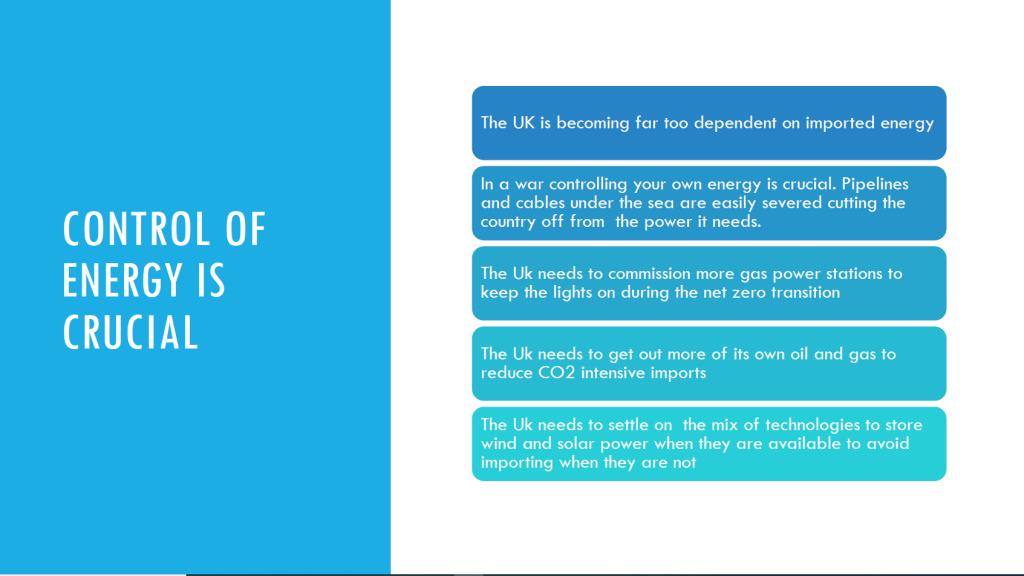
One subsidy leads to another. One windfall tax soon becomes several permanent tax rises on overtaxed energy. One price distortion tempts Regulators to do more. Instead of pursuing the three aims of security of supply, affordable power, and environmental requirements we end up with energy which is too dear and a growing dependency on imports and the goodwill of foreigners.

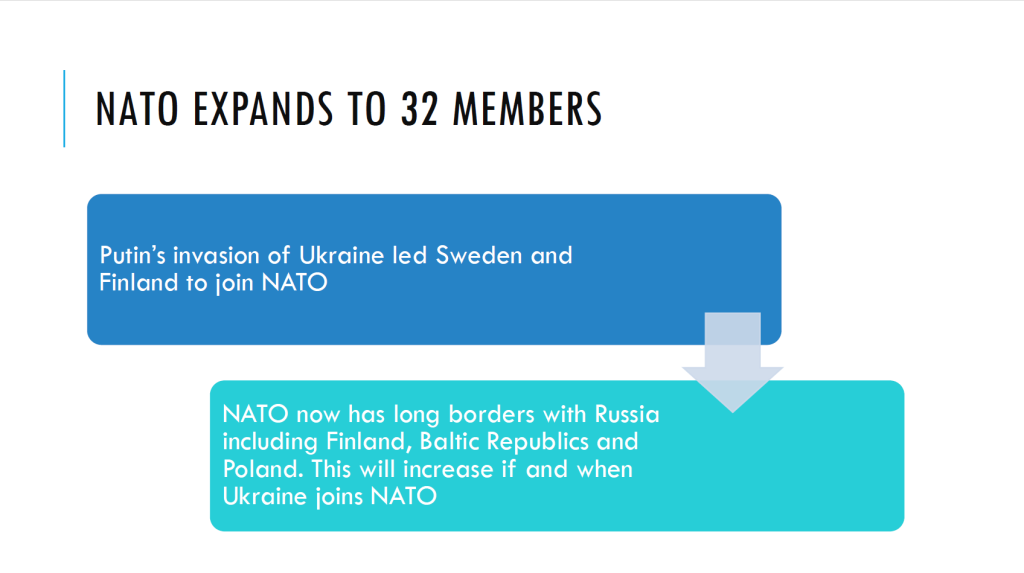
The boost to oil and gas prices caused by the decision to get Russian oil and gas out of our supply chains in retaliation for the invasion of Ukraine was used as an opportunity to increase taxes on oil and gas. It was called a windfall tax  though the government did not specify what element of the price/profit was windfall, nor did it promise to cancel the tax when oil prices fell back. This then caused super profits for older renewable electricity investments so they too were put under a windfall tax. Subsequently new investment in renewables was exempted .  All this reinforced dearer energy, so then the government decided to spend a fortune on subsidies to domestic consumers. The government introduced a price cap on domestic energy bills. As prices fell so the price cap held costs up until the next review point. All these interventions were backed by the Opposition parties who usually wanted them to go further, last longer and tax and subsidise more.

This is a wasteful and worrying model for energy. It has meant higher public sector spending and borrowing. It has deterred investment in  new capacity through the higher and unpredictable taxes. It has helped close factories in the UK thanks to high energy prices, increased energy imports, and increased the imports of energy intensive goods.

The same thing is happening with energy using products. It is wrong to  tax car producers for selling too many petrol vehicles that people want to buy, and for  selling too few battery cars which people do not want to buy. It would be wrong to tax gas boiler manufacturers or to ban their product if people do not want to buy heat pumps. Government did not need to step in to ban blackberries in  order to promote smart phones, or to boost computer pads by taxing home desktops. There was no subsidy to promote mobile phones or internet services. Good products sell because people want them.


My Conservative Home article on a vote about net zero

April 6, 2024 197 Comments
Net zero is on the ballot paper. Greens have never wanted a referendum on whether we should make the road to net zero the centrepiece of so many of our policies and life choices. Many think there should be  a vote , as this mission has become so dominant, affecting so many areas of government activity and of our daily lives . The country was never allowed a proper conversation  about the wisdom of this course of action. All the main parties signed up so there was little debate in Parliament.
 Greens will   find  policies to promote net zero increasingly become election issues despite the apparent party consensus as they weigh on people’s minds and the road gets tougher. In the UK there are two major issues confronting the government which the many pro green Opposition parties wish to shrug off. They are the costs of the transition and the issue of whether the public will buy the goods and services it will take.
The question of money has already come to the front pages. The Labour plans were said to need an extra £28bn over the next five years. Labour has had to withdraw this proposal as it does not fit in with the numbers supplied by the OBR about what is affordable. Labour will want to find ways to increase the contribution of private capital, and will be looking to see if there other taxes it can raise to pay the bills. One way or another it has to accept the fact that wanting to get the power sector to net zero by 2030, five years ahead of the government, will require a lot of extra spending which will need subsidy and incentives. I doubt it can be done, but it certainly cannot and will not be done by private money alone. Closing down our fleet of gas fired power stations early means writing them off and substituting dearer ways of generating power when full costs are taken into account. There would need to be government subsidies for the electricity  storage and transition costs. I doubt we could build enough new capacity in time and couple renewables with all the ways you would need to keep the lights on when there is no wind or sun.
UK energy customers already carry a net zero burden on their energy bills. Lower costs of buying electricity have been overridden to provide boosts to the use of renewables and nuclear in past bidding rounds. Subsidies have been built into some net zero decisions that are carried as a general charge on bills. A mesh of controlled prices, windfall taxes and preferred fuel choices has kept prices higher recently, with some subsidies providing some offset. Voters do not warm to higher fuel prices, and the government stepped in with large subsidies when the Ukraine war caused a spike in fossil fuel costs with the withdrawal of Russian oil and gas from the market.
Clearly scrapping all fossil fuel power stations and putting in many new renewable generators is costly. There will also need to be substantial storage capacity , with investment in some mixture of batteries, hydrogen production from renewable energy and pump storage to able to cope with  interruptible sources of electricity. In the meantime as government thinks about how and who pays for all that extra cost there needs to be back up power stations capable of being switched on when the wind dies and the sun sets.
Today there is considerable opposition to siting new wind farms near settlements, to putting pylons across landscapes, to drilling for onshore oil and gas and to digging up roads and pavements to install larger capacity cables. These can become issues in local elections in particular. If the costs of electricity storage and carbon capture become too high then the cost of energy will be back on the agenda as a running sore for the government that imposed the costs.
The question of consumer acceptance needs more debate than the greens allow. The truth is hardly anyone wants to buy a heat pump to rip out their gas boiler. Most people are put off by the large installation cost. They do not want the double disruption of putting in more insulation followed by heat pump works. They find the overall costs far too high, several  times  the cost of a new gas boiler. They are concerned that in an older house it may never be possible to get a heat pump to provide higher temperatures given heat loss, and are worried that running costs will still be high as electricity is a much dearer fuel than gas per unit of energy. It is true the heat pump cuts the need for energy in use, but that can be  offset by the higher costs of the energy.
Battery electric cars are a minority choice for individual customers. Many are put off by the high prices, by the difficulty in finding recharging places on longer journeys, by range issues and by the time it takes to recharge. Some of these problems will be resolved as and when more fast chargers are put in. Many people are waiting for the roll out of hydrogen as a fuel for trucks, and of synthetic fuel for planes. As this happens why not use those fuels to power a conventional internal combustion engined car or van? Why  not keep your home gas boiler in the expectation that clean gases will be added to the gas mix as more are produced.?
The green revolution wants to change the way we heat our homes, the kind of transport we use, the products we buy from industry and the diets we eat. To do this there needs to be far more consumer enthusiasm than there is today. Government and business are working together on this strategy. They need to spend more time working out which new products people will want to own and will be affordable. We still have no idea of what combination of hydrogen based or synthetic fuel based transport and heating we will have and how much will require improved battery vehicles and heat pumps. There is a danger of backing too many competing technologies and failing to get any of them to the scale where they will work better and be more affordable.
Bite sized books  have just published John’s  updated short book “The $275 trillion Green revolution. Will consumers buy it? ” available through Amazon.
Ad

Get a grip on nationalised industry costs

April 5, 2024 123 Comments

When we had many nationalised industries they dominated public accounts and caused some of the overspending and over borrowing that damaged the Labour government of 1974-9. Nationalised industries sacked a lot of employees, over charged customers and often lost taxpayers huge sums. Rail, coal, steel were in painful decline. Telecoms fell well behind technically with shortages of investment.

Today the public accounts are being damaged again by two nationalised industries, rail and the Post Office, and by the colossal losses of the Bank of England.  Since 2022 the Bank has demanded £50 bn from taxpayers to pay its bills. Network Rail has just got approval for £30 bn of taxpayer cash for the next five years. The Post Office has lost £1400 m in recent years and now expects taxpayers to pay up for all the repayments and compensation they owe the sub postmasters.

I have often reported on the needless damage to the accounts  being perpetrated by the Bank. The Fed does not send its losses to the US Treasury for reimbursement. The ECB does not sell its bonds at huge losses in the markets. Only The Bank of England does this.

Network Rail plans to rely on taxpayer grant for almost two thirds  of its cash needs. Only 4% will come from revenues of its commercial, property and freight interests. It has fabulous land and buildings, with key sites in the  centres of our cities and many towns . It fails to develop those and to harness private capital to make more stations good locations to visit with retail and services. It fails to develop land  adjacent to stations and rail yards for commercial purposes.

Nationalised HS 2 was a spectacular  failure at building the original northern rail scheme to something like budget and timetable . It is ending up building  us a ridiculously costly additional London to Birmingham line  when improved signalling and by pass track would have been a much cheaper answer to any capacity issues.

My Daily Telegraph article on the green revolution as I sent them

April 4, 2024 149 Comments
The Telegraph amended this and added a headline without my consent.
The vast ambition of the net zero policies envisages most people switching their heating to electricity, their travel to bicycles and electric cars, and their diets to vegetarian options. It certainly needs the wholesale conversion of electricity generation from coal,oil and gas to renewables, and a solution to what to do when the sun does not shine and the wind does not blow.  We need to ask are consumers ready for changes of this magnitude?
          So far governments have concentrated on doing what should be the easier bits of the change over. They have considerable influence and control over energy markets and have increased their interventions in them. They have ordered more renewables and pressed for closures of coal based generation. They have used subsidies, tax breaks, windfall taxes, regulations, managed prices and bans to tip electricity generation more strongly towards wind and solar power away from fossil fuel. They have got support  or acquiescence from the industry to this pathway. Industry actively promotes renewable power as a good. At home it  is forced to roll out smart meters to an increasingly sceptical group of consumers who have resisted them so far. It has come forward with many new windfarms and solar arrays.
         Even this transition in the UK has hit some buffers. More renewables means more grid to handle the great variability of output and to transfer the power from offshore and from the north to onshore and in the south where most of the customers are. The industry is behind on increasing grid capacity, and plans for it are delayed by planning processes that reveal the opposition to pylons in local landscapes. It is all more cost for consumers and taxpayers.
          The digital revolution sweeps on because people like its products and services. We have seen a near universal adoption of mobile phones. The majority have signed up readily to the internet, have liked downloading entertainment of their choice when they want it, have turned to social media and on line meetings to keep in touch with friends and family, have undertaken many a google search, let their photos and memos be stored on an Amazon web server and usually use Microsoft software. A handful of leading US companies have swept the globe with their new products and services without government subsidy, tax break or exhortation.
       So far the green revolution has not fired the same enthusiasms. Battery electric cars are still a hard sell. Heat pumps with a £7500 subsidy do not fly off the shelves. Whilst many people do say global warming is a problem and something should be done about it, few think it sufficient of a problem that they need to  change their travel, heating and diet. There are determined minorities on both sides of the argument. One group say it is essential people are made to change to stop the rise in temperatures. They want tougher tax rises,  more restrictions on drivers  and bans on fossil fuels. One group says it is all nonsense, with a variable climate affected by many things in addition to human carbon dioxide. They do not want the government interfering and think adaptation much cheaper than prevention if temperatures do rise.  The majority in  the middle would like policy to be gently pointing in a less carbon direction, but not in a way which would worsen their living standards and put up their costs.
       The all electric battery car is mainly bought by fleet buyers who benefit from a tax break and have to show their shareholders they are taking net zero seriously. Hertz car rentals has recently announced it bought too many electric cars and is unable to rent them all out, so it is selling some of its fleet. In the UK most individual car buyers think battery cars too dear, worry about their range and how you would be able to recharge them. Some think it would be better to develop synthetic fuels which can already be produced in small quantities. These  work in conventional engines and be supplied through existing filling stations.
        The heat pump is an even more difficult sell. If like many  you have an older house you first need to spend a lot with disruptive  works to properly insulate the whole building. You then face an installation and supply cost of around £15,000 before subsidy with more  works. You may need to put in bigger pipes and radiators to get it hot enough. Whilst the heat pump does cut the amount of energy needed to heat the home, given the much higher cost of electricity per unit of energy the running costs can still come out higher than a gas boiler.
      Some think it better to keep a modern gas boiler and change the gas fuel used to fire it. Increasing volumes of hydrogen or its derivatives made from renewable electricity and water could be fed into the gas supply as the power becomes available. There is little point people buying a heat pump system all the time we depend on gas fired power stations for the extra demand. Why burn the gas in a remote power station, losing energy in transmission, when you could burn it at home?
       More people are turning to vegetarian diets but no political party is going to ban meat or impose a special meat tax anytime soon. When the Dutch tried to cut back animal numbers  on local farms as part of a net zero strategy there was a political earthquake with a new Farmers party and  the Wilders party helping evict the government that did it. The best way to wean people off methane intensive animal products is by producing better alternatives.
       The world cannot get to net zero without major changes of consumer behaviour. The digital revolution shows people are willing to make big changes in the way they work, enjoy entertainment and talk to each other if you produce great new products and services. The Green revolution designed by global civil servants and forced upon us by governments still has to find the iconic products that would fire the imaginations of families. People do not want a landscape covered in pylons, a car that cannot make it easily to the next working charging point and a heating system that is a lot dearer than the one they have got. They do not want to be stuck in more traffic jams as highways authorities make it ever more difficult to get about in a van or car.  More do now worry about what happens to everything electric when the wind does not blow and when evening darkness has closed down the solar.

Two modern arguments against nationalisation

April 3, 2024 118 Comments

The two best arguments against nationalisation today are the Post Office and the nationalised rail companies Network Rail and HS 2.

Both of these  have lost taxpayers a fortune. Both have failed to deliver good service and to achieve the aims set for them by governments.

The Post Office under Labour and Lib Dem Ministers bungled putting in an expensive new computer system. It then blamed its sub postmasters demanding money from them they did not owe and putting many into court and prison. Under Conservative Ministers since 2015 the Post Office has delayed and diluted efforts to correct the record and compensate those falsely accused.

In recent years the Post Office has racked up losses of £1400 million plunging the balance sheet into the red . The Post Office is only allowed to trade by its auditors with a Treasury guarantee to pay all the continuing losses. Without a taxpayer guarantee the PO is now bankrupt.

HS2 Ltd has presided  over a massive escalation of costs to build a railway line, and allowed long delays in building the track and ordering the trains. So bad has it been it has resulted in deleting important parts of the original plan whilst we await a new track between Birmingham  and London for a train which was meant to improve connections for the north. If they had stuck to the original budget and timetable we would at least have got a new railway to the north.

Network Rail has presided over colossal losses. It regularly shuts sections of railway down for maintenance at holiday periods when more people might need a train. They do not resurface the main runways  at Heathrow over a bank holiday. It is often the reason for train delays and cancellations with points and signals failures, and with flooded and undermined track.

Network Rail has been slow to introduce digital signalling that would allow more trains to run safely on the same track, knowing exactly where all the other trains are. Its vast rambling property estate is poorly kept, and underdeveloped with often a negative response to ideas to develop station property better.

All 3 of these nationalised companies have paid large salaries and bonuses to senior executives  regardless of the losses and poor performance. There have been many changes of Minister and 3 different governing party governments ( Lab/Coalition/Conservative)  presiding over these companies. How can you argue this has been a good way to run things? Don’t private sector companies like Amazon and Microsoft do things better?

Sorting out water

April 2, 2024 145 Comments

There are 3 ways forward for a company like Thames Water. There can be a deal between Regulator and the current shareholders and management agreeing an affordable investment programme and realistic customer charges  for the task. There could be a move to force a sale to new shareholders by undermining the current company, with a possible period of management by a government Administrator. There could be nationalisation.

Nationalisation is a particularly bad idea. Existing shareholders would need to be compensated for the enforced sale of their shares. State confiscation of the assets of the UK Universities Pension Scheme and the Ontario Municipal Pension Scheme would be contentious. To do so could  put off the many investors and supporters of private finance activities that the UK relies on. University teachers in the UK might  demand compensation for their pension scheme.

After deciding what to pay for the assets the state would then need to find additional money to increase the investment spend. It would all add up to a very large bill for taxpayers. In the past nationalised industries have also been good at running up large losses taxpayers have to pay. Current state enterprises, the Post Office  and HS  2 have shown just how huge the losses and cost overruns can be.

Tipping a water company into Administration also comes with considerable  costs as well as reputational damage to the UK as a good place to invest. The special Administration of an electricity company was costly for taxpayers.

To those who think the company should be bankrupted and the debts written off and not met, I remind you that the government and Labour rely heavily in their forward plans on harnessing large sums of private capital to provide the extra homes, energy capacity, broadband and the rest we need. If the country got a reputation for stealing assets off investors and undermining businesses by unrealistic price controls and regulations that would get a lot dearer and more difficult to pull off.

The best way forward is a negotiated settlement between the company  and the Regulator. As most want faster progress with expanding capacity of our dirty water pipes there needs to be an increase in spend and in customer contribution. If we want more and better sewers then either customers or taxpayers have to pay more. As it is  the  same people paying VAT, Income tax and water bills I prefer it to be on water bills. There needs to be a clear link and financial discipline on water companies between revenue and renewal expenditure.

There is the added complication that Thames Water is owned by a holding company that now  says it has run out of money. Uk taxpayers and water customers should not bail that company out. It is not itself a highly regulated water monopoly serving UK customers. If they need to tell the shareholders they need to get more money from them or undermine their investment further then that is a matter for them which should not affect the UK state.

The Bank of England lets its Magic Money tree wilt

April 1, 2024 94 Comments

Great news. The Bank of England has reviewed its money policy over lockdown and the period 2020 to 2022. It has concluded it worked well against a very difficult background. It thinks it can repeat its successful Quantitative easing operations in the future. Meanwhile  it’s best to sell lots of bonds and lose lots of money. They think

1.The big inflation had nothing to do with the creation of £450 bn to buy bonds at very high prices and the suppression of interest rates. It was the Ukraine war that gave us inflation. It is irrelevant that Japan, Switzerland and China who all import a lot of energy did not have the same high inflation.

They think

2 It is crucial that the Monetary Policy Committee does not consider the quantity of money. It is right to ignore it and not to monitor it or report on it.

They think

3. The big sell off in government bonds under Liz Truss had  nothing  to do with the Bank’s decision to sell £80 bn of bonds or with the decision to increase interest rates .

They think

4.The current recession is necessary to  complete  the task of bringing inflation down. Later this year it will be necessary to  lower rates  to provide stimulus to get some growth back, but there is no need to hurry.


So there we have it. A Bank whose main task is to keep inflation to 2% is blameless when it goes  to 11%. A money policy committee is right to ignore money and believe they can print as much as they like without causing inflation. A Bank can sell lots of bonds at huge losses and send the bill to the taxpayer but that has no bearing on recession or government finances. April 1 is a great day to remind people of these findings.

Thames Water. Paying for bigger sewers

March 31, 2024 124 Comments

The nationalised water industry had  a bad record, putting sewage into rivers and the sea. It spent too little on expanding pipe capacity and on replacing old and damaged pipes, as the costs fell on taxpayers. Water lost out in many a public spending battle under Labour, Conservative and Coalition governments  pre 1989. The UK had sewage strewn beaches in the last century as well as dirty rivers.

Privatisation freed the industry to raise new capital, shares and debt. The Regulator limited the amount the companies could spend on new investment and imposed price controls on what they could charge.Progress remained fairly slow in renewing and expanding the system, though more was spent than under nationalisation. Substantial sums were freed through the sale of new shares and extra long term loans. The rapid escalation in inward migration under Labour from 1997, and the further large increase this Parliament added to the need for more capacity.

Thames Water is 51% owned by the Ontario Municipal Pension Fund and the UK Universities Pension Fund. Other minority shareholders make up the mix.

The Company has undertaken substantial investment in recent years, stepping it up to £1.77bn in 2022-23 alone. It has not paid any share dividends to its external shareholder owners since 2017, ploughing back as much money into investment as possible. It has also taken out large borrowings to finance new pipes. Debt now adds up to £14 bn.

Thames provided a breakdown of how it spends each pound of receipts in 2022. 46 p is spent on new infrastructure. 19 p is spent on operational costs and 15 p on employees.7 p is spent on energy, 5 p is paid in tax and 8 p is paid to lenders as interest on the debts.

Labour has said it does not recommend  nationalising  it. The government have no plans to nationalise it. It would be difficult to increase investment spend as people want  were it nationalised given the extra strain that would impose on state budgets.Whether nationalised or privatised the decision is the same. Should Thames be allowed to put up its prices more to speed up and increase its investment or not? I will look at the available options for Thames in a future blog.

Nationalisation is a bad idea

March 30, 2024 150 Comments

There are several strong arguments against the nationalised model for providing commercial services  like phones,water,electricity and gas as we used to suffer.

1. These services never had sufficient priority in public spending to access sufficient capital to modernise and expand.

2. As monopolies not facing daily competitive pressure they put up prices too much and tolerated poor service.

3. As monopolies they often made bad decisions about investment that then  cursed the whole service. BT for example when under state control spent a lot on rolling out outmoded electro mechanical switching when the US was well advanced with superior electronic. The UK’s supply industry was unable to sell the Uk spec products for export as they were out of date. The electricity industry stuck with new coal power stations , only opting for cleaner cheaper more fuel efficient gas after privatisation.

4. These businesses were overmanned with low productivity. This led to getting rid of staff and charging too much.

5. The losses on nationalised industries exposed to international competition like steel and coal were huge. The railways also ran up huge losses.Taxpayers had to pick up the bills.

When making the case against nationalisation I was able to demonstrate nationalised industries were bad for customers, charging too much, bad for taxpayers, costing too much, and bad for employees, getting rid of so many.

Devolution and growth

March 29, 2024 169 Comments

There is no evidence that devolving power to regional governments in the Uk foster more economic growth.Indeed there is evidence the opposite is true. SNO Scotland and Labour Wales have grown less than England. The NHS in Scotland and Wales both cost more per head but perform less well than NHS England.

There is no reason why an additional layer of government with more officials would make somewhere more prosperous. Regional governments want to impose more and different regulations than the national government. Both the Welsh and Scottish governments wanted longer and tougher lockdowns for covid to add to the damage lockdown policies did.

The regional governments become campaign platforms for their First Ministers and ruling parties who use their position to criticise and undermine national policies. They lobby for more money and get more spend per head than England. They then prove more public spending does not lead to faster growth or better economic performance.

Many Councils in England use their positions similarly. Politicians like Kahn use their platforms to try to undermine the national government. They pursue their own vendettas against van and car drivers, damaging local businesses and shopping centres. They claim be short of money yet they spend a fortune on wrecking the roads. Many buy up portfolios of commercial property and renewable power generation , risking  taxpayers money. Some lurch to bankruptcy as a result.

The Opposition parties who want more of all this will level down any more successful place they win, whilst failing to tackle poverty, lack of successful business and run down urban centres elsewhere.


Posts navigation

Older posts→
←Newer posts

Free Email Alerts

You can sign up to receive John's blog posts by e-mail for free by submiting your email address in the box below.

The e-mail service is powered by Automattic's Jetpack service. Your information is not shared.

Social

Brexit Facts4EU.Org
↻Brexit Facts4EU.Org@Facts4euOrg4h
Huge impact report from Facts4EU. Please re-post! ...
💬1↻7♥7❝0
Brexit Facts4EU.Org
↻Brexit Facts4EU.Org@Facts4euOrg5h
Our hugely important report on @GBNEWS . EXCL: The 5 charts that leave Burnham boxed-in over Brexit. Direct challenge issued to Andy Burnham. Essential reading: ... Pls re-post! ...
💬1↻16♥25❝1
John Redwood
John Redwood@johnredwood5h
When Andy Burnham saw the Defence Plan he should have asked how it would be paid for. Why doesn't he say where he is going to find the money? If he wants to succeed he needs to know and to answer questions. He looks as if he has no idea what to do.
💬24↻44♥221❝0
John Redwood
John Redwood@johnredwood10h
If a Number 10 office in Manchester is going to boost the North West, will other regions need a similar arrangement to get a boost for themselves?
💬27↻28♥174❝0
John Redwood
John Redwood@johnredwood10h
If more money and power is to be given to City region mayors, what happens to the rest of the country that does not have such an office holder? This could become a divisive and unfair policy.
💬20↻45♥197❝1
John Redwood
John Redwood@johnredwood10h
In two thirds of local referendums voters rejected the idea of an elected mayor. In four cases voters have voted to get rid of one after seeing what a bad idea it was. Andy Burnham’s idea of more devolution to mayors will not produce more UK growth and will be unpopular.
💬35↻141♥655❝2
John Redwood
John Redwood@johnredwoodJul 1
@tigahope Indeed. Most delays and cancellations caused by fully nationalised Network Rail.
💬0↻0♥2❝0
John Redwood
John Redwood@johnredwoodJul 1
@PieroPasset Cheaper to go home to sleep than charging taxpayers for an overnight stay, returning to Parliament the next day.
💬1↻0♥1❝0
John Redwood
John Redwood@johnredwoodJul 1
If Andy Burnham wants to boost UK industry he should cancel the steel tariffs. Were he serious about national security and our defence industries he should say how he will pay for the Defence Plan and how he will hit NATO defence targets.
💬16↻46♥203❝1
John Redwood
John Redwood@johnredwoodJul 1
UK government intensifies its attack on UK industry today with 50% tariffs on steel imports. Expect more factory closures, lost jobs and lost orders in steel using industries.A further blow to a car industry being shut down by coming bans on making petrol and diesel vehicles.
💬18↻252♥768❝3
John Redwood
John Redwood@johnredwoodJul 1
US has given $300 m to help rescue people from the disaster in Venezuela, the UK just £2 m. Why was the UK so uncaring? Why do we find so many bad ways of spending overseas aid, then fail to offer enough help when it is needed?
💬22↻49♥277❝1
John Redwood
John Redwood@johnredwoodJul 1
Is Andy Burnham’s only growth policy to employ more staff for two Number 10 s? More taxpayer costs of rail fares to help his nationalised industry? Hardly efficient to shuttle between No 10 North and South, with the need for more security.
💬28↻58♥314❝1
John Redwood
John Redwood@johnredwoodJun 30
Last night on GB News Jacob Rees Mogg set out the case against City region devolution, breaking up England. I explained why extra government in City regions would be more cost and regulation, a brake on growth. Tourist taxes all round to put off visitors?
💬29↻78♥376❝0
John Redwood
John Redwood@johnredwoodJun 30
Andy Burnham said more unspecified devolution would boost growth. So why have Scotland and Wales grown much more slowly than England this century with their devolved governments? see ... and @Facts4euOrg
💬32↻193♥788❝2
John Redwood
John Redwood@johnredwoodJun 30
Andy Burnham will not devolve the powers Councils need to reflect local opinions about key issues. Whitehall will still decide where illegal migrants will be housed, where new homes will be built, where greenfields will be filled with solar panels or pylons.
💬9↻75♥326❝1
John Redwood
John Redwood@johnredwoodJun 29
@RDGray No, he did not speak in the Commons where he can be cross examined. No questions, no clarifications, no debate, no detail.
💬1↻0♥0❝0
John Redwood
John Redwood@johnredwoodJun 29
@bodman_mike @GrumpyLofty I did not criticise him for no election. I asked when he wanted one, pointing out he needs to fight and win two to get his 10 years.
💬1↻0♥7❝0
John Redwood
John Redwood@johnredwoodJun 29
Andy Burnham proposes a ten year plan. That would require him to win two general elections. When will he try to win his first?
💬145↻481♥4,012❝16
John Redwood
John Redwood@johnredwoodJun 29
When will Andy Burnham announce a budget and plan that can rebuild our defences?
💬57↻36♥263❝4
John Redwood
John Redwood@johnredwoodJun 29
Major devolution of power in Wales to a Labour government all this century meant Wales fell further and further behind England for economic growth. To boost growth in England and rebuild industry you need lower energy prices and lower taxes, not more government.
💬27↻131♥650❝2
John Redwood
John Redwood@johnredwoodJun 29
Andy Burnham is now an MP. He should make a speech or hold a debate in Westminster setting out his agenda, allowing cross examination of his proposals. He wants to become PM without a proper agenda. What has he got to hide?
💬110↻332♥1,695❝6
John Redwood
John Redwood@johnredwoodJun 29
Many want a nationalised water industry again. In 1976 our state water industry cut many people’s mains water off. They had to queue to fill a bucket from a standpipe in the road. Not great service, as the state did not put in enough reservoirs or mend leaky pipes.
💬53↻78♥390❝1
John Redwood
John Redwood@johnredwoodJun 28
The North needs better transport. Spin out the much delayed HS 2 a bit longer, reallocating some of the money 2026-8 to the North.The irony of HS 2 is they want to spend huge out of control sums on a southern railway we do not want and cancelled a Northern rail that was wanted.
💬21↻37♥243❝3
John Redwood
John Redwood@johnredwoodJun 28
I want Andy Burnham to revitalise the North and cities. First slash energy prices, removing net zero taxes and skewed investment. Great cities need industries with well paid jobs. Bans on oil,gas,petrol vehicles stop industry. Dear energy is a jobs killer.
💬33↻113♥689❝3
John Redwood
John Redwood@johnredwoodJun 28
The Haigh agenda of taxing more and borrowing more will lose us more jobs, keep interest rates higher for longer, harm the economy and lead to early disappointment with the new PM.
💬22↻123♥603❝2
John Redwood
John Redwood@johnredwoodJun 27
Glad to hear Andy Burnham wants to cut Whitehall spending. Not a good idea to boost Mayoral budgets. If he wants economic revival the UK state needs to spend less and tax less not spend and borrow more.
💬13↻73♥461❝3
John Redwood
John Redwood@johnredwoodJun 27
Will Andy Burnham make the easy cuts in wasteful public spending? Cancel the Chagos give away. Stop the carbon capture and storage costs. Stop new external recruitment into the civil service. Tighten rules about granting sick notes for life.
💬40↻121♥706❝3
John Redwood
John Redwood@johnredwoodJun 27
The government cuts our defence forces, freeing bases for other uses. It then spends big sums in adapting the military buildings and providing free board and lodging for illegal migrants. Why?
💬240↻493♥2,045❝22
John Redwood
John Redwood@johnredwoodJun 26
I set out in a speech the way the UK’s net zero policies will increase world CO 2 and cost a fortune. This is self defeating self harm on a huge scale. see ...
💬23↻69♥268❝2
John Redwood
John Redwood@johnredwoodJun 26
Labour MPs who backed Burnham fail to tell us what changes will follow to improve things. They liked his ability to win Makerfield but it was a win to sack Starmer. His win did not endorse clear policy change for the better or mean voters like the Labour government.
💬24↻117♥637❝1
John Redwood
John Redwood@johnredwoodJun 26
Labour’s dumping of Starmer was about politics and MP fears of losing their seats. Burnham has presented no clear policy on taxes, growth, defence spend, welfare reform or anything else that matters. The public wants change for the better.
💬63↻236♥1,401❝8
Brexit Facts4EU.Org
↻Brexit Facts4EU.Org@Facts4euOrgJun 25
Last 2 days on @GBNEWS , we’ve ranked 2nd & 4th for our 2 reports on EU Ref’s 10th b'day! Exclusives from Nigel, Boris, Priti & many more! Wed: ... Tues: ... Pls re-post GBN’s tweets: ... And: ... ...
💬1↻12♥31❝0
John Redwood
John Redwood@johnredwoodJun 25
The BBC is not a trustworthy news source. It fails to present criticisms of the damaging net zero policies. It loads its news in favour of the EU and the “international rules based order.” That’s why many conservatives are turning to other news services.
💬174↻680♥3,488❝25
John Redwood
John Redwood@johnredwoodJun 25
Overnight 66% of our electricity came from gas. Still the government bans producing more of our own gas. Renewables are unreliable and dearer than gas power. With renewables you need to pay to keep gas power on stand by and get no carbon tax revenue from wind or solar.
💬42↻292♥1,083❝6
John Redwood
John Redwood@johnredwoodJun 25
Glad the EU Re set summit is delayed. The new PM should cancel it. Starmer’s re set was a surrender, giving the EU money we cannot afford to damage our growth with their rules. The Re set could not possibly pass the Makerfield test.
💬15↻138♥607❝2
Kemi Badenoch
↻Kemi Badenoch@KemiBadenochJun 24
This is a disgrace. Labour’s lame duck Attorney General, Lord Hermer, is once again trying to force through his vindictive pet project: the Chagos Island surrender. Hermer is the only person who wants this deal. Conservatives rejected it. The Americans have serious concerns ...
💬407↻2,209♥10,796❝60
John Redwood
John Redwood@johnredwoodJun 24
@Dougmacd9826 The HS 2 nationalised company was set up by Gordon Brown as PM
💬0↻0♥0❝0
John Redwood
John Redwood@johnredwoodJun 24
@hmv666 Solar has now picked up. Gas was 59% earlier this morning.
💬37↻0♥27❝0
Brexit Facts4EU.Org
↻Brexit Facts4EU.Org@Facts4euOrgJun 24
We asked Nigel and 10 key Brexit figures for their views, on the 10th anniversary of the announcement of the victory. @GBNEWS covers this in full, below. Please read and please re-post! ...
💬4↻10♥27❝0
John Redwood
John Redwood@johnredwoodJun 24
@CSPolicies I opposed it
💬4↻0♥6❝0
John Redwood
John Redwood@johnredwoodJun 24
Gas is supplying 59% of our electricity this morning. Those expensive wind turbines are having another day off.
💬294↻1,129♥4,985❝26
John Redwood
John Redwood@johnredwoodJun 24
Yesterday I and others pointed out the huge estimated cost of £35 bn a year for the government’s net zero carbon strategy is not value for money. It is also probably a bad underestimate of the amount taxpayers and energy bill payers will have to pay.
💬20↻114♥543❝1
John Redwood
John Redwood@johnredwoodJun 24
A Minister told me in the Lords that HS2 is now expected to cost £87.7 billion to £102.7 billion. The first trains will run Euston to Birmingham maybe May 2040 or December 2043.This project remains out of control, still running massively over budget and endlessly delayed.
💬84↻200♥858❝12
John Redwood
John Redwood@johnredwoodJun 24
Is Mr Burnham’s enthusiasm for more nationalisation based on the record budget overruns and delays of nationalised HS 2 or on the dreadful treatment of staff at the Post Office ? How many loss making businesses like British Steel does he think taxpayers can afford?
💬18↻79♥346❝1
Brexit Facts4EU.Org
↻Brexit Facts4EU.Org@Facts4euOrgJun 23
‘The Long Road to Brexit’ “Your readers were totally right!” Boris tells us on the Referendum 10th Anniversary. Our 2-part Special shared with @GBNEWS ! ... Pls re-post! ...
💬1↻24♥39❝1
John Redwood
John Redwood@johnredwoodJun 23
Will Andy Burnham today praise the majority of electors in Makerfield for voting for Brexit? Will he now set out how he will renounce the planned bad deal Re Set and start to use Brexit freedoms to back British business and growth?
💬38↻104♥597❝3
John Redwood
John Redwood@johnredwoodJun 23
I am proud of voters voting for Brexit. The EU and single market damaged our economy badly. ...
💬57↻112♥769❝6
John Redwood
John Redwood@johnredwoodJun 23
Mainstream defines Manchesterism for us to warn us of what Burnham may do. It is a plan for massive state borrowing to nationalise large chunks of the economy. They think if they borrow through state corporations the bond market might not notice the surge in debt. Dream on.
💬9↻78♥310❝2
John Redwood
John Redwood@johnredwoodJun 23
“To borrow and to borrow and to borrow is not Macbeth with a heavy cold. It is Labour party policy” . Margaret Thatcher’s famous summary of Labour economics sums up what many in Labour want from Burnham.
💬18↻99♥418❝0
John Redwood
John Redwood@johnredwoodJun 22
Mainsteam's statement of Manchesterism says it is about a big increase in borrowing. Borrow to nationalise assets. Borrow for the state to invest in more projects. Borrow to pay for any losses and mistakes like HS 2. Then say this state borrowing is outside the state debt rules!
💬15↻49♥212❝0

About John Redwood

John Redwood won a free place at Kent College, Canterbury, and graduated from Magdalen College Oxford. He is a Distinguished fellow of All Souls, Oxford.
  • Read more about John Redwood

John’s Books

Previous Next

Links open an Amazon product page in a new window/tab.

2026 © John Redwood's Diary Theme by EccentricCoder
