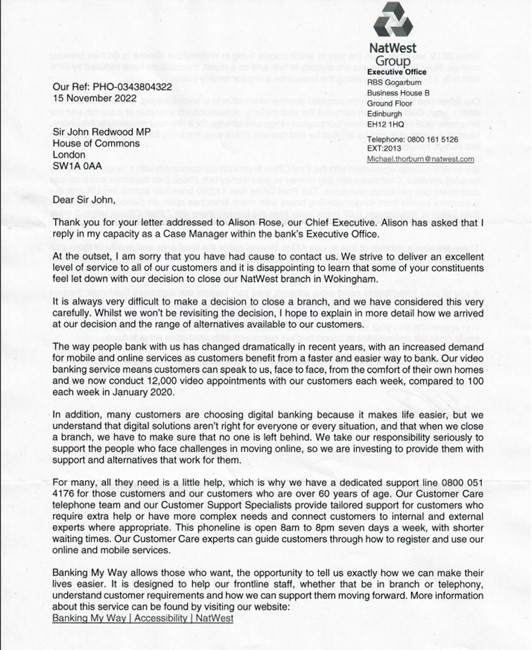
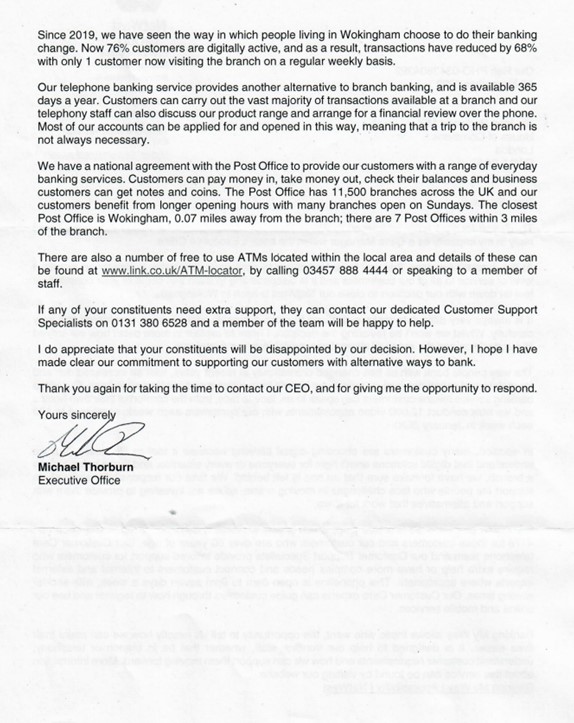
Rishi must set out his low-tax vision to get our party members on side (Written for Telegraph)

I offer the new Prime Minister the same loyalty I showed to his two recent predecessors, and the same economic advice designed to see off inflation whilst avoiding a deep and prolonged recession. The first task Rishi needs to address is to bring together more of the MPs and members of the party behind the common endeavour  of greater prosperity and a better economic policy to avoid the inflationary money printing of the last year. The voluntary party that knocks on doors, delivers leaflets, finds Council candidates and helps pay the bills of party officials must be wooed and thanked. It is a pity they did not get a vote on another change of leader. It is a shame the very truncated timetable did not allow Rishi to set out in general terms how he plans to tackle the budget issues, balance necessary spending with affordable tax rates, and create a productivity revolution in industry and services. We need all these to go right if we are to see off recession, level up communities around the country, grow and produce  more of our own needs and bring the deficit down through the extra tax that comes from economic success.

Many members feel let down that their two choices for leader in recent leadership elections both fell prey to MP disagreements and to infighting within the Parliamentary party and government.  One of the main attractions of becoming a member is to play a role in selecting candidates for Councils, Police Commissioners, and MPs, with the best prize being a say in who should be leader and Prime Minister when we have a majority.  Each elected official is more accountable to party members because they have that say, requiring us all to listen to the grassroots as well as to our wider constituencies in our official capacities. I hope Rishi will reach out to the members and tell them how he plans to bring them into the big task of fulfilling our 2019 promises and seeing us through the inflation, energy crisis and the need to reverse the decline in many people’s spending power. He needs to speak to them to get their buy in to the project he now needs to set out.

The dilemma he faces is the same as his immediate predecessors in office. The problems to be overcome are the same. Whilst in some ways everything has changed because there is a new leader who will bring a new team to the tasks, in another way today  nothing has changed. It is the same party to lead, the same inflation to finally quell, the same recession to see off. We saw from Liz Truss and Kwasi Kwarteng proposals to make the UK more competitive with some modest tax rate reductions, and a huge spending programme of support to tackle surging fuel bills. It was a pity they did  not frame these with the rest of the  spending plans, and allow us forecasts of the short term and longer term borrowing that might result. Of course they needed to be affordable ,but they also needed to avoid plunging us into deep recession.  When adjusting and developing these plans for growth the new team needs to avoid lurching to too restrictive a policy which could deepen and lengthen the downturn. This would increase overall borrowing rather than reduce it, as borrowing is very sensitive to the rate of growth. The extra pound of income earned from growth is taxed more highly and helps save on benefit bills as more people get work to meet the increased demand for goods and services.

The new team needs to ask why the Bank is keen to sell bonds it bought at high prices at large losses today. If they do so the Treasury has to send them money to pay the losses. There is no need to sell these bonds  now, and making losses on bonds  is not a good priority for spending. It needs to build on past government work to find ways for more of the people on  benefits to take some of the many jobs still available. It must always be worthwhile working. Those in work paying taxes expect people who can work  to do so  where there are jobs available rather than  being on  benefits.

The members responded well  to Liz Truss this summer because she was upbeat, promising us growth with lower tax rates. Her aim was to generate more revenue from the growth to pay for the healthcare and education we want. In his first speech as Prime Minister elect Rishi said he too wanted growth and lower taxes. That will warm more of the members to him. That requires delivery. He will get more unity from a bruised party if he shares its members aspirations and then manages to implement them. He also needs to tell them more of this vision and win their confidence.

My Intervention in the Urgent Question on Great British Railways

Rt Hon Sir John Redwood MP (Wokingham) (Con): When will the Government and railway companies come forward with proposals for an improved pattern of services that attracts many more fare-paying passengers? We need to get the deficit down very quickly and the best way of doing so is by getting more people paying fares willingly.

Kevin Foster, Minister of State, Department for Transport: My right hon. Friend is absolutely right. Clearly, demand patterns have changed dramatically during the pandemic. For example, a lot fewer people are commuting into London at 7 am to 9 am and then leaving between 5 pm and 7 pm, or they are doing that three or four days a week rather than five, so there is a need to look at how we can adapt. We are giving slightly more flexibility to some operating companies, and looking at how we use our ticketing and, in particular, our ticket pricing. The rail sale was a great way of getting a lot of people on to trains that might otherwise have been relatively quiet, producing new revenue to the railways. In addition, as I said in response to the SNP spokesperson, Lumo is targeting traffic that goes by air to get it on tracks.


My Speech in the Treasury Estimates Motion

Rt Hon Sir John Redwood MP (Wokingham) (Con): I am glad the Minister agreed that the £60 billion for the energy scheme will of course adjust according to market prices, and let us hope that the current downward trend in some of the gas prices is continued. We need a mild winter and other bits of good fortune, otherwise we could be back facing even bigger bills. I am sure we are all appreciative of the fact that the new Chancellor wishes to review the scheme after March, because this is a very expensive scheme and there may be better ways of doing it to contain the expenditure.

I hope, for example, that consideration will be given, where price controls are still being offered to consumers, to limiting the amount of subsidised fuel any household can buy to a reasonable amount for a normal household, so that those who are in richer households and making much bigger demands on the fuel system would pay for the additional fuel they need—if they are lucky enough to have a heated swimming pool, or whatever it is—and would pay the full price on the extra fuel that such luxuries require. That is offered as a hopeful idea of how one can start to grapple with the very high costs of this scheme without in any way undermining the crucial guarantee to all those who are struggling with their bills already and want this kind of security.

I also have some concerns about the Bank of England estimate. It is quite true that, from Chancellor Darling onwards, quantitative easing decisions have always been jointly taken by Chancellors of the Exchequer and Governors of the Bank of England. One of the main reasons why they have always been joint decisions is that the Bank of England always understandably insisted on a complete capital guarantee against losses on the bonds, because it was envisaging buying so many bonds that they became very big for the Bank of England balance sheet, and it wanted to be reassured that the Treasury and taxpayers stood behind the system in case of losses.

To the extent that this supplementary estimate is to make good losses on bonds that the Bank of England is selling, I have these questions. First, why does the Bank of England think it must sell bonds at this juncture, when the United Kingdom bond market, the American bond market and lots of other bond markets around the world are particularly depressed by the need for a counter-inflation strategy based on high interest rates? We are crystalising a loss that, as I understand it, the Treasury then has to pay for, whereas if we have an unrealised loss, no payments are of course needed until eventual redemption, and very often the redemption value of the bond is considerably higher than today’s price in the market. I cannot quite understand why the Bank needs to sell these bonds now, and as this has always been a joint policy in which Chancellors have been very heavily involved and have heard Bank of England advice—Chancellors had to sign it off because the taxpayer is at risk, not the Bank of England itself—I hope this will be carefully re-examined.

To those who say that we do need to be selling bonds as well as putting up interest rates to curb inflation, I would say they should be careful not to overdo it. If the Bank really does feel it has to tighten even more, it can do so by a further rise in interest rates; it does not have to do so by selling bonds. Very directly, as we see tonight, the sale of these bonds can realise a loss and then can trigger a cash requirement on taxpayers and the Treasury at an extremely bad time for such a cash requirement. I think all of us have much better priorities than paying for bonds that are underwater, when we see the current state of the economy and the need to route more money to individuals and companies in the right ways, to see off a longer and deeper downturn and provide some balance in the public accounts. I ask the Minister and Chancellor to think again, and to talk again to the Governor of the Bank of England about their joint responsibility. They must ask whether this is really the right time to be crystalising losses, resulting in unspecified amounts of money that will have to be paid.

Leadership, a retrospect

The consultation of members of the Wokingham Conservative Association put Boris Johnson in first place, a little ahead of Rishi Sunak. Penny Mordaunt came a poor third. Boris has many strong supporters whilst more Rishi enthusiasts support their man because he is not Boris.

Amongst constituents there was also much more interest in Boris and Rishi than Penny. Both men attracted strong support and evoked strong antipathy from others. Amongst constituents a few  more favoured Rishi, but this seems to be particularly true of people who do not express Conservative values and outlooks and are unlikely to given the attitudes they do express.

Boris and Penny answered my questions about the economic issues but Rishi did not. I look forward to an early statement from him on how he will fight recession whilst continuing the work the Bank and Treasury have done to bring inflation down.

As you now know MPs did not get a vote between the candidates, nor will members. All now rests on Rishi making good judgements of how to pilot the economy and how to build support with the party and the public for what he wants to do.


Ways to cut spending

The new Chancellor says he is looking for ways to cut spending to bring the borrowing down. I have sent him a list of ideas familiar to readers of this blog where they have been published before.

Today there are some easy ways to make an impact.

1 Reverse his decision with the  Bank of England to sell some of the bonds they own at a loss. Not selling would save in excess of £10 bn in the year ahead.

2 Work with DWP to improve incentives and support to help 500,000 people on benefits to get jobs. Saving around £5bn from less benefit and more tax.

3.implement Braverman plan to stop small boats illegal migration. Save £3bn in annual additional hotel costs.

4. Cancel HS2 and resell land acquired. Save many billions starting this year.

5. Adjust energy package  to limit subsidised energy for households to the average usage, requiring those who use more to pay full price for the extra.

6 Substitute more UK gas and oil for imports by pressing on with extra N Sea production. This will cut the import bill and boost UK tax revenues substantially.

The Bank wants to lose money on bonds

The Bank of England announced again this  week its plans to sell some of the bonds it bought at much higher prices. Lower bond prices mean higher interest rates.  When it last announced this it then was forced by the  market into wanting rates lower so it flip flopped and bought more. Now it wants rates even higher so it plans to sell them again. I think they are wrong to be selling at current levels. They should wait until they can lower rates again when the bonds will be much more  valuable. Longer rates are quite high enough to curb inflation, as most forecasters see it coming down next year after a probable peak next month.

Mr Sunak as Chancellor approved £450bn of bond buying and got the Treasury/taxpayers to underwrite  all the purchases. When the Bank does sell and takes a loss that loss has to be paid by the Treasury. All Chancellors from Darling onwards agreed to bond buying and agreed to pay any losses.  As the decision to buy was a joint one between the Chancellor of the day and  the Governor, and as the Treasury pays the losses, the Chancellor should tell the Governor he does not have the money to pay for taking losses now and the bonds should be held for better times. How much is the Bank planning to want the Treasury to find to cover losses over the next twelve months? Bloomberg suggests over £11bn.

This week Mr Hunt signed off a Bank scheme to lend money to energy companies if they needed it. Once again the taxpayer through the Treasury is guaranteeing the Bank against loss. I think the government should be more careful about all these guarantees.

As Mr Hunt tells  us he needs spending cuts to reduce the deficit he should start with this one. He must tell The Bank he will not pay for losses on bonds they do not need to sell. That will save us billions. Sometimes saving money can be popular and easy.

Consultation on leadership

I continue to consult on who my constituents would like to see as the next PM. A good number have written into my email and some have expressed views here.  The Wokingham Conservative Association has also consulted and is letting me know the balance of opinion amongst members who of course have a vote in any final ballot assuming there are  two candidates with more than 100 MPs backing them. I am also seeking the  views of the  candidates on various matters of importance.

The state of the economy and those official forecasts

Consumer confidence remains stuck at the ultra low level of minus 47 on the Gfk index. Retail sales fell again in September. The public sector borrowing figure came in at a hefty £20 bn for September, £5.2bn more than the OBR forecast. All this is proof of a weakening economy. So why do the Bank and some in the Treasury think we need to slow it down more? Can’t they see that will increase the borrowing we need to do, as slowdown reduces tax revenue growth  and increases benefits expenditure.

In the previous two years I had to disagree with the OBR stating they had greatly exaggerated the borrowing needed, as it turned out they had. This year I said I thought their forecast was too low. In the six months to September state net debt has risen by £44.7bn more than the OBR forecast. It reinforces my general point that their forecasting model does not seem to pick up the sensitivity of borrowing to the rate of growth in the economy. Speed it up as last year and revenues surge cutting borrowing needed. Slow the economy down as this year and the reverse happens. It was also clear there had to be policy change to spend more to offset the energy package as has happened.

Given the wonky way they account for interest charges there will  be a big windfall decline in interest costs as soon as inflation comes down. Actual interest being paid as cash payments remains low and very affordable. There could be something like a £30bn fall in their stated interest part of total spending going forward from next year.

Meanwhile the mainstream media send out the misleading narrative that a few tax cuts-not the huge spending package on energy- sank the bond market. They refuse to talk about The Bank selling bonds and deliberately driving rates higher. They ignore the bond sell offs in the USA and Europe. US mortgages are over 6% now. The Treasury and Bank establishment have lots of little helpers.

Another leadership election

As if 4 Chancellors in 4 months was not enough we are now pitching for 3 Prime Ministers in 3 months and maybe a fifth Chancellor. It is an irony that a small group who were determined to pull both Boris and Liz down claim we need to stabilise the markets!

Their attitude to the members is arrogant, preferring them not to have a vote or upending anyone they vote for that they did not want. It makes it extremely difficult for anyone elected as PM as they are under constant fire from their own side from people who will abuse their privileged access and look for any slip or error. Having  healthy debate about policy and decisions is good. Personal attacks and venom is destructive and puts many good people off politics.

We now have a short space of time to do again what was done at leisurely pace this summer. The members should look for someone with Conservative views and reject the idea that we want  a so called grown up who will do everything the establishment and the international institutions tell them. The establishment gave us the inflation and now seem determined to give  us  a recession. Why trust them when their forecasts were so wrong and when they continuously lied to us about the inflation they caused but denied for so long.

”Grown ups” usually want to put us back under EU rules, to gold plate any global trend and Treaty requirement even when it is clearly damaging to us, to frustrate the self employed and small business, and to back the big boom/bust swings of Central bank policies as they lurch from printing too much money to stopping credit too abruptly.